The Romantic period in music
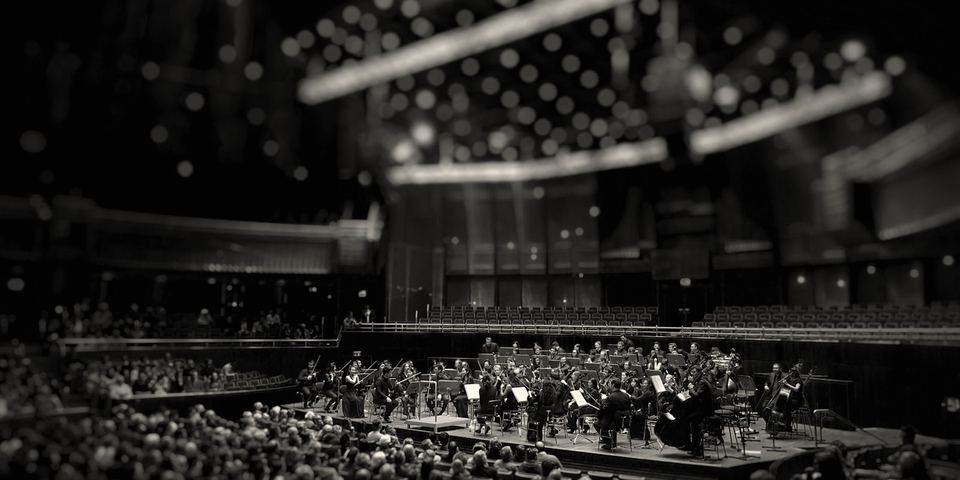
The Romantic period of Western music lasted from the early nineteenth century to the start of the twentieth. Composers put personal feeling, nature, legend and national identity at the center of their music. The orchestra expanded, and harmony used more chromatic notes. The piano became the leading instrument in family homes and in concert halls.
A pianist plays Träumerei by Schumann. The title means dreaming. The piece is the seventh of his Scenes from Childhood.
Recording: Musopen
When the period began
The Romantic period grew from the late works of Beethoven and the songs of Schubert in the early nineteenth century. Writers led the way. The author and composer E. T. A. Hoffmann praised the instrumental music of Beethoven as Romantic, because it opened a world beyond words.
The period lasted through the whole century. Its last composers, such as Mahler and Richard Strauss, wrote into the early twentieth century. By then new styles were taking its place. They included the music of Debussy. Later came Schoenberg's atonal music, which has no tonic.
Features of the style
Romantic melody is long and expressive. It is often modeled on the singing voice. The harmony uses many chromatic notes, rich seventh and ninth chords, and sudden moves to distant keys. The first chord of Wagner's Tristan und Isolde is known as the Tristan chord. It moves at once to another tense chord, and the music delays its resolution again and again.
Dynamics cover a far wider range than before. They run from the softest pianissimo to a huge fortissimo. Tempo becomes more flexible. Players use rubato, a give and take in time, to shape a phrase.
Many works tell a story or paint a scene. This is program music. Wagner tied short themes to characters and ideas. Such a theme is called a leitmotif. Composers also turned to the folk songs and dances of their own lands. Chopin wrote mazurkas, Dvořák used Czech dances, and Grieg drew on Norwegian folk music. Virtuosos such as Paganini on the violin and Liszt at the piano filled concert halls.
Forms of the period
The forms range from songs of a few minutes to the music dramas of Wagner.
| Form | What it is |
|---|---|
| Lied | A German art song for voice and piano, often in a cycle of songs that tells a story |
| Character piece | A short piano piece in one mood, such as a nocturne, an impromptu or a song without words |
| Étude | A study that trains one skill and stands as a concert piece |
| Program symphony | A symphony that follows a story, such as the Symphonie fantastique of Berlioz |
| Symphonic poem | Liszt's form: a single orchestral movement on a poem, a painting or a legend |
| Concert overture | An overture for the concert hall, such as The Hebrides by Mendelssohn |
| Music drama | Wagner's form of opera, in which the music flows without breaks between numbers |
| Ballet | A full evening of dance music, such as Swan Lake by Tchaikovsky |
Instruments of the period
Makers gave the piano an iron frame, thicker strings and felt hammers. The double escapement, a new key mechanism, let notes repeat quickly. The concert grand could now fill a large hall.
Valves let horns and trumpets play all the notes of the scale. The tuba gave the brass a deep bass. Theobald Boehm redesigned the flute, and Adolphe Sax invented the saxophone. The harp, the English horn and extra percussion joined the orchestra.
The orchestra became much larger. A symphony by Mahler can call for more than a hundred players. It may add eight horns and a large choir.
Composers of the period
Franz Schubert wrote more than six hundred songs in a short life. Felix Mendelssohn and his sister Fanny Hensel composed songs, piano music and choral works. Robert Schumann is known for his piano cycles and songs, and his wife Clara Schumann was a leading pianist and composer. Frédéric Chopin composed almost only for the piano. Franz Liszt toured Europe as a piano virtuoso.
In opera, Giuseppe Verdi wrote La traviata and Aida for the Italian stage, and Richard Wagner created the music drama in Germany. Johannes Brahms kept the Classical forms alive in his symphonies and chamber music. Hector Berlioz wrote for a vast orchestra.
National schools formed across Europe. Pyotr Ilyich Tchaikovsky and Nikolai Rimsky-Korsakov wrote in Russia, Antonín Dvořák and Bedřich Smetana in Bohemia, and Edvard Grieg in Norway. Gustav Mahler and Richard Strauss carried the style into the twentieth century.
A listening guide
These works show the range of the period.
| Work | What to listen for |
|---|---|
| ErlkönigSchubert | Rapid triplets in the piano sound like a horse galloping through the night. |
| Symphonie fantastiqueBerlioz | A single melody stands for the beloved and returns in all the movements in a new form. |
| Violin Concerto in E minorMendelssohn | The soloist enters almost at once, without a long opening for the orchestra. |
| TräumereiSchumann | Its opening phrase begins with a rising fourth and returns many times. |
| Liebestraum No. 3Liszt | A song melody passes between the hands under sweeping arpeggios. |
| Prelude to Tristan und IsoldeWagner | Chromatic lines rise and fall, and the opening phrases all stop on an unresolved chord. |
| Symphony No. 9 (From the New World)Dvořák | The English horn plays the famous slow melody of the second movement. |
| Symphony No. 4 in E minorBrahms | The finale is a set of variations on a repeated bass, as in the Baroque chaconne. |
In the third movement of Symphony No. 3 in F major by Brahms, the cellos play the sad melody first, and the horn takes it up later. A nocturne by Chopin follows. Listen for the rubato in the melody over the steady left hand. Only the opening of the cello concerto by Saint-Saëns is heard here. The cello enters after a single chord from the orchestra.
What students play
Romantic music offers young pianists many short pieces. Schumann wrote the Album for the Young for his daughters, and Tchaikovsky wrote his own Album for the Young. Burgmüller's easy studies, Grieg's Lyric Pieces and Mendelssohn's Songs without Words follow.
Advanced pianists play the nocturnes, waltzes and études of Chopin, the impromptus of Schubert and the late piano pieces of Brahms. Violinists learn the concertos of Bruch and Mendelssohn. Cellists learn the first concerto of Saint-Saëns, and singers learn the songs of Schubert and Schumann.
Romantic music needs a singing tone and a flexible pulse. Shape your phrases toward their high points. Use the pedal to blend the harmonies, and change it whenever the chord changes.
A short check
Choose one answer per question.
What is program music?
Berlioz's Symphonie fantastique and Liszt's symphonic poems are program music.
What is a leitmotif?
Wagner built his music dramas from leitmotifs that return and change.
Which invention let horns and trumpets play all the notes of the scale?
Valves open extra lengths of tubing. Brass players could then play chromatic melodies.
What is a Lied?
Schubert wrote more than six hundred Lieder. Schumann and Brahms added many more.
Common questions
What are the dates of the Romantic period?
It began in the early nineteenth century with the late works of Beethoven and the songs of Schubert. It faded early in the twentieth century, as Debussy and Schoenberg found new styles.
Who are the main Romantic composers?
Schubert, Chopin, Schumann, Liszt, Wagner, Verdi, Brahms and Tchaikovsky are among the best known. Dvořák, Grieg and Mahler are also heard often in concert halls.
What makes music Romantic?
Romantic music puts personal feeling first. It uses long melodies, chromatic harmony, wide dynamics and a large orchestra, and it often tells a story.
Is Beethoven a Romantic composer?
He belongs to both periods. E. T. A. Hoffmann already heard Beethoven's instrumental music as Romantic. Beethoven's late works helped begin the Romantic period, and his early works belong to the Classical period.
What is nationalism in music?
It is the use of a nation's folk songs, dances, legends and language in concert music. Smetana, Dvořák, Grieg and the Russian composers are examples.
What came after the Romantic period?
Early in the twentieth century, three new styles took its place. Impressionism, the style of Debussy, used harmony for color and mood. Atonal music gave up the tonic, and Schoenberg was its leading composer. Neoclassicism returned to the clear forms of the eighteenth century.