The Classical period in music
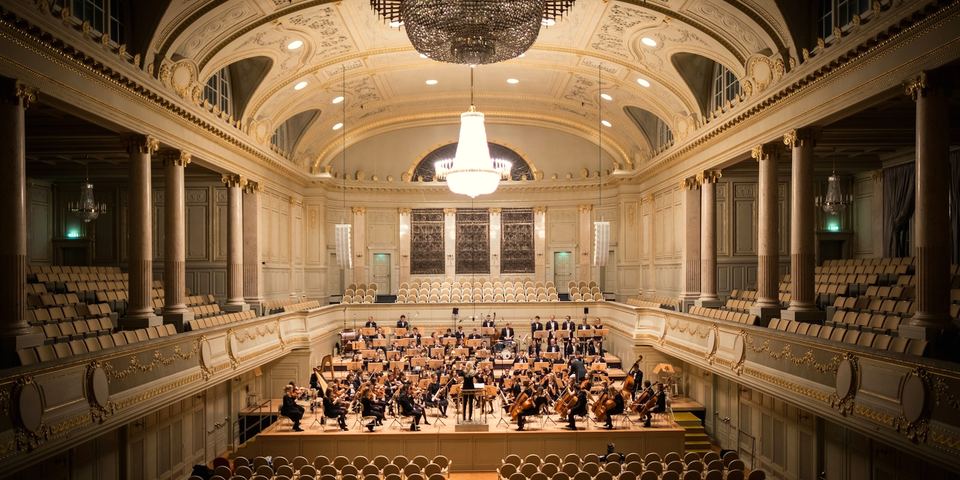
The Classical period of Western music lasted from the middle of the eighteenth century to the early nineteenth. Its music has clear melodies in balanced phrases above a light accompaniment. In these decades composers built the symphony, the string quartet and the piano concerto on sonata form. The leading composers were Haydn, Mozart and the young Beethoven.
A string quartet plays the first movement of Haydn's Lark Quartet. A movement is a complete section of a longer work. The full title is String Quartet in D major, Op. 64 No. 5. Op. is short for opus, which is the Latin word for a work.
Recording: Musopen
When the period began
The Classical style came out of the galant style in the middle of the eighteenth century. The galant style was light and elegant. Composers turned away from dense counterpoint toward a single clear melody with a light accompaniment. Counterpoint combines several independent melodies. Carl Philipp Emanuel Bach was a son of Johann Sebastian Bach. He wrote keyboard music full of sudden changes of feeling. At Mannheim, a famous court orchestra played with a new discipline. Its long crescendos became famous as the Mannheim crescendo.
Vienna became the center of the style. Haydn, Mozart and Beethoven all worked there, and the term Viennese Classical style refers to their music. The period ends in the early nineteenth century, as the music of Beethoven and Schubert opens the Romantic period.
Classical with a capital C refers to this period alone. In everyday speech, classical music means the whole tradition of Western concert music. That tradition runs from the Middle Ages to today.
Features of the style
A Classical melody is built from short phrases of equal length. Often one phrase pauses on the dominant chord, and the next answers it with a close in the tonic.
The texture is usually a melody with accompaniment. Under the melody the left hand of the piano often plays an Alberti bass, a chord broken into a repeated pattern. Baroque music had relied on the basso continuo, which is a bass line with chords filled in by a keyboard player. In the Classical period it faded from use, and the harmony changed more slowly than in Baroque music.
Contrast lies inside the movements themselves. A loud, firm first theme may be followed by a soft, singing second theme in a new key. Dynamics change gradually, with crescendos and diminuendos, as well as suddenly. From the comic opera of Italy, composers learned to change mood quickly.
Forms of the period
Sonata form shapes the first movement of most Classical sonatas, symphonies, quartets and concertos. It has three parts. The exposition presents the first theme in the tonic key. A bridge leads to a second theme in a new key, which is usually the dominant.
The development breaks the themes into fragments and carries them through several keys. The recapitulation brings both themes back, now in the tonic key. The larger forms of the period use sonata form for at least one movement.
| Form | What it is |
|---|---|
| Symphony | A work in four movements for orchestra: fast, slow, minuet and fast finale |
| String quartet | Two violins, a viola and a cello, usually in four movements |
| Concerto | A soloist with orchestra in three movements, with a cadenza for the soloist |
| Rondo | A main theme that keeps returning between contrasting episodes |
| Theme and variations | A melody followed by changed versions of it |
Instruments of the period
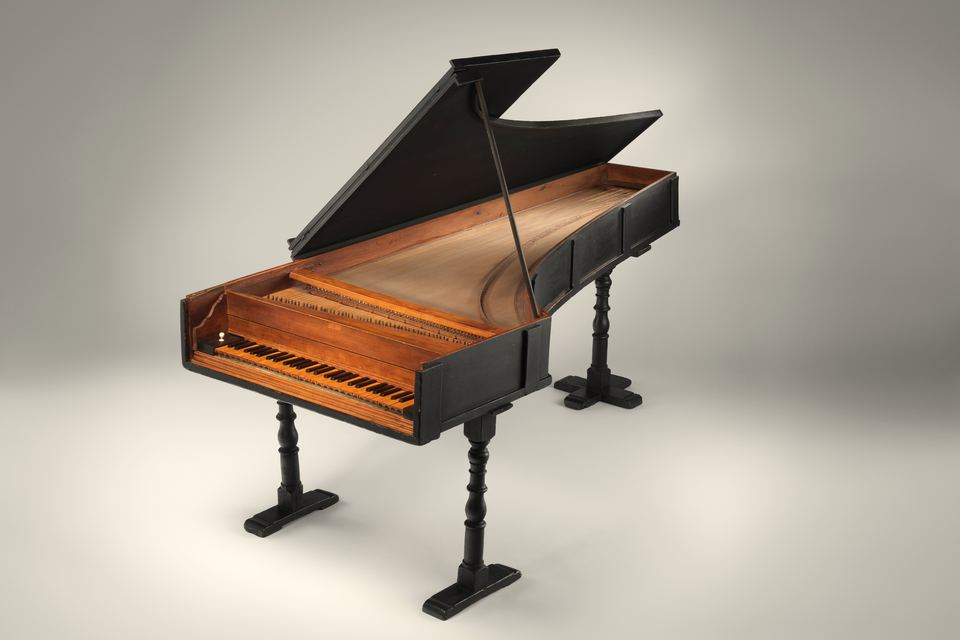
The piano replaced the harpsichord. Its hammers let the player shape any note soft or loud, and composers began to mark gradual dynamics in their scores. The pianos of Vienna had light actions, so the keys responded to a gentle touch. They had wooden frames and a clear, quick tone.
The orchestra took the form it still keeps at its core. The strings formed the base. Pairs of flutes, oboes, bassoons and horns joined them, and trumpets with timpani played in festive works. The clarinet joined late in the period. Horns and trumpets had no valves, so they played mainly the notes of the harmonic series. These are the notes that a tube without valves can sound.
Chamber music for amateurs became popular. Families played string quartets, piano trios and sonatas for violin and piano at home.
Composers of the period
Joseph Haydn served the Esterházy princes for decades. He wrote more than a hundred symphonies and dozens of string quartets, and his works set the plan of four movements for both forms. Wolfgang Amadeus Mozart wrote operas, symphonies, concertos and chamber music. Ludwig van Beethoven began in the Classical style and carried it toward the Romantic period.
Christoph Willibald Gluck reformed opera so that the music would serve the drama. Muzio Clementi wrote the sonatinas that many piano students learn early. Luigi Boccherini wrote cello music and string quintets. Joseph Bologne, Chevalier de Saint-Georges, was a violinist, a fencer and a composer of concertos and quartets in Paris.
A listening guide
Haydn and Mozart lead the list, and the young Beethoven closes it.
| Work | What to listen for |
|---|---|
| Symphony No. 94 (Surprise)Haydn | A sudden loud chord breaks into the quiet theme of the slow movement. |
| String Quartet Op. 76 No. 3 (Emperor)Haydn | The slow movement is a set of variations on a hymn he wrote for the emperor. |
| Trumpet Concerto in E♭ majorHaydn | He wrote it for a new trumpet with keys that could play a full scale. |
| Eine kleine NachtmusikMozart | All the strings open the serenade together in octaves with a forceful call. |
| Symphony No. 40 in G minorMozart | The violas start the first movement, and the violins bring in the melody. The melody begins with two falling notes that sound like a sigh. |
| Dance of the Blessed SpiritsGluck | A solo flute plays a slow melody over soft strings in this scene from Orfeo ed Euridice. |
| Sonatina in C major, Op. 36 No. 1Clementi | It is sonata form on a small scale. Clear scales and arpeggios run through it. |
| Symphony No. 1 in C majorBeethoven | It opens on a chord that is not the tonic chord. That chord leads to F major. |
Music: Envato (StanNau)
In the slow movement of the Lark Quartet, the first violin plays a long melody over the other three instruments. The opening movement of the Piano Sonata in D major, K. 576, by Mozart follows. K. 576 is its number in the Köchel catalog of Mozart's works. Listen for its two themes and the return of the opening in the tonic.
What students play
In Classical pieces students learn even scales and a quiet accompaniment. They also learn to give the phrases a clear shape. Pianists play the sonatinas of Clementi and Kuhlau. They move on to the sonatas of Haydn and Mozart and the easy sonatas of Beethoven.
The Classical concerto is a standard audition piece for wind and string players. Many orchestras ask for a concerto by Mozart on flute, clarinet, horn or violin. Cellists learn the cello concertos of Haydn, and trumpeters learn his Trumpet Concerto.
In Classical music, keep the left hand light and the tempo even. Let the dynamics follow the shape of the phrase. Use the pedal sparingly.
A short check
Choose one answer per question.
What are the three main parts of sonata form?
The exposition presents the themes, the development works on them, and the recapitulation brings them back in the tonic.
Which keyboard instrument replaced the harpsichord in the Classical period?
The early piano, often called the fortepiano, could play soft and loud by touch alone.
Which composer wrote the Surprise Symphony?
Haydn wrote it for his first visit to London. The surprise is a loud chord in the slow movement.
Which woodwind instrument joined the orchestra in the Classical period?
Mozart wrote for the clarinet in his late symphonies, concertos and chamber music.
Common questions
What are the dates of the Classical period?
It began in the middle of the eighteenth century, as the galant style replaced Baroque counterpoint. It gave way to the Romantic period early in the nineteenth.
What is the difference between classical music and the Classical period?
Classical music in everyday speech means Western concert music of any age. The Classical period is one era within it, the age of Haydn, Mozart and the young Beethoven.
Who are the main composers of the Classical period?
Haydn, Mozart and the young Beethoven defined the style in Vienna. Gluck, Clementi, Boccherini and Carl Philipp Emanuel Bach also shaped it.
What is sonata form?
It is the plan of most Classical first movements. The themes are presented in two keys and developed. The recapitulation brings them back together in the tonic key.
Is Beethoven a Classical or a Romantic composer?
He belongs to both. His early works follow the Classical style, and his later works opened the way for the Romantic composers.
What instruments were used in the Classical period?
The orchestra had strings with pairs of woodwinds, horns, trumpets and timpani. The piano became the main keyboard instrument.