The Baroque period in music
The Baroque period of Western music lasted from about the start of the seventeenth century to the middle of the eighteenth. Its music rests on a firm bass line with chords above it. Opera, the oratorio, the concerto and the fugue took shape in these years. Bach, Handel and Vivaldi are its best-known composers.
A chamber orchestra plays the first movement of Spring from The Four Seasons by Vivaldi. A movement is one complete part of a longer work.
Recording: Musopen
When the period began
The period opens in Italy around the start of the seventeenth century. Poets and musicians in Florence wanted to revive the drama of ancient Greece. They set words for a single voice over a simple bass, so the listener could follow the text. From this new style came the first operas. Claudio Monteverdi's L'Orfeo, staged in Mantua, is the earliest opera still often performed.
Historians usually close the period with the death of Bach in the middle of the eighteenth century. By then a lighter style, the galant, was already in fashion. Composers wrote Baroque music in Italy, France, Germany, England and the rest of Europe. It reached the cathedrals of Spanish and Portuguese America as well.
The word baroque comes from the Portuguese barroco, which means a pearl of irregular shape. In the eighteenth century a French critic used it to attack an opera by Rameau as noisy and strange. Historians began to use it as the neutral name of the period early in the twentieth century.
Features of the style
Under most Baroque music lies the basso continuo. A cello, a viola da gamba or a bassoon plays the bass line. A harpsichord, an organ or a lute fills in the chords from figures written above the bass. This is figured bass, and players improvised from it.
A movement usually keeps one mood from start to end. Writers of the time described music as moving the affections, the passions of the listener. A fast movement keeps a steady, driving rhythm. Melodies are spun out by sequence, in which a short figure repeats at a higher or lower pitch.
Loudness often changes in steps. An organist or a harpsichordist moves to another keyboard or adds stops to play louder. Stops are the sets of pipes or strings that the player switches on. In the concerto a full group alternates with a smaller group of soloists. Ornaments such as trills and mordents decorate the melody, and singers and players added more of their own.
The major and minor keys became the basis of harmony in these years. Composers used the pull of the dominant chord to the tonic to drive their music forward. New ways of tuning keyboards let them write in more keys.
Forms of the period
Several of these forms, such as the concerto and the fugue, lived on in the Classical period.
| Form | What it is |
|---|---|
| Opera | A drama sung throughout, with recitative to tell the story and arias to express feeling |
| Oratorio | A sacred drama for soloists, choir and orchestra, sung in concert without staging |
| Cantata | A work in several movements for voices and instruments, sacred or secular |
| Concerto grosso | A small group of soloists set against the full string orchestra |
| Solo concerto | One soloist with orchestra, usually in three movements: fast, slow and fast |
| Suite | A set of dances in one key: allemande, courante, sarabande and gigue |
| Trio sonata | Two melody instruments over the basso continuo |
| Fugue | A piece in which several voices take up one short subject in turn |
| Chaconne | Variations over a short bass line or chord pattern that repeats |
Instruments of the period
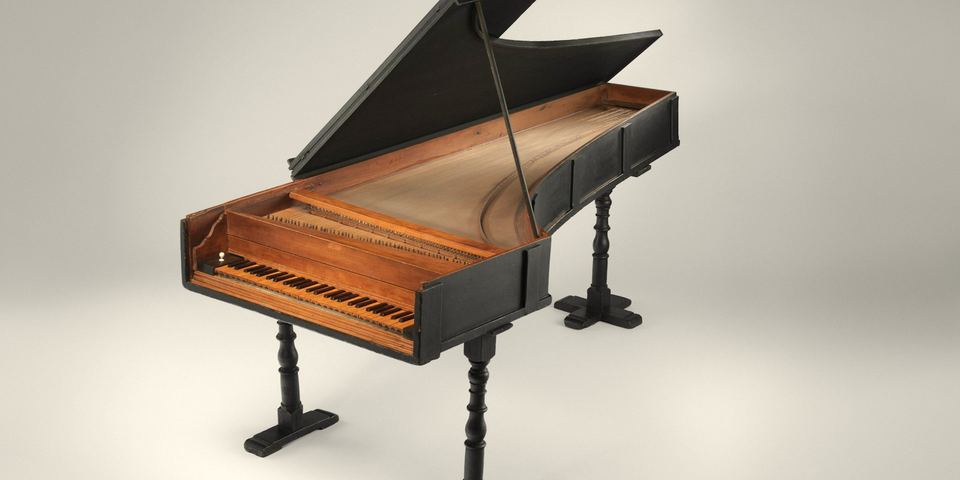
The harpsichord and the organ were the main keyboard instruments. The harpsichord plucks its strings, so its loudness does not change with the touch. Several organs built by the Schnitger family in northern Germany survive in working order.
The violin family took the lead among the strings. Cremona makers such as Amati, Stradivari and Guarneri built instruments that players still prize. The viola da gamba, held between the knees, sounded beside them. The lute and the larger theorbo played chords in the continuo.
The wind instruments were made of wood and had few keys. They include the recorder, the one-keyed flute and the Baroque oboe. Trumpets had no valves. Players reached the high notes of the natural trumpet with the lips alone. Strings were made of gut, and many period ensembles now tune about a half step below modern pitch.
Composers of the period
In Italy, Monteverdi led the move from the polyphony of the Renaissance to opera. Polyphony is music woven from many equal voices. Arcangelo Corelli set the model for the trio sonata and the concerto grosso. Antonio Vivaldi taught at a home for orphaned girls in Venice and wrote hundreds of concertos for its musicians. Domenico Scarlatti wrote more than five hundred keyboard sonatas.
In France, Jean-Baptiste Lully created French opera at the court of Louis XIV. François Couperin and Jean-Philippe Rameau wrote harpsichord pieces with vivid titles. In England, Henry Purcell wrote the opera Dido and Aeneas.
In Germany, Johann Pachelbel, Dieterich Buxtehude and Georg Philipp Telemann were famous in their day. Johann Sebastian Bach combined the Italian, French and German styles in his counterpoint. George Frideric Handel was born in Germany and trained in Italy. He made his career in London. There he wrote Italian operas and English oratorios such as Messiah.
A listening guide
The list runs from Monteverdi's first opera to Bach.
| Work | What to listen for |
|---|---|
| L'OrfeoMonteverdi | The opening toccata is a brass fanfare played three times. |
| Canon in DPachelbel | A bass of eight notes repeats. Above it three violins play a canon. In a canon all the voices play the same melody, and the voices enter one after another. |
| Dido's LamentPurcell | A falling chromatic bass repeats under the queen's last song. A short bass line that repeats in this way is called a ground bass. |
| The Four SeasonsVivaldi | The four concertos follow four sonnets that describe the seasons in turn. Listen for birdsong and storms in Spring. |
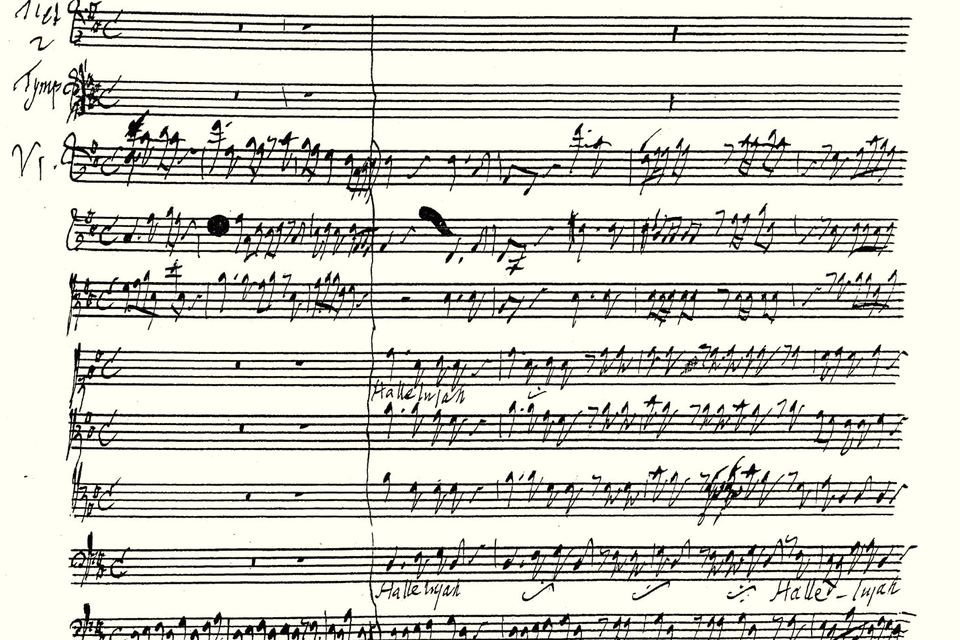
| MessiahHandel | The Hallelujah chorus moves between full chords and counterpoint, in which independent melodies sound together. |
| Water MusicHandel | Handel wrote these suites of dances for a royal party on the Thames. Horns and trumpets ring out over the strings. |
| Brandenburg Concerto No. 5Bach | The harpsichord leaves the continuo and plays a long solo passage called a cadenza. |
Pachelbel's Canon is heard here in an arrangement for strings. The second recording is the opening of an air by Handel from one of his harpsichord suites. The piece is known as The Harmonious Blacksmith. The third is the opening of a concerto by Vivaldi for two mandolins and strings.
What students play
Baroque pieces are a standard part of music study. Many exam boards ask for one piece from an early list, and a Baroque dance often fills it. Pianists start with the minuets from the notebook of Anna Magdalena Bach. Later they play Bach's inventions and the sonatas of Scarlatti.
Violinists learn the Concerto in A minor by Vivaldi early in their study. Flutists play the sonatas of Handel and the fantasias of Telemann. Recorder players have a large Baroque repertoire of their own.
A steady pulse and clear articulation suit Baroque music. Play fast notes slightly detached. Shape the phrases with the touch more than with the pedal. Add trills where the score marks them, and begin a trill on the note above.
A short check
Choose one answer per question.
What is a basso continuo?
A cello or bassoon plays the written bass. A harpsichord, organ or lute fills in the chords from figures above the notes.
Which form grew up in Italy at the start of the Baroque period?
Composers in Florence and Mantua wrote the first operas. Monteverdi's L'Orfeo is the earliest that is still often staged.
What is a ground bass?
Pachelbel's Canon and Dido's Lament by Purcell both rest on a ground bass.
Which keyboard instrument plucks its strings?
A harpsichord key lifts a plectrum that plucks a string. The clavichord strikes its strings with brass tangents.
Common questions
What are the dates of the Baroque period?
It began with the first operas in Italy around the start of the seventeenth century. Historians often close it with the death of Bach in the middle of the eighteenth.
What does baroque mean?
The word comes from the Portuguese barroco, which means a pearl of irregular shape. Critics once used it as an insult. It is now a neutral name for the period.
Who are the most famous Baroque composers?
Bach, Handel and Vivaldi are the best known today. Monteverdi, Purcell, Corelli, Scarlatti, Telemann and Rameau are also widely played.
How is Baroque music different from Classical music?
Baroque music rests on the basso continuo and on counterpoint, and a movement keeps one mood. Classical music has a clear melody over a lighter accompaniment, and its themes contrast within one movement.
Is the Canon in D a Baroque piece?
Yes. Johann Pachelbel wrote it for three violins and basso continuo. It is built on a ground bass.
Why is the harpsichord used in Baroque music?
It was the main keyboard instrument of the period, along with the organ. The piano was invented in the early eighteenth century and spread only later.