The trumpet
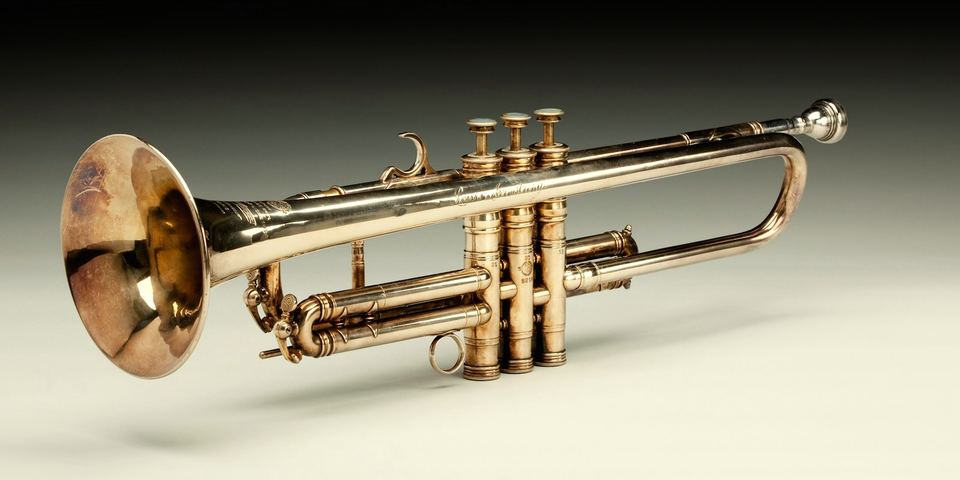
The trumpet is a brass instrument with a cylindrical tube, three valves and a flared bell. The sound starts as a buzz of the lips in a cup-shaped mouthpiece. The most common trumpet is pitched in B♭, so the notes sound a whole step lower than written. Trumpets play in orchestras, concert bands, jazz bands and much popular music.
A trumpet leads this swing piece over a piano and a double bass. In swing, the first eighth note of a pair lasts longer than the second. Listen for this long-short feel in the trumpet line.
Music: Envato (EasyTunes)
The sound of the trumpet
On the first button below, a solo trumpet plays a lyrical melody. A B♭ major scale and a short blues phrase follow.
Single notes come next. You hear an open B♭, the same note played short, and then the B♭ with a straight mute and with a harmon mute. A mute is a cone placed in the bell to change the tone. A low note and a high note at the top of the range end the set. On the last button a recorded grand piano plays the first five notes a beginner learns. The piano plays them at the pitch that a B♭ trumpet sounds.
History of the trumpet
The tomb of the Egyptian king Tutankhamun held two trumpets. The first is silver, and the second is bronze or copper. They are the only trumpets from ancient Egypt known to survive. Bronze trumpets called lurs were made in Scandinavia, and metal trumpets were made in ancient China. The Greek salpinx was a long, straight trumpet, and contests for its players were part of the ancient Olympic Games.
For thousands of years trumpets gave signals in war, hunting and religious rites. The Bible mentions the shofar, made from a ram's horn, and the chazozra, a trumpet of metal. The bugle still carries on the signaling role. The English word trumpet comes from the Old French trompette, which is a small form of trompe. Italian scores call the trumpet tromba, and German scores call it Trompete.
The trumpet became a musical instrument in Europe late in the Middle Ages. From the late fifteenth century its brass tube was bent twice into a long loop. This natural trumpet had no valves. It could play only the notes of one harmonic series. These are the notes that one length of tube can sound. Players added lengths of tube called crooks to change the key. The finest makers worked in Nuremberg. Anton Schnitzer and the Haas, Ehe and Hainlein families made trumpets there, and William Bull made them in London.
In the Baroque period, trumpeters mastered the high clarino register. There the notes of the harmonic series lie close together, so the trumpet could play melodies. Late in the eighteenth century the Viennese court trumpeter Anton Weidinger built a trumpet with keys over tone holes. It could play all the notes of the scale, but its tone was weak, and it soon fell out of use.
Valves solved the problem in the nineteenth century. Heinrich Stölzel first fitted valves to the horn, and makers soon added them to the trumpet. In Paris, François Périnet later patented the piston valve that most trumpets still use. In jazz, Louis Armstrong moved from the cornet to the trumpet. After him the trumpet took the place of the cornet as the lead brass instrument of jazz.
The role of the trumpet in music
An orchestra usually has two to four trumpets. They give power to loud passages and play fanfares and solos. In a jazz big band a section of four or five trumpets plays beside the trombones and the saxophones.
In a brass quintet two trumpets play with a horn, a trombone and a tuba. Most school bands also have a trumpet section. The trumpet leads the mariachi of Mexico together with the violins, and it is heard in salsa, ska and much popular music.
The cornet and the flugelhorn are close relatives. Both are pitched in B♭ and have three valves, but their tubes widen more. The cornet sounds a little mellower than the trumpet, and the flugelhorn mellower still. British brass bands use cornets in their high brass parts.
Music: Envato (EvolvingVibes)
A flugelhorn plays this slow jazz ballad. Its wider tube gives a darker and softer tone than that of the trumpet. Compare it with the trumpet in the swing piece.
Music for the trumpet
Baroque composers wrote brilliant parts for the natural trumpet. Bach used it in many cantatas and in the second Brandenburg Concerto, where it plays high above the other soloists. In Messiah, Handel gave the trumpet a famous solo in the aria The Trumpet Shall Sound. Haydn wrote his trumpet concerto for Weidinger's keyed trumpet. It includes melodies in the middle and low range that the natural trumpet could not play. Hummel wrote a concerto for the same instrument.
Romantic and modern composers gave the valved trumpet famous solos. A solo trumpet opens the fifth symphony of Mahler with a fanfare. In Ravel's orchestration of Pictures at an Exhibition, a solo trumpet plays the first Promenade.
Jazz made the trumpet a solo voice. Louis Armstrong set the model with his improvised solos on the recordings of his Hot Five and Hot Seven. Dizzy Gillespie built on the style of Roy Eldridge. He added new harmony and played with great ease in the high range. Miles Davis played with a spare, quiet tone and often used the harmon mute. On records, compare the bright, open sound of Armstrong with the muted sound of Davis.
How the trumpet is made
The B♭ trumpet is a brass tube about four feet ten inches (one and a half meters) long. It is bent twice into a long loop. The tube stays narrow for most of its length and widens only near the bell.
The mouthpiece has a round rim and a cup. A wider, deeper cup gives a darker tone. The leadpipe carries the air from the mouthpiece to the valves. The three valves add extra lengths of tubing when pressed. Most trumpets have piston valves, and many orchestras in Germany and Austria play trumpets with rotary valves.
The main tuning slide sets the overall pitch. Pulling it out lowers the pitch, and pushing it in raises it. Some notes of the harmonic series are slightly out of tune, so the first and third valves have slides that move during playing. The left thumb moves the first slide, and the ring finger moves the third.
Trumpets are also made in C, D and E♭. The piccolo trumpet sounds an octave above the B♭ trumpet and usually has four valves. The bass trumpet sounds an octave below the B♭ or C trumpet, and trombonists usually play it.
How the trumpet is played
The player buzzes the lips into the mouthpiece. Changing the tension of the lips moves the sound from one note of the harmonic series to the next.
The valves change the length of the tube. The first valve lowers the pitch a whole step, the second a half step and the third a step and a half. Together they fill the gaps between the notes of the harmonic series.
Trumpet music is written in the treble clef. The usual range runs from the F♯ below middle C to the high C two octaves above middle C. On a B♭ trumpet the notes sound a whole step lower than written.
The tongue starts the notes. In fast passages trumpeters use double tonguing, with the syllables ta and ka, and triple tonguing. A lip slur moves between notes of the harmonic series with no change of valves. Mutes in or over the bell change the tone. The straight mute gives a bright, piercing sound, and the cup mute a darker one. The harmon mute gives a thin, buzzing tone.
What makes a fine trumpet
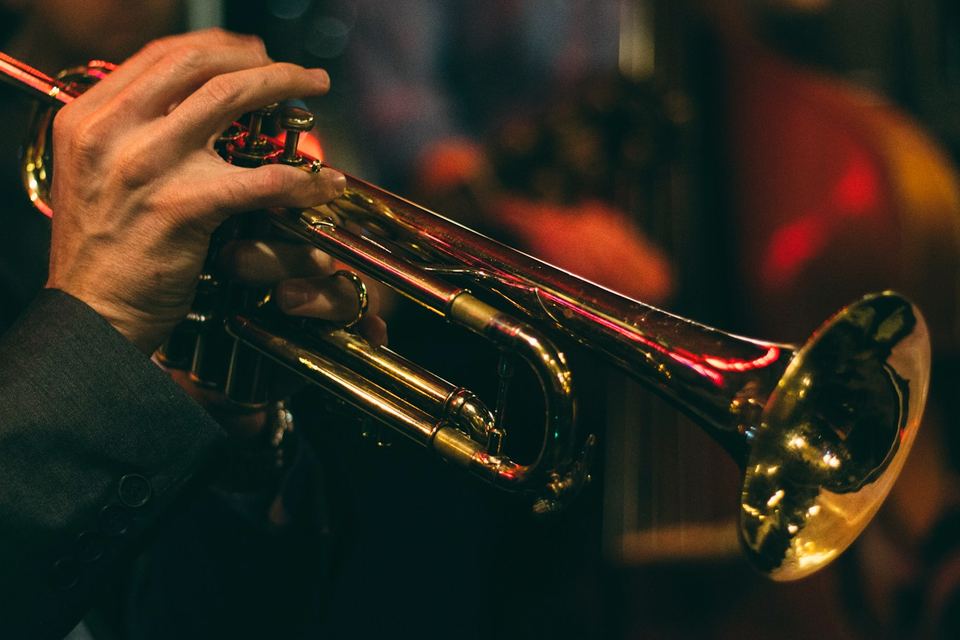
A fine trumpet plays in tune and responds evenly from the low notes to the high ones. The notes center easily, so the player needs little effort to hold the pitch. The maker shapes this response through the bore, the leadpipe and the bell. The flare of the bell colors the tone.
The valves must fit closely and move freely. Worn valves leak air and make the response dull. The slides should move with gentle force and hold their place. A repair technician can clean the tube, free the slides and remove dents.
The mouthpiece matters as much as the trumpet. A shallower cup helps the high notes. Players often change mouthpieces as their playing develops, and many try several before they choose one.
The Nuremberg makers set the standard of the Baroque trumpet. Later trumpets came from large factories and from small workshops in Europe and the United States.
Choosing a trumpet
Most beginners start on a B♭ trumpet with piston valves. Check that the valves move freely and that the slides pull out with gentle force.
Keep valve oil and slide grease with the trumpet. A student mouthpiece of medium size suits most beginners. On a used trumpet, look for dents in the bell and the tubes. A practice mute lets a player work quietly at home.
Who keeps these instruments
Tutankhamun's two trumpets were kept for many years in the Egyptian Museum in Cairo. Both are engraved with images of the gods Ra-Horakhty, Ptah and Amun. A soldier played them for a radio broadcast in the twentieth century. They are now so fragile that they are unlikely to be played again.
The Metropolitan Museum of Art in New York keeps natural trumpets by Johann Wilhelm Haas of Nuremberg. They have long loops of tube and no valves. The National Museum of African American History and Culture in Washington keeps a trumpet that belonged to Louis Armstrong. The firm of Selmer made it.
First steps on the trumpet
Buzz the lips on the mouthpiece alone first. Keep the corners of the mouth firm and the center relaxed. Try to hold one steady pitch for four slow beats.
Then play the first five written notes, C, D, E, F and G. C needs no valves. D needs the first and third valves, E needs the first and second valves and F needs the first valve. G needs no valves again, and the lips alone raise it from C.
A tuner shows the pitch you hear, so on a B♭ trumpet it shows the notes a whole step lower. Written C, D, E, F and G appear as B♭, C, D, E♭ and F.
A short check
Choose one answer per question. The explanation appears below the correct answer.
How does a trumpet player make the sound?
The lips vibrate against the rim of the mouthpiece. The buzz sets the air inside the tube vibrating.
On a B♭ trumpet, which note sounds when a C is written?
The B♭ trumpet is a transposing instrument. The written notes sound a whole step lower.
Which valve lowers the pitch by a half step?
The second valve lowers the pitch by one half step, which is the smallest change. The first valve lowers it by a whole step, and the third lowers it by a step and a half.
What does a mute do?
A mute sits in or over the bell. The straight mute and the harmon mute give their own colors.
Sources
Common questions
Is the trumpet hard to learn?
The valves are easy to learn, but the lips do most of the work. High notes need strength in the lip muscles, and that strength grows slowly with daily practice.
What is the difference between a trumpet and a cornet?
Both are B♭ brass instruments with three valves and the same fingerings. The cornet has a more conical tube with more bends, and its tone is a little mellower.
Why is the trumpet in B♭?
The B♭ trumpet has the tube length that suits most bands and orchestras. Trumpets in C, D and E♭ also exist, and many orchestral players use a C trumpet.
What is a piccolo trumpet?
It is a small trumpet pitched an octave above the B♭ trumpet. It usually has four valves, and players use it for high Baroque parts.
How many notes can a trumpet play?
The usual range covers about two and a half octaves. It reaches from the F♯ below middle C to the C two octaves above it. Advanced players reach higher.
What is a harmon mute?
It is a metal mute with a stem in the middle. It gives a thin, buzzing tone. Moving a hand over it gives a wah-wah sound.
What is a natural trumpet?
It is a trumpet with no valves. It plays only the notes of one harmonic series, so Baroque trumpeters played their melodies in the high register.