The oboe
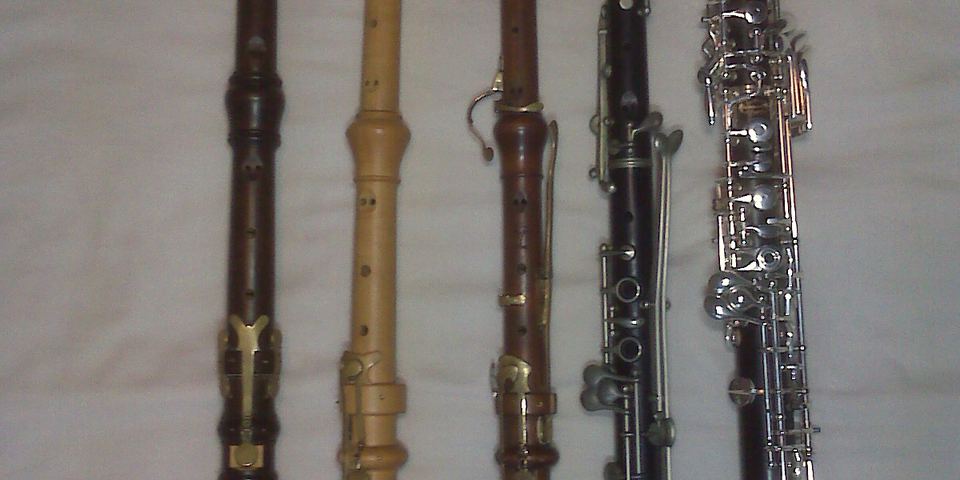
The oboe is a woodwind instrument played with a double reed. At the top of a narrow conical tube, two thin blades of cane vibrate against one another. The oboe is usually made of dark wood with metal keys. Its bright, penetrating tone carries through an orchestra, and the orchestra tunes to the A of the first oboe.
This adagio by Bach is for oboe, violin and strings. Adagio is an Italian tempo mark that means slow. Listen for the reedy voice of the oboe beside the violin.
Music: Envato (PremiumBeat)
The sound of the oboe
In the Bach adagio, the oboe and the violin play as soloists over the strings. Listen to how the oboe notes begin. The tongue releases the reed, and the note begins cleanly. Then listen to how the oboist keeps the tone even through a long phrase.
The slow movement of an oboe concerto by Albinoni comes first below. The strings sound a chord, and the oboe enters on a long high note. An improvised melody on a solo oboe follows.
Single notes come next. The low B♭ is the lowest note of the oboe. A higher B♭, a held F with vibrato and a short staccato note follow. Vibrato is a slight, regular wavering of the pitch. Staccato means short and detached. On the last button, a recorded grand piano plays the A that tunes the orchestra.
Names of the oboe
In English the instrument was first called the hautboy or hoboy. The name came from the French hautbois, which means "high wood." Here high means loud as well as high in pitch. The spelling oboe came into English later from Italian. A person who plays it is an oboist.
Used alone, the word oboe means the soprano oboe in C. Its larger relatives are the oboe d'amore and the cor anglais. The cor anglais is the alto oboe, and it is also called the English horn. French scores still call the oboe the hautbois, and German scores call it the Oboe.
History of the oboe
The oboe grew out of the shawm. The shawm was a loud double-reed instrument of medieval Europe. Town bands played it outdoors. Its player held the whole reed inside the mouth, so the lips could not shape the sound. Relatives of the shawm still sound in many lands. They include the zurna of Turkey and the Middle East, the shehnai of India and the suona of China.
The oboe itself appeared in France in the middle of the seventeenth century. Musicians of the French court remade the shawm, and the members of the Hotteterre and Philidor families are the likely inventors. They narrowed the bore, which is the inside of the tube, and divided the instrument into three joints. The player now held the reed between the lips. The new hautbois could play softly and in tune with strings, and it joined the court orchestra of Louis XIV.
The hautbois spread quickly across Europe. In England it was called the hautboy, and it led military bands in many countries. In Nuremberg the Denner family made oboes and recorders of high quality. Makers also built larger members of the family. The oboe d'amore sounds a minor third below the oboe. The oboe da caccia is a tenor oboe, and Bach wrote for both in his church music.
In the nineteenth century the Triébert family of Paris rebuilt the key system. Guillaume Triébert and his sons borrowed ideas from the Boehm flute. Their work led to the conservatory system of keys, which the Paris maker François Lorée refined. Most oboists play this system today. Vienna kept an older design. The Viennese oboe has a wider bore and its own fingering, and the orchestras of Vienna still play it.
The role of the oboe in music
An orchestra usually has two oboes, and larger orchestras add the cor anglais. The first oboe often plays solo melodies. Before a concert it gives the A, and the other players tune to it. Its pitch is steady, and its clear tone carries across the stage. The oboe also plays in concert bands and in chamber music.
In the wind quintet the oboe joins the flute, the clarinet, the horn and the bassoon. Film composers often give the oboe a tender or lonely melody. It appears in jazz from time to time, but it is rare there.
Music for the oboe
Baroque composers wrote a great deal for the oboe. Albinoni, Vivaldi, Telemann and Handel wrote concertos and sonatas for it. Bach gave the oboe and the oboe d'amore long solos in his cantatas and passions, and his first Brandenburg Concerto has three oboes. A concerto by Bach for oboe and violin survives only in a later version for two harpsichords. Musicians have rebuilt the first version from it, and oboists play that version today.
Mozart wrote an oboe concerto in C major and a quartet for oboe and strings. Haydn wrote a Sinfonia Concertante with a solo part for the oboe. In the Romantic period Schumann wrote three romances for oboe and piano. Orchestral composers also wrote well-known solos for the oboe. A long oboe melody opens the slow movement of the violin concerto by Brahms. Beethoven gave the oboe a short solo cadenza in the first movement of his Fifth Symphony.
In the twentieth century Richard Strauss wrote an oboe concerto near the end of his life. Vaughan Williams and Martinů also composed concertos, and Poulenc added a sonata for oboe and piano. Britten wrote his Six Metamorphoses after Ovid for oboe alone. The short movements picture figures from Greek myth.
How the oboe is made
The modern oboe is usually made of grenadilla. This dark wood is also called African blackwood. Student oboes are often made of plastic resin, which is cheaper and resists cracking. The oboe is about twenty-five inches (sixty-five centimeters) long. It comes apart into the upper joint, the lower joint and the bell.
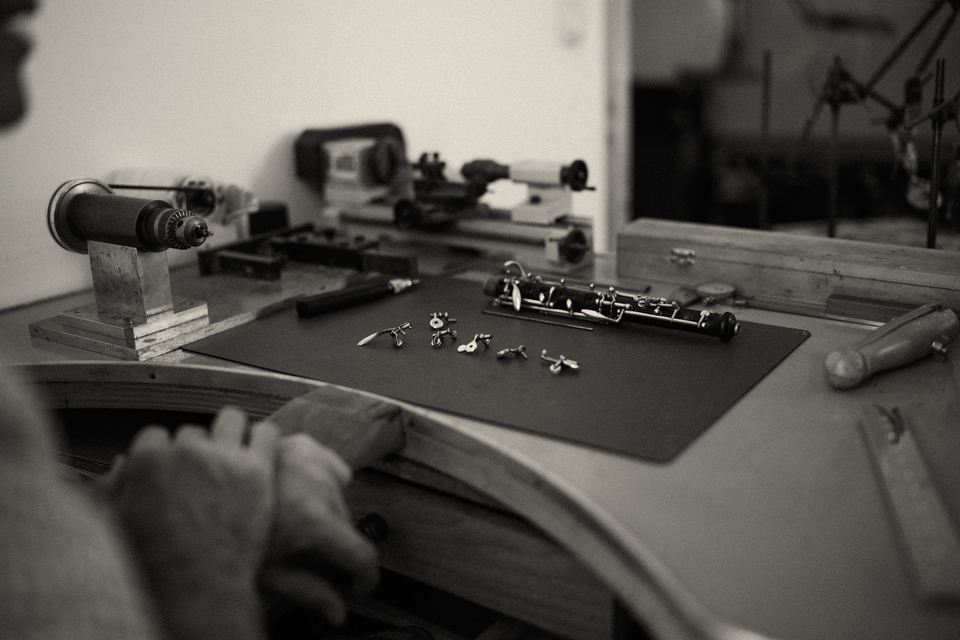
The bore is a narrow cone that widens slowly from the top of the upper joint to the bell. The tone holes are small, and a complex set of rods, springs and pads covers them. The keys are nickel silver, and many are plated with silver. The pads must close the holes without any leak, or the low notes will not sound.
The reed is two blades of cane tied onto a small metal tube called the staple. The cane comes from the giant reed. Clarinet and saxophone reeds come from the same plant. The maker splits a tube of cane, gouges the pieces thin and folds them in half. The folded cane is shaped and tied onto the staple. Then the fold is cut open so that the two blades can vibrate. Last comes the scrape. The maker removes wood with a knife until the reed vibrates freely and plays in tune.
How the oboe is played
The oboist rolls both lips slightly over the teeth and closes them around the reed. A firm, steady stream of air makes the reed vibrate. The player shapes the lips to keep the pitch in tune.
The opening of the reed is tiny, so the oboe uses little air. Oboists often have air left at the end of a phrase. They learn to breathe out the old air before they breathe in again. Some also learn circular breathing for the longest phrases.
The range of the oboe runs from the B♭ below middle C to about the G more than two octaves above it. Oboe music is written in the treble clef at the pitch you hear. Reeds change with the weather, so oboists keep several and soak them in water before playing.
What makes a fine oboe
Grenadilla for a fine oboe is dried for years before the maker turns it, because fresh wood moves and cracks. Even well-dried wood can crack when warm breath meets a cold upper joint. Oboists warm the instrument before they play for this reason. Some makers line the upper joint with a thin tube of plastic to protect it. The Baroque oboe was made of boxwood, and copies for early music still are.
Much of the tone depends on the bore. Makers cut it with reamers, which are long tapered cutting tools. A small change in its shape alters both the tuning and the color. The maker then shapes the inner edges of the tone holes by hand so that the notes sound evenly. A good maker plays a finished oboe and adjusts the holes until the scale is in tune.
The key system determines which passages the oboe can play with ease. A full conservatory system adds keys for difficult trills and for the high notes. Many advanced players choose an oboe with a third octave key, which helps the highest notes. The mechanism should feel firm and quiet under the fingers, and the pads must seal well.
The reed matters as much as the instrument. A fine oboe played with a poor reed sounds poor. Players test a reed for a free response, a stable pitch and a warm tone. A student oboe of resin, with a good reed and a careful setup, is the right first instrument.
Choosing an oboe
Most beginners start on a plastic resin oboe or on an instrument that a school lends. Some student oboes lack the low B♭ key and stop at the B above it.
Beginners usually buy reeds from a music store or a reed maker. A medium-soft reed is the common choice for a first reed. Experienced oboists often make their own reeds.
Who keeps these instruments
The Bate Collection at the University of Oxford shows how wind instruments developed from the Renaissance to the present day. Students and makers come there to study the old instruments. The Metropolitan Museum of Art in New York holds oboes from the Baroque period to the present.
The great workshops of the past shaped the oboe that oboists play today. The Denner family of Nuremberg made some of the finest early oboes. In Paris the Triébert family and the firm of François Lorée built the modern key system. The Paris Conservatoire trained generations of oboists in the French style of playing. That style spread to other countries together with the conservatory system.
First steps on the oboe
Soak the reed in a little water for a few minutes. First play on the reed alone. A good reed gives a steady crow. A crow is a buzzing sound with more than one pitch.
Put the reed into the oboe. With the left hand, the first finger plays B and the first two fingers play A. Hold the notes for four slow beats apiece with the metronome.
Check the A against the tuner. The oboe reads at concert pitch, so the tuner shows the same letter that you play.
A short check
Choose one answer per question. The explanation appears below the correct answer.
What makes the sound of an oboe?
The reed is made of two thin blades of cane that vibrate against one another. It is tied to a small metal tube called the staple.
Which note does the oboe give the orchestra for tuning?
The first oboe plays an A. Its steady pitch and penetrating sound make it easy for the whole orchestra to hear.
What does the French word hautbois mean?
Haut means high or loud, and bois means wood. The English word oboe comes from it through Italian.
Which instrument is the alto of the oboe family?
The cor anglais, or English horn, is pitched in F. It sounds a fifth lower than the oboe.
Sources
Common questions
Is the oboe hard to learn?
The narrow reed needs firm lips and steady air, and a poor reed makes even good players sound bad. With a good reed and a teacher, most beginners play a clear B and A in the first weeks.
What is the difference between an oboe and a clarinet?
The oboe has a double reed and a conical bore. The clarinet has a single reed on a mouthpiece and a mostly cylindrical bore. The B♭ clarinet also reaches lower. Its lowest note lies a minor sixth below the low B♭ of the oboe.
Why does the orchestra tune to the oboe?
Its pitch is steady, and its penetrating sound is easy to hear across the stage. The first oboe plays an A, and the other players match it.
What is the difference between an oboe and a bassoon?
Both use a double reed. The bassoon is much longer and folded, and it plays in the bass and tenor range.
What is an English horn?
It is the alto oboe, also called the cor anglais. It has a bulb-shaped bell and sounds a fifth lower than the oboe.
Is the oboe a transposing instrument?
No. Music for the oboe is written at the pitch you hear. The oboe d'amore and the cor anglais do transpose.
Who invented the oboe?
No single person invented it. Musicians of the French court made the first oboes from the shawm in the middle of the seventeenth century. Members of the Hotteterre and Philidor families are the likely inventors.
Why do oboists make their own reeds?
A reed suits one player's lips, air and instrument. Oboists scrape their reeds to fit their own playing. A reed also loses its tone with use, so players make new ones often.