The sarod
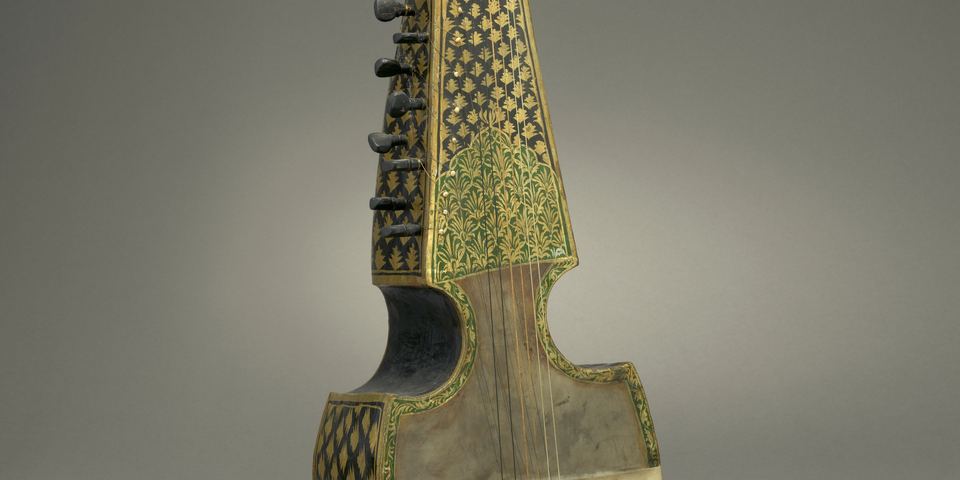
The sarod is a plucked string instrument of Hindustani classical music, which is the classical music of North India. It has no frets. The strings run over a smooth metal fingerboard, and a goatskin covers the body. Its tone is deep. Beside the sitar, it is one of the main melody instruments of Hindustani concerts.
On this early record, Sakhawat Hussain Khan plays Raag Pahadi on the sarod. Listen for the slides along the steel fingerboard. These slides are called meend.
The sound of the sarod
The recording is a short phrase on a sarod. Listen for the slides between its notes.
On a sarod the player can slide smoothly from one note to the next, because there are no frets. This slide is called meend.
Names of the sarod
The word sarod may come from the Persian sorud, which means song or melody. Another idea links it to shahrud, a Persian word that joins the words for king and string. The instrument was once also called the sardiya veena.
A sarod player is called a sarodiya.
Where the sarod is played
The sarod belongs to North India and the Hindustani tradition. It probably grew from the Afghan rubab, which Pashtun communities brought to North India. Scholars also connect it to older Indian instruments. Its present form took shape in cities such as Lucknow, Gwalior and Rewa in the middle of the nineteenth century.
The role of the sarod in music
In a concert the sarod plays the melody of a raga, which is a framework of notes and characteristic phrases. A tabla player keeps the rhythm beside it.
The tone of the sarod is heavier than the bright tone of the sitar. Its sympathetic strings ring by themselves when the played strings sound. They give it a ringing tone.
Music for the sarod
Sarod players learn in gharanas, which are lineages of teachers and students. The design of the instrument also differs from one gharana to another. Rival claims come from two lineages, and both say that one of their own ancestors turned the rubab into the sarod.
How the sarod is made
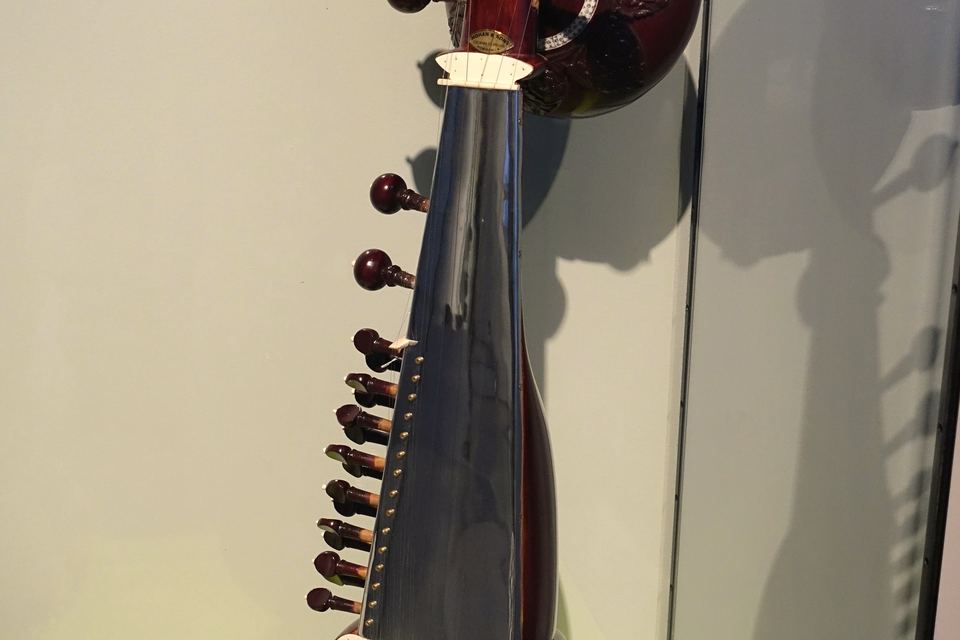
The body and neck are usually made of teak. A goatskin is stretched over the round body, and a steel plate covers the fingerboard. Strings of steel or phosphor bronze run over the plate.
A common sarod has seventeen to twenty-five strings. The melody is played on four or five strings. A drone comes from one or two strings, and two chikari strings are tuned to a high Sa. The rest are the sympathetic strings.
How the sarod is played
The player plucks with a triangular plectrum called a java. It is made of coconut shell, ebony, horn, bone or plastic. The left hand presses the strings against the metal plate with the ends of the fingernails. Some players use the nail and the fingertip together.
The strings are tight, and there are no frets, so the left hand must press hard. The player slides along the plate to make meend.
How the sarod has changed
In the twentieth century, players added more drone strings and more sympathetic strings. A larger design has twenty-five strings. Of these, fifteen are sympathetic strings. Its four main strings are tuned to Ma, Sa, low Pa and low Sa, which gives a range of three octaves.
Sa is the tonic, the first note of the scale. Ma and Pa are the fourth and the fifth notes above it.
Choosing a sarod
Sarods differ by gharana, so ask a teacher which design you will learn on. The traditional sarod is usually tuned with Sa on B. The larger design is usually tuned with Sa on C.
The fingerboard plate is chrome-plated or nickel-plated steel. Some players prefer polished stainless steel, which is easier to look after.
First steps on the sarod
A new student learns to hold the java and to pluck the main string with slow, even strokes. Play while the tanpura sounds the drone. Next, play the notes of sargam, the Indian names of the notes, and sing the notes as you play them.
Press the notes firmly with the fingernail, and listen for a clear pitch. Practice a short meend between two neighboring notes. Tunings differ between gharanas, so a teacher sets the first tuning.
A short check
Choose one answer per question.
Why can the sarod make a smooth meend?
Meend is a smooth slide between notes. With no frets in the way, the finger can slide along the metal plate.
What is the java?
The java is a triangular plectrum. It is made of coconut shell, ebony, horn, bone or plastic.
How does the sarod sound beside the sitar?
The tone of the sarod is heavy and deep. The sitar has a brighter tone that is rich in overtones.
Sources
Common questions
What is the difference between the sarod and the sitar?
The sitar has curved frets and a gourd body. The sarod has no frets, a metal fingerboard and a skin over its body, and its tone is deeper.
How many strings does a sarod have?
A sarod has seventeen to twenty-five strings. Only four or five of them carry the melody.
Where does the sarod come from?
It developed in North India, probably from the Afghan rubab. Its modern form dates from the nineteenth century.
What is the sarod made of?
The body is usually teak, and a goatskin covers it. The fingerboard is a steel plate, and the strings are steel or bronze.
Is the sarod hard to play?
A beginner first learns to stop the tight steel strings with the fingernail on the steel plate. A clear note in this way takes steady practice. With no frets, the nail must also land exactly on the pitch.
What are chikari strings?
Chikari strings are high strings tuned to Sa. They sound between the notes of the melody.
World MusicRagasSitarTablaIndian music