The sarangi
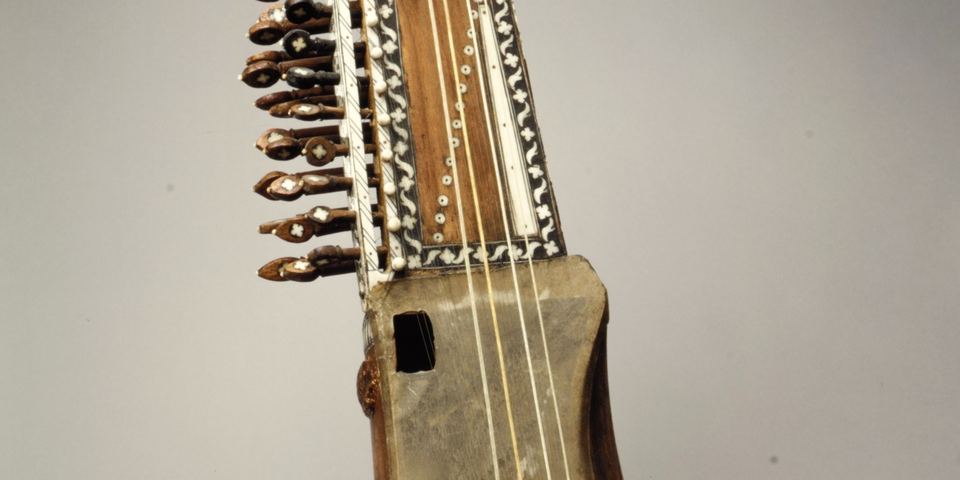
The sarangi is a short-necked bowed instrument of Hindustani music. Hindustani music is the classical tradition of North India. A single block of wood forms its body. The player bows three thick gut strings, and up to about thirty-seven thin metal strings ring beneath them. Its tone can follow the shakes and slides of a singer’s voice.
The sound of the sarangi
The recording is a phrase played on a sarangi. Listen for the long glides between its notes.
A smooth glide from one note to another is called meend. Singers use it constantly, and the sarangi can match it closely.
Names of the sarangi
A popular explanation links the word sarangi to sau rang, which means a hundred colors. It refers to the many shades of its tone. Scholars do not all accept this origin.
Where the sarangi is played
The sarangi belongs to the classical music of North India and Pakistan. Folk forms of it are played across South Asia. In Rajasthan, folk musicians of the Langa community play a sarangi of their own.
The role of the sarangi in music
The sarangi has mainly accompanied vocal music. It follows the singer phrase by phrase in khyal and thumri. These are two of the main forms of Hindustani song. Most sarangi players know the words of many classical compositions.
A sarangi player keeps those words in mind during a performance. The playing follows the shape, the ornaments and the tempo of a vocal performance.
Music for the sarangi
A solo sarangi concert presents a raga in full. A raga is a set of notes with its own phrases and mood. The concert opens with alap. Alap is a slow section with no beat. It moves on to jor and jhala, which grow in pulse and speed.
Compositions called bandish follow. A bandish is set to a tala, which is the cycle of beats that the tabla keeps.
How the sarangi is made
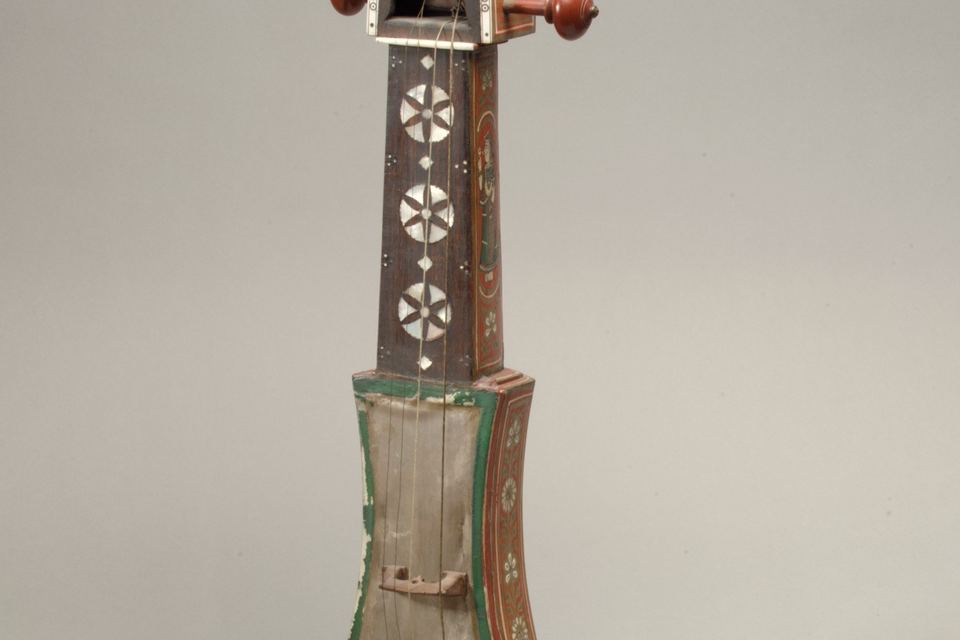
The body is carved from a single block of tun. Tun is a red cedar. It has three hollow chambers called pet, chaati and magaj. The names mean stomach, chest and brain. A sarangi is usually about sixty centimeters long.
Goatskin covers the lower chamber. A strip of thick leather crosses the skin, and the bridge stands on it. The bridge is usually camel or buffalo bone.
The three main strings are gut. Up to about thirty-seven sympathetic strings of steel or brass lie beside and beneath them. A sympathetic string is never bowed. It rings when a main string sounds its pitch.
How the sarangi is played
The player sits and holds the sarangi upright. Its lower end rests in the lap. A heavy bow strung with horsehair crosses the main strings.
The left hand does not press the strings onto the neck. The fingers touch them from the side with the nails, the cuticles and the skin around them. Talcum powder helps the fingers slide, so the player can glide between notes.
How the sarangi has changed
In the twentieth century the harmonium and the violin began to replace the sarangi beside singers, because they are easier to handle. Fewer young players took up the sarangi.
The bridge was once ivory or the bone of the swamp deer. Both are now restricted, and makers use camel or buffalo bone. The sarangi remains in use in classical concerts, both beside singers and as a solo instrument.
Choosing a sarangi
Sarangis are made in several sizes. A smaller sarangi is steadier in the hands, which helps a beginner.
Tuning the many sympathetic strings to the notes of a raga is a skill in itself. Ask your teacher to check the instrument and to set its first tuning.
First steps on the sarangi
The notes of Indian music are called swaras, and Sa is the first of them. Start the tanpura, and choose a Sa that you can sing without strain. Rest the sarangi upright in your lap. Draw the bow slowly across one main string until the tone is steady.
Next, touch the string from the side with the nail of the first finger, and find Sa, Re and Ga. Sing a swara before you play it. Then practice a slow meend from one swara to the next.
A short check
Choose one answer per question. The explanation appears below the correct answer.
How does a sarangi player stop the strings?
The player uses the nails and the skin around them. Nothing presses the strings onto the neck.
What is a sympathetic string?
Sympathetic strings are never bowed. They ring by themselves when their pitch sounds on a main string.
Which music has the sarangi mostly accompanied?
The sarangi has accompanied singers for most of its history. Its players follow the voice phrase by phrase.
Sources
Common questions
How many strings does a sarangi have?
It has three main strings and up to about thirty-seven sympathetic strings. The bow plays only the main strings.
Why is the sarangi compared with the human voice?
It can slide and shake between notes as a singer does. Its players also shape their phrases on the vocal compositions they know.
What is the sarangi made of?
The body is one block of red cedar called tun. Goatskin covers the lower chamber. The main strings are gut, and the others are steel or brass.
What is the difference between the sarangi and the sarod?
The sarangi is bowed, and the nails stop its strings from the side. The sarod is plucked with a plectrum, and its strings are pressed onto a metal fingerboard.
Why did the harmonium replace the sarangi for many singers?
The harmonium is easier to handle. It cannot glide between notes as the sarangi can.
What are the three chambers of the sarangi?
They are the pet, the chaati and the magaj. The names mean stomach, chest and brain. The lowest chamber is covered with skin.
World MusicRagasSarodTablaIndian music