String instruments of East Asia
East Asia has many plucked and bowed string instruments. The erhu of China is a fiddle with two strings. The pipa is a Chinese lute, and the guzheng is a Chinese zither with movable bridges. Japan has the koto, which descends from the Chinese zheng. The shamisen of Japan is a three-string lute played with a large plectrum.
The erhu
The erhu is the best-known Chinese fiddle. Its two strings run over a small soundbox covered with python skin, and the hair of the bow passes between them.
The pipa
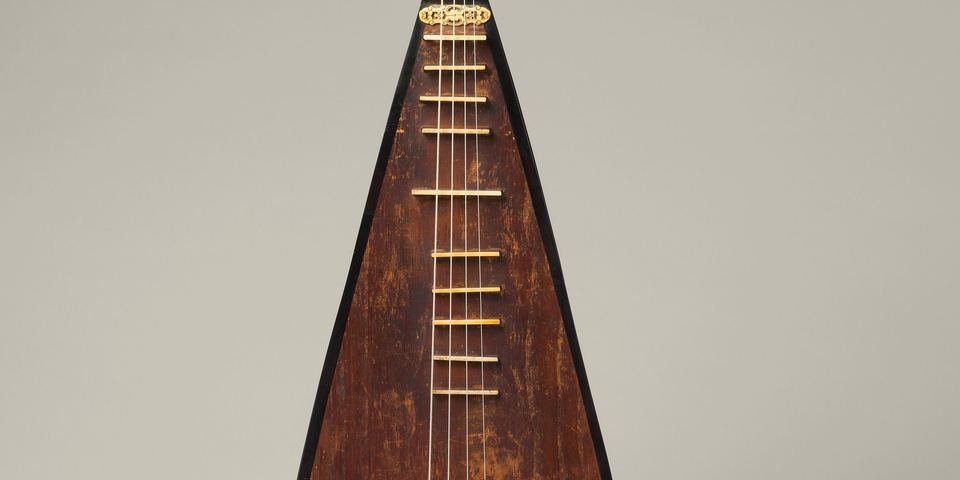
The pipa is a Chinese lute with four strings and a pear-shaped wooden body. Raised frets run down its neck and onto the top of the body. Modern players pluck the strings with the fingernails of the right hand.
The pipa has been played in China for almost two thousand years. The biwa of Japan descends from it.
The guzheng
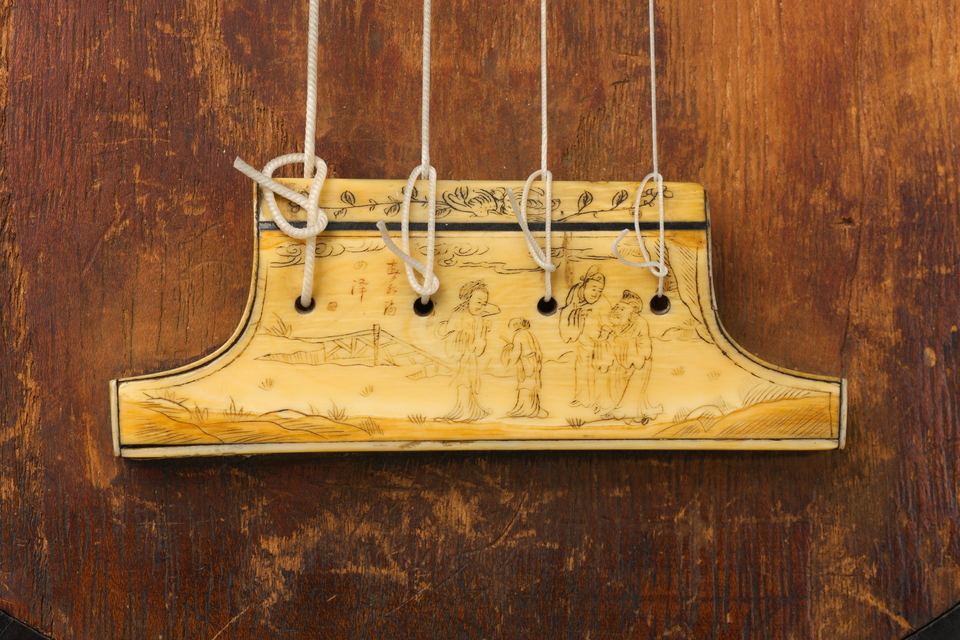
The guzheng is a Chinese zither. Its strings rest on movable bridges of their own, and the strings are tuned to a pentatonic scale of five notes.
The koto
The koto is a Japanese zither that descends from the Chinese zheng. Most kotos have thirteen strings over movable bridges called ji. The player plucks with picks called tsume on the thumb and first two fingers of the right hand.
The shamisen
The shamisen is a Japanese lute with three strings. Its long neck has no frets. Its square body is covered with skin, and the player strikes the strings with a large plectrum called a bachi. Traditional skins came from animals, and synthetic skins are now common.
The nut is the small bar where the strings leave the pegbox. The lowest string lies lower at the nut than the others. This gives a buzzing sound called sawari. The shamisen descends from the sanshin of Okinawa, which grew from the Chinese sanxian.
The shamisen accompanies kabuki theater and bunraku puppet theater. It also belongs to folk song and to the songs of the geisha. Its necks come in thin, medium and thick sizes. The thin hosozao suits nagauta, which are the long songs of kabuki theater. The thick futozao is used for the fast folk style called Tsugaru shamisen.
Common questions
What is a shamisen?
The shamisen is a Japanese lute with three strings and a long neck without frets. Its square body is covered with skin, and the player strikes the strings with a large plectrum called a bachi.
What is the difference between the sanshin and the shamisen?
The sanshin is the three-string lute of Okinawa. The shamisen of Japan descends from it.
What is the difference between the sanxian and the shamisen?
The sanxian is the Chinese three-string lute. It reached Okinawa through the Ryukyu Kingdom and became the sanshin, the ancestor of the shamisen.
What is Tsugaru shamisen?
Tsugaru shamisen is a fast, virtuoso style of shamisen playing. It grew from folk music and uses the thick-necked futozao shamisen.
What is a shamisen pick called?
The shamisen pick is called a bachi. The player strikes the strings with it.
Which East Asian instruments descend from the Chinese zheng?
The Japanese koto, the Korean gayageum, the Mongolian yatga and the Vietnamese đàn tranh all descend from the zheng.
Sources
World MusicErhuGuzhengKalimbaMusic of Japan