The erhu: the two-string fiddle of China
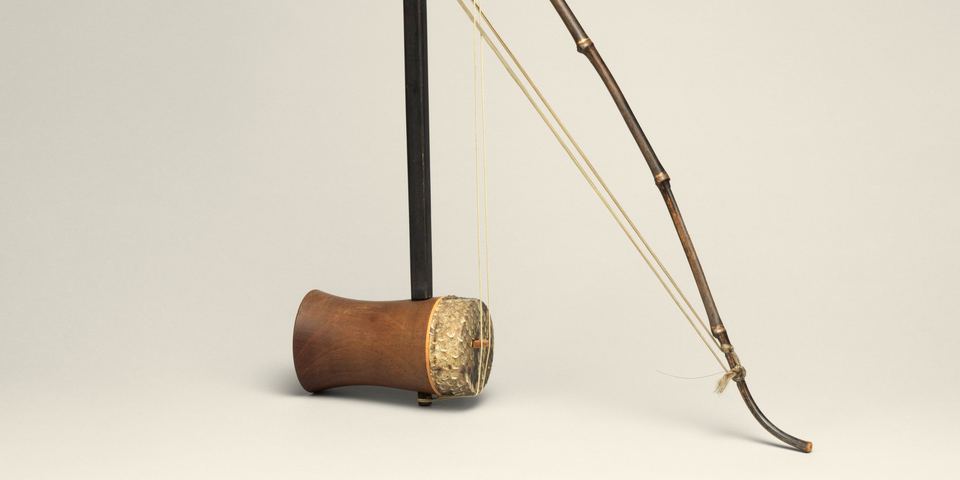
The erhu is a Chinese bowed instrument with two strings. Its small soundbox is covered with python skin, and its long neck has no fingerboard. The hair of the bow passes between the two strings. The erhu is the most popular member of the huqin family of Chinese fiddles. It is sometimes called the Chinese violin.
An erhu plays the melody of this piece. The erhu has no fingerboard, so the left hand can slide along a string between notes. Listen for these slides.
Music: Envato (PremiumBeat)
The sound of the erhu
The first two recordings come from one session of free playing on the erhu. The last is a single held note.
Names of the erhu
The first syllable, er, means two. It probably refers to the two strings. Hu marks the erhu as a huqin, a family of Chinese fiddles. In the West the erhu is sometimes called the Chinese violin or the Chinese two-stringed fiddle.
Where the erhu is played
The erhu was long a folk instrument of southern China. In the twentieth century it was brought to Beijing, where it became the most popular huqin.
The role of the erhu in music
The erhu plays melody. It is heard as a solo instrument and in ensembles. It has no frets or fingerboard, so the left hand can slide between notes, add vibrato and move up the neck.
Music for the erhu
The erhu plays in jiangnan sizhu, which is the silk and bamboo music of the region around Shanghai. It also plays in Chinese opera and in Chinese orchestras.
The erhu also became a solo instrument with exercises and concert pieces of its own. It is now heard in popular music, jazz and film music as well.
How the erhu is made
The soundbox may be hexagonal, octagonal or round. It is made of dense hardwood and covered with python skin, which gives the erhu its sound.
A pair of pegs holds the strings at the top of the neck. A loop of string called the qianjin ties the strings to the neck. It works as the nut, which marks the top of the sounding length of the strings. The strings are tuned a fifth apart, to the D and the A above middle C. The range is about two and a half octaves. Steel strings have replaced the silk strings of the past.
How the erhu is played
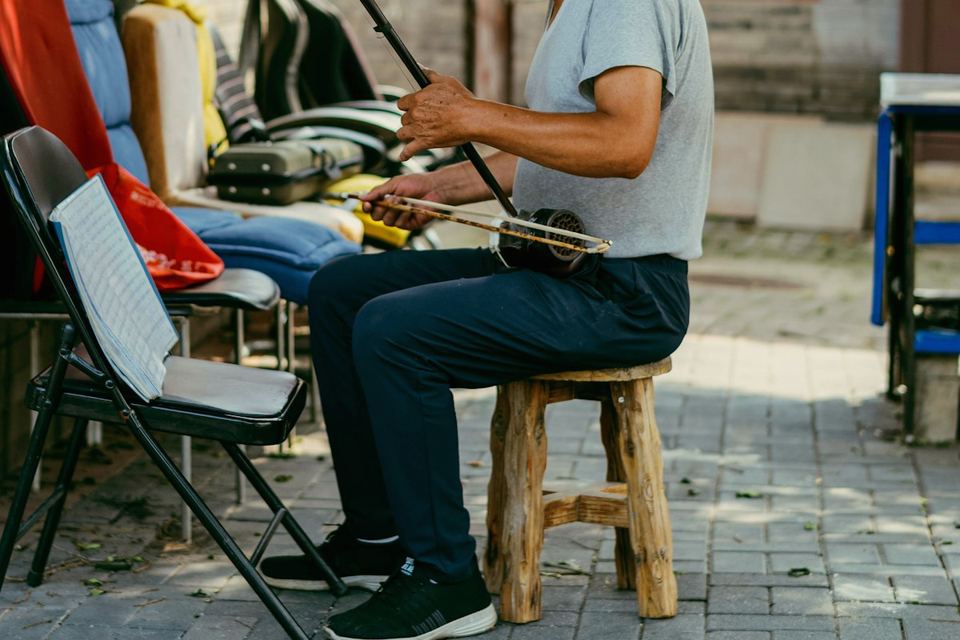
The player sits with the soundbox on the left thigh and the neck upright. The bow is held from below, and both sides of its hair are used. The fingertips press the strings without touching a fingerboard. The strings can also be plucked.
How the erhu has changed
In the twentieth century the erhu moved from folk music to the concert hall, and steel strings replaced silk. An orchestra in Hong Kong developed an erhu with a skin of polyester.
Choosing an erhu
Ask the seller for the certificate that allows the python skin to be traded, or choose an erhu with a synthetic skin. CITES, the treaty on trade in endangered species, sets the rules for python skin. Check that the neck is straight, that the pegs hold their tuning and that the qianjin is firmly in place.
Sources
Common questions
What does erhu mean?
Er means two, and it probably refers to the two strings. Hu marks the erhu as one of the huqin, the Chinese fiddles.
How is the erhu tuned?
The two strings are tuned a fifth apart. The inner string sounds the D above middle C, and the outer string sounds the A above it.
What is the difference between the gaohu and the erhu?
The gaohu is a higher member of the huqin family. By one explanation, the name erhu means the second huqin. It is the next in pitch below the gaohu.
Why does the bow pass between the strings?
The hair of the erhu bow runs between the two strings. The player uses one side of the hair for one string and the other side for the other string. The bow therefore always stays on the instrument.
What is the erhu made of?
The neck and soundbox are dense hardwood. The soundbox is covered with python skin, and the two strings are steel.
What music is played on the erhu?
The erhu plays folk music, jiangnan sizhu, Chinese opera and music for Chinese orchestras. It also has a solo repertoire of its own.
World MusicGuzhengString instruments of East AsiaTuner