Metronome
Set a slow tempo, and let one click be one beat. Clap the bell pattern over four clicks.
Highlife is a popular dance music of Ghana and Nigeria. It grew up in the coastal towns of Ghana and joins West African rhythm with Western instruments. Guitars and horns lead the band. A bell keeps a pattern that Cuban musicians call the clave. Highlife later spread across West Africa.
This dance piece is Afrobeat, which grew from highlife, jazz and funk in Nigeria. Tap the beat, and listen for the short patterns that repeat above it.
Music: Envato
Highlife joins the rhythm of West African drumming with the guitars, horns and harmony of Western bands. A lead singer carries the song, and a chorus answers in call and response. Singers use many languages of Ghana. They also sing in English and in Pidgin. Pidgin is a language of the West African coast that draws most of its words from English.
The songs stay close to daily life. They speak of relationships, health, education and the troubles of society. The guitar, the bass and the bell repeat short patterns of their own, and the patterns fit together under the voice. Highlife is performed at weddings, funerals and festivals. It is also heard at the ceremonies that welcome a newborn child.
Highlife has two main roots on the coast. Palm-wine music was played in the bars of the ports, where sailors and dock workers drank palm wine. Its players took up the guitar and other portable instruments from traders and sailors. They played these instruments alongside local strings and drums. Kru sailors from Liberia spread their style of guitar playing along the coast.
Local musicians also served in the military brass bands of the colonial forts. There they learned marching music. In their spare time they mixed it with local rhythms. This mix produced the dance style called adaha. Konkoma was a cheaper form of it, which groups played on local instruments.
Inland, the guitar met the music of the seperewa. The seperewa is a harp-lute of the Akan people. The result was a slower guitar song that people called odonson, or the Akan blues.
Early dance orchestras played local songs in exclusive clubs on the coast. Among them were the Jazz Kings, the Cape Coast Sugar Babies and the Accra Orchestra. Guests paid a high entry fee and came in evening dress. People outside called the music highlife, after the high life of the couples inside.
Guitar bands grew at the same time. A trio from Kumasi made some of the first highlife guitar records in London. Guitar bands were small, and at first they played mostly in the countryside. A singer, guitars, drums and claves made up the group. E. K. Nyame and his Akan Trio released more than four hundred records.
After the Second World War, smaller professional dance bands took the place of the large orchestras. The best known was E. T. Mensah and the Tempos. Trumpets and saxophones led its sound. Mensah played with Louis Armstrong in Accra, and listeners called him the King of Highlife.
A bell pattern is a short rhythm that repeats through a dance piece. It holds the other parts together. The pattern of highlife is the one that Cuban musicians call the clave. It is an old pattern in Ghana.
The pattern has five strokes in two halves. Its first half holds three strokes, and its second half holds two. Players call this order three-two. Most highlife moves in four beats. The guitar bands of the inland towns also used rhythms in twelve-eight time, which move in groups of three.
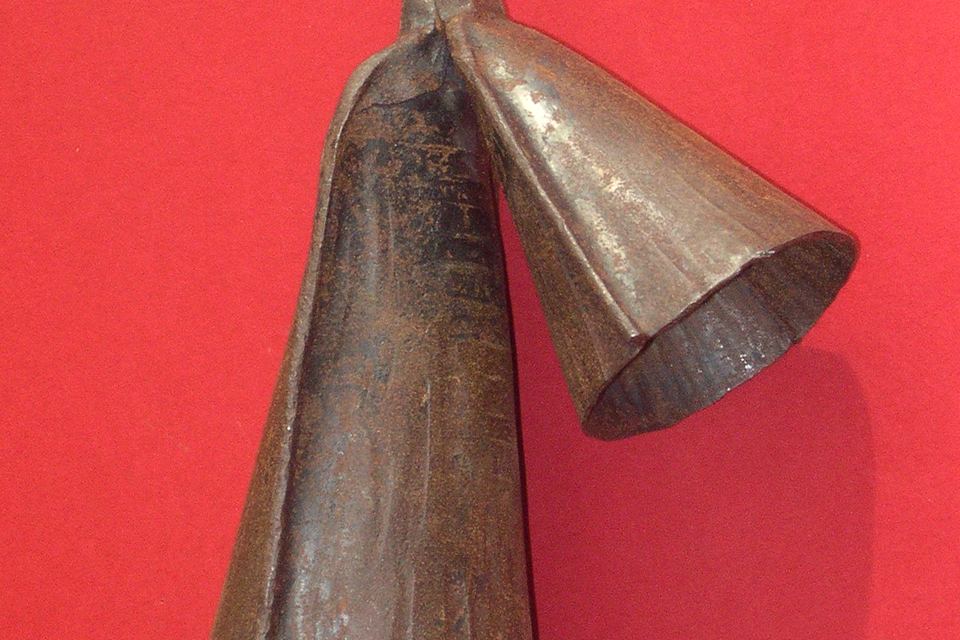
The rhythm player below plays the pattern on a recorded agogo bell and two congas. The drawing of one highlife bar shows the same pattern. The bell plays the clave. A high conga plays between the beats, and a low conga plays on beats one and three. This is a simple practice pattern. Highlife drummers vary their parts as a song goes on.
Highlife bell with two congas
112 beats per minute
Highlife guitarists pluck with the thumb and one finger. The thumb plays a low note on the beat. The finger plays a higher note between the beats. Guitarists learned this style from Kru sailors of Liberia, and in Ghana it was called the dagomba style.
The two-finger style also recalls the local harp-lutes. Players of the seperewa pluck its strings with the thumbs, and the early guitarists played the guitar in a similar way.
The guitar part often breaks the chords into single notes. Its pattern of notes is close to the guajeo, which is a repeating figure in Cuban music played on the tres or the piano. The figure below plays the chords C, F, G and C on a recorded guitar.
Dance bands and guitar bands share the guitar, the bass and the drums. The dance band adds a horn section. The guitar band is smaller, and its singers and guitars carry the music. UNESCO also counts the xylophone among the instruments of highlife.
| Instrument | Part in the band |
|---|---|
| Guitar | Repeating figures played with the thumb and one finger |
| Bass | A low line that repeats under the guitars |
| Trumpet and saxophone | The tunes and short riffs of a dance band |
| Bell | The clave pattern that holds the rhythm together |
| Claves | The same pattern in a guitar band |
| Congas and drums | The dance rhythm under the bell |
| Xylophone | A melody part in some bands |
Highlife has words of its own from English and from the languages of Ghana. The table explains the ones that appear on this page and in books about the music.
| Word | Meaning |
|---|---|
| Highlife | The name that people outside the clubs gave the music |
| Palm-wine music | The guitar music of the port bars. In Sierra Leone it is called maringa. |
| Adaha | A dance style that mixed brass band marches with local rhythms |
| Konkoma | A form of adaha played on cheaper local instruments |
| Osibisaba | A Fante rhythm that early dance bands joined with foreign dances |
| Odonson | A slow guitar song of the Akan people. It is also called the Akan blues. |
| Seperewa | The harp-lute of the Akan people |
| Dagomba style | The two-finger guitar style that came from Kru sailors |
| Burger highlife | Highlife made by Ghanaians in Germany with electronic instruments |
| Hiplife | A later style of Ghana that joins highlife with hip hop |
UNESCO lists three main styles in Ghana. Dance band highlife began in the cities, while guitar band highlife began in the towns and villages. Burger highlife took shape among Ghanaians in Germany. Its name probably comes from the city of Hamburg. A fourth form, gospel highlife, carries the style into the churches of Ghana and of its communities abroad.
In Nigeria, Igbo musicians built a highlife of their own. They sang in Igbo and Pidgin English and added local drums. For a time it was the most popular music of the country. The bandleader Rex Lawson was among its pioneers.
| Form | Where it grew | Character |
|---|---|---|
| Dance band highlife | The cities of Ghana | Horns, guitars and drums for dancing in clubs |
| Guitar band highlife | The towns and villages of Ghana | A singer with guitars, drums and claves |
| Burger highlife | Ghanaian communities in Germany | Highlife with funk, disco and electronic instruments |
| Gospel highlife | Churches in Ghana and abroad | Christian songs in the highlife style |
| Igbo highlife | Eastern Nigeria | Guitar-led songs in Igbo and Pidgin English |
Ghanaian workers carried highlife to Nigeria, Sierra Leone, Liberia and the Gambia. Later styles grew out of it. In Nigeria, Fela Kuti mixed highlife with jazz and funk, and the result was Afrobeat. In Ghana, hiplife brought hip hop into highlife.
UNESCO added the highlife music and dance of Ghana to its list of intangible cultural heritage. The listing notes that the music passes on through apprenticeship in bands and within families. Universities now teach it as well. Band leaders train the new members and organize the shows.
Begin by finding the beat. Count to four with the piece and tap your foot. Next, listen for a part that repeats in a short cycle. In highlife the bell, the guitar and the bass all repeat such cycles. The singer or the lead instrument moves freely above them.
Then start the rhythm player at a slow tempo and clap the bell pattern on its own. Clap it again while the piece plays, and notice where the strokes fall between the beats. Last, listen to the whole group and follow how the short patterns add up to one dance rhythm.
Music: Envato
Count four even beats aloud, and split all the beats into four. Clap on the first sixteenth note, the fourth and the seventh. Then clap on the eleventh and the thirteenth. Keep one count of sixteenths running through the whole bar.
Clap along with the bell in the player. Once your claps stay with it, tap the beat with your foot as well. Then try the guitar figure. Pluck the low note with the thumb on the beat and the high note with one finger between the beats.
Set a slow tempo, and let one click be one beat. Clap the bell pattern over four clicks.
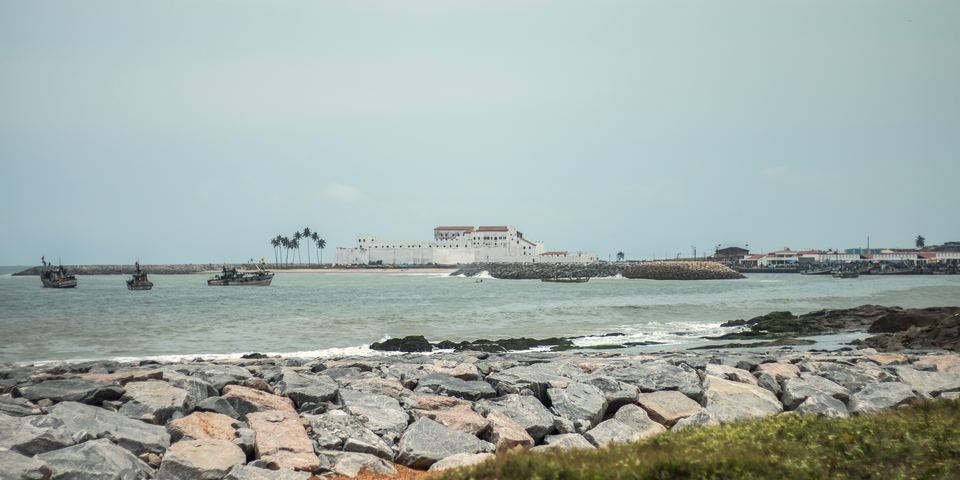
The coast of Ghana is where highlife began. Accra, Cape Coast and Sekondi had the first dance orchestras and their clubs. Elmina Castle is one of the old trading forts that still stand along this coast. The brass bands of these forts were one root of the music.
Today highlife is heard across Ghana at family and public celebrations. Gospel highlife is sung in many churches. In eastern Nigeria, Igbo highlife is still popular. Ghanaian communities in Germany and other countries keep their own highlife bands.
Choose one answer per question. The explanation appears below the correct answer.
Where did highlife begin?
Highlife grew up in the coastal towns of Ghana. It later spread to Nigeria, Sierra Leone and other countries of West Africa.
Which bell pattern does highlife share with Cuban music?
The pattern known in Cuba as the clave is also an old bell pattern of Ghana. Highlife bands use it.
How do highlife guitarists pluck the strings?
The thumb plays the low notes, and one finger plays the notes between them.
Where did the name highlife come from?
People outside the clubs called the music highlife. They meant the high life of the guests in evening dress inside.
It is a popular dance music of West Africa. It began in Ghana and became a leading music of Nigeria as well.
It began in Ghana. Igbo musicians in Nigeria later built a strong tradition of their own.
Guitars, horns, bass and drums are the core. Guitar bands add claves and a bell, and dance bands add saxophones and trumpets.
It is the guitar music of the bars of the West African ports. It is one of the roots of highlife.
Afrobeat grew later out of highlife, jazz and funk. Its songs are longer, and its grooves repeat for many minutes.
Most highlife moves in four beats. A bell or the claves keep the clave pattern above the drums.
Listeners gave the name to E. T. Mensah. He led a Ghanaian dance band called the Tempos.
Yes. UNESCO lists the highlife music and dance of Ghana as intangible cultural heritage.