Ta ti-ti rhythm (free)
Ta is one sound on a beat. Ti-ti is two quick sounds on one beat. You read them in pictures and clap them.
Level 2 is for children aged six to eight. Its Western path works toward the Initial grade of the ABRSM and Trinity exams. The Initial grade is the step before Grade 1. A child claps rhythms and sings so, mi and la. The child also plays a first tune on the keyboard or the recorder. In the last lesson, the child reads notes on the staff.
Ta is one sound on a beat. Ti-ti is two quick sounds on one beat. You read them in pictures and clap them.
So, mi and la are singing names for three notes. Mi is the lowest of the three, and la is the highest. Here you see them as dots and sing them.
A rest is a beat with no sound. The beat goes on while you stay silent. In stick notation, a rest is a zigzag sign.
A tune can move to the next note up or down. That move is a step. A tune can also jump over a note. That move is a skip.
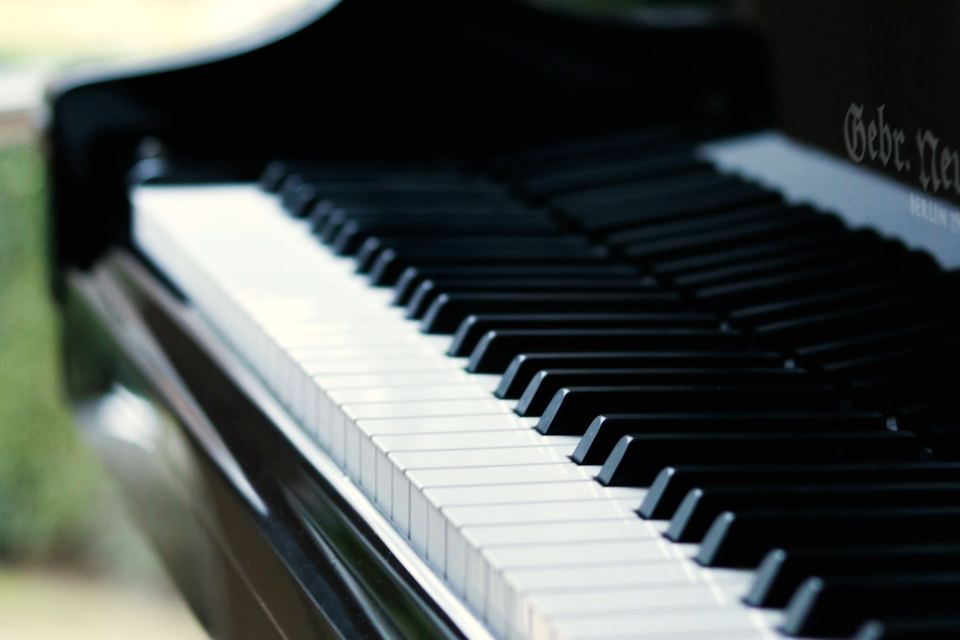
Middle C is a white key near the middle of the piano. A group of two black keys shows where it is. You may also choose the recorder and learn its first notes.
The last line of Mary Had a Little Lamb uses only three notes. On the keyboard, they are E, D and C. On the recorder, they are B, A and G.
A march moves in twos, as your feet do when you walk. A waltz moves in threes, so you count one, two, three.
A rhythm can sound like a question. A second rhythm can answer it. An answer that stops before the last beat often sounds finished.
In a round, two groups sing the same tune. The second group starts later, and the two parts fit together.
Musicians write notes on a staff of five lines. A note sits on a line or in a space. A note higher on the staff sounds higher.
By the end of the Western path, a child will be able to:
The same melody is played three ways. The first version is a Western chorale. The second version is Hindustani. It opens with an alap, which is a slow section with no regular beat. A section in teentaal follows. Teentaal is a rhythm cycle of sixteen beats. A tanpura drone sounds under the whole Hindustani version. The third version is a jazz bossa nova.
The Level 2 lessons follow Western music. A child of this age can also hear Hindustani music and jazz on free pages of the site.
A Hindustani singer tunes to Sa, the note the online tanpura sounds. The tala player plays two rhythm cycles of the tabla for clapping along. They are called keherwa and dadra. The sargam page plays Sa, Re and Ga, which match do, re and mi. The Listening Room has recordings of early jazz bands.
The skill map lists the skills of the Western path and the lessons that teach them. It also shows the skills the child has completed in the lessons.
A grown-up reads the questions of the test aloud. The site marks the answers. It also measures the clapping, the singing and the playing.
Level 3 follows Level 2. It begins with the notes of the treble staff, which the last lesson of Level 2 introduces.