Metronome
Set a slow tempo with three beats in a bar. Count one, two, three with the clicks, and tap on all three.
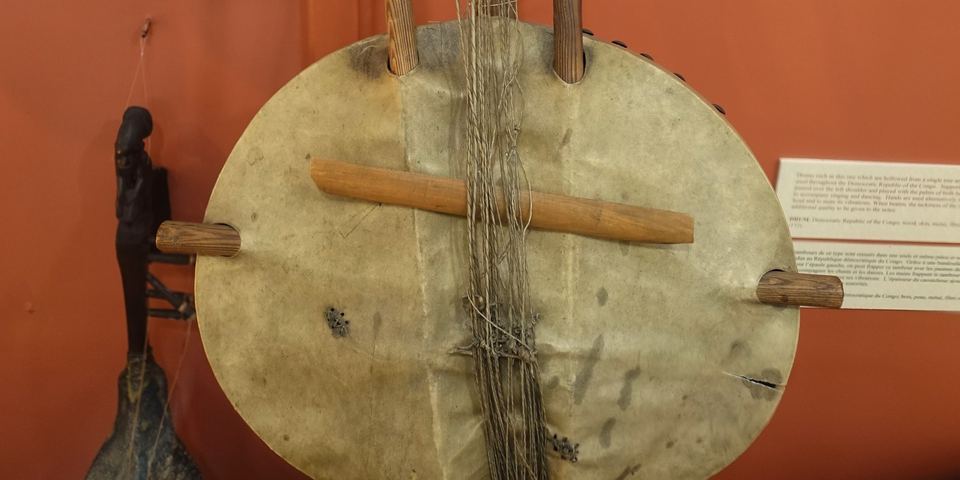
The music of Mali shares deep roots with the music of Guinea. Both grow from the Mande world of the old Mali Empire. Hereditary musicians called jelis sing its histories and praise songs. They play the kora, which is a harp of twenty-one strings. They also play the ngoni lute and the balafon. Drummers play the djembe.
The kora plays this piece. Listen for the short pattern that repeats through it. Kora players call this pattern the kumbengo. In a song, the jeli sings over it.
Music: Envato (MyMusicID)
The Mali Empire grew up in the thirteenth century along the upper Niger River. Its peoples speak Mande languages. Among them are the Maninka, the Bamana and the Mandinka. Today they live in Mali, Guinea, Senegal, the Gambia, Côte d’Ivoire and Burkina Faso.
The Tuareg live in the north of Mali, and the Songhai live along the Niger in the east. The Fula live in many parts of the country. These peoples have their own music.
A jeli is a hereditary musician and speaker. In French the word is griot. Jelis are born into their families, and only these families may follow the calling.
Jelis keep the genealogies of noble families and recite the deeds of their ancestors. They sing praise songs at weddings and at the ceremonies for a newborn child. They also settle disputes between families.
A song of the jeli has a fixed refrain. The refrain is called the donkili. Between the refrains the singer improvises praise and proverbs.
Sunjata Keita founded the Mali Empire. Jelis still tell his story as a long epic in speech and song. In the story his jeli, Bala Fasseke Kouyaté, plays the sacred balafon of a rival king.
That balafon is said to be the Sosso Bala. It is kept by a family of jelis in the village of Niagassola in Guinea. UNESCO lists the cultural space of the Sosso Bala as intangible cultural heritage of humanity.
The kora is a harp-lute. A large half calabash, covered with cowhide, forms its body. A hardwood neck passes through the calabash, and two handles stand on either side of the bridge.
Most koras have twenty-one strings. The left row has eleven strings, and the right row has ten. The player holds the handles and plucks with the thumbs and the index fingers.
Kumbengo is the repeated pattern that accompanies the song. Birimintingo is the run of fast notes that the player adds between the sung lines.
The ngoni is a lute with a wooden body shaped like a boat. A skin covers the body, and the strings are tied to a round neck. The jeli ngoni has four to seven strings.
Hunters play their own harp. It is called the donso ngoni. The kamalengoni is a younger harp of the Wassoulou region. Most of its singers are women.
The balafon is a xylophone with gourds under its wooden bars. Thin membranes over the gourds add a buzz to the tone. In Guinea and Mali, players often join in groups of three instruments.
The pattern player below sounds a short repeated pattern on four bars, or keys, of a balafon. Balafon players repeat patterns of this kind under a song. The button under the player sounds a single bar of a gourd xylophone and its buzz.
Repeated pattern on four balafon bars
84 beats per minute
The djembe is a goblet-shaped drum played with the bare hands. It belongs to the Maninka and their neighbors. A djembe group has a soloist and one or more players who repeat steady patterns. The dunun drums join them. The dunun are cylinder drums played with sticks, and the player also strikes an iron bell.
After independence, Mali and Guinea supported national orchestras and dance bands. These bands played Mande songs on electric guitars and horns. Guitarists copied the lines of the balafon and the kora.
Wassoulou music comes from the region south of Bamako. Women sing it to the kamalengoni and a one-string fiddle. In the north, Tuareg bands play desert blues on electric guitars.
Listen first for the repeated pattern beneath a song. Tap the beat, and notice how the pattern returns.
Next, play the balafon pattern above at a slow tempo. Sing the four bar names with it: low F, high F, high C and middle C. Then try to hum the pattern with the player switched off.
Set a slow tempo with three beats in a bar. Count one, two, three with the clicks, and tap on all three.
Choose one answer per question. The explanation appears below the correct answer.
What is a jeli?
A jeli is born into a family of musicians. Jelis sing the histories and praise songs of the Mande.
How many strings does a kora usually have?
Most koras have twenty-one strings in two rows on either side of the bridge.
What are kumbengo and birimintingo?
Kumbengo is the repeated accompaniment. Birimintingo is the run of fast notes between the sung lines.
It is above all the music of the Mande jelis. The kora, the ngoni and the balafon accompany their songs, and the djembe leads the dances.
Griot is the French word for a jeli. A griot is a hereditary singer, storyteller and keeper of family histories.
It comes from the Mande peoples of West Africa. It is played most in Mali, Guinea, Senegal and the Gambia.
They share the Mande traditions of the jeli, the balafon and the djembe. Both countries also have their own peoples and styles.
It is a music of the Wassoulou region. Women sing it to the kamalengoni harp, and it grew from the songs of hunters.
It is the electric guitar music of the Tuareg and their neighbors in northern Mali.