The mbira
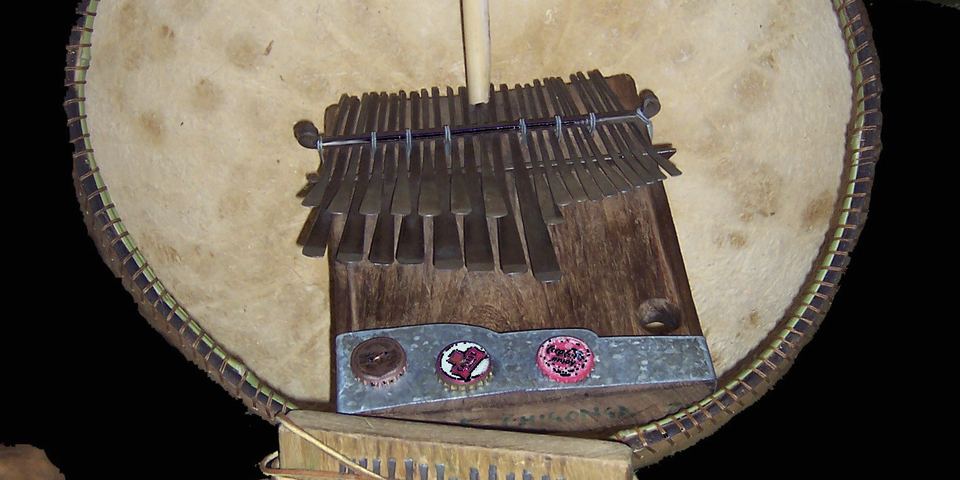
The mbira is a thumb piano of the Shona people of Zimbabwe. Metal keys are fixed to a wooden board, and the player plucks them with the thumbs and a finger. The mbira dzavadzimu is played at ceremonies that call the ancestral spirits. It is often set inside a large calabash that makes it louder.
The sound of the mbira
A few phrases on an mbira open the recordings. After them come single keys of an mbira dzavadzimu in the Nyamaropa tuning.
Listen to how the notes begin. The bright attack fades quickly and leaves an almost pure tone.
Names of the mbira
Mbira is a Shona word. Mbira dzavadzimu means the mbira of the ancestral spirits. Instruments of this family have many names in Africa, among them kalimba, sansi and zanza. In Western countries people often call any of them a kalimba.
Where the mbira is played
Instruments of this kind have been played in Africa for thousands of years. Metal keys appeared in the Zambezi River valley about thirteen hundred years ago. They spread across the continent and became popular among the Shona and other peoples of Zimbabwe and Mozambique.
The role of the mbira in music
Mbira music is built on cross-rhythm. The left hand often plays a repeating bass line, and the right hand plays an upper melody against it.
A piece is often shared by a pair of players. The kushaura leads, and the kutsinhira plays a part that interlocks with it. A single mbira is often thought incomplete for a performance.
Music for the mbira
The mbira dzavadzimu is played at the bira, a ceremony that lasts all night. At the bira, people call on the ancestral spirits to answer their questions. The mbira also plays at weddings and other gatherings, often with the hosho, a percussion instrument.
How the mbira is made
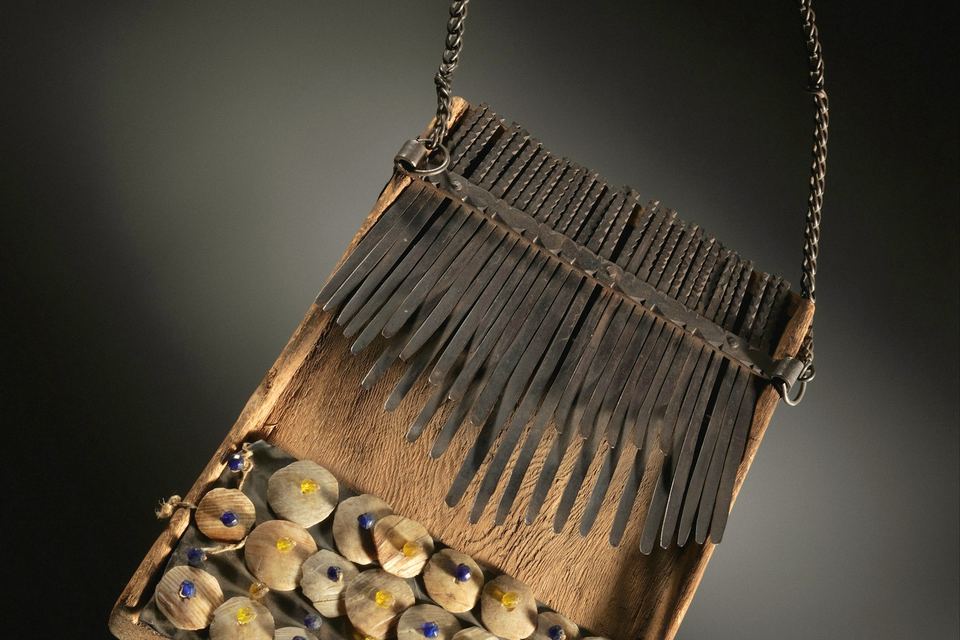
An mbira dzavadzimu has between twenty-two and twenty-eight keys of forged metal. They sit in three registers on a hardwood soundboard called the gwariva. The left side holds two registers, and the right side holds one.
Bottle caps or shells are often fixed to the board to make a buzz. In traditional settings this buzz matters, because it is believed to attract the ancestral spirits. For public playing, the mbira is often placed in a calabash called a deze.
How the mbira is played
The little finger of the right hand goes through a hole in the lower right corner of the board. The right thumb plays the keys of the right register from above. The right index finger plays them from below.
The left thumb plays both registers on the left side. On most mbiras the lowest notes sit near the center, and the higher notes lie to the far left and the far right.
How the mbira has changed
The mbira dzavadzimu has become popular in North America, Europe and Japan. Makers in Zimbabwe now tune their instruments for export more uniformly. At home the tunings still vary from family to family.
UNESCO lists the art of making and playing the mbira as intangible cultural heritage. The listing covers Malawi and Zimbabwe, where the instrument is also called sansi.
Choosing an mbira
Choose an mbira by its type and its tuning. Nyamaropa is the most common tuning, and it is close to the Mixolydian mode.
An mbira dzavadzimu has twenty-two keys or more. A nyunga nyunga usually has fifteen keys in two rows and no hole in the board. The kalimba is a Western version with a simpler layout.
First steps on the mbira
The hand position comes first. Put your right little finger through the hole and steady the board with your other fingers. Play the left-hand bass line of a piece slowly until it is steady. Then add the right-hand part above it.
A short check
Choose one answer per question.
In a piece for two mbiras, which part does the kushaura play?
The kushaura leads the piece. The kutsinhira answers with a part that interlocks with it.
Where do the lowest notes usually sit on an mbira?
The lowest notes sit near the center, and the higher notes lie to the far left and the far right. The thumbs can then reach all the keys.
Sources
Common questions
What is the difference between an mbira and a kalimba?
The kalimba is a Western version of the African instruments. It was designed for sale outside Africa. The Shona mbira dzavadzimu has more keys in three registers and its own tunings.
How many keys does an mbira have?
An mbira dzavadzimu usually has twenty-two to twenty-eight keys. The nyunga nyunga has fifteen, and the njari has thirty to thirty-two.
What is the Nyamaropa tuning?
Nyamaropa is the most common mbira tuning in Zimbabwe. It is close to the Mixolydian mode, and it is thought to be the oldest Shona tuning.
Why does an mbira buzz?
Bottle caps or shells fixed to the board rattle when the keys sound. Shona tradition values this buzz.
What is a deze?
A deze is a large calabash resonator. The mbira sits inside it, and the calabash makes the sound louder.
Who plays the mbira?
The Shona people of Zimbabwe play the mbira dzavadzimu at ceremonies and gatherings. Players around the world now learn it as well.