Metronome
Choose a slow tempo. A click is one beat, so clap halfway between the clicks.
Cumbia is a music and dance of the Caribbean coast of Colombia. It joins Indigenous flutes, African drums and Spanish song. Couples dance in a circle around the musicians, and the woman holds lit candles. Dance orchestras later carried cumbia across Latin America. Latin American countries now have their own cumbia.
A trombone, other brass instruments, timbales, congas and bongos play this cumbia. Feel two beats in a measure, and listen for the short strokes between them.
Music: Envato
Cumbia joins three traditions of the Colombian coast. The gaita flutes and the maracas come from the Indigenous peoples. The drums come from Africans brought to the coast. The verses and the costumes come from Spain.
Scholars still argue about where cumbia began. Many trace it to the Depresión Momposina. This is a low land of rivers and swamps along the lower Magdalena River. Indigenous peoples such as the Chimila lived there, and Africans and Spaniards joined them in colonial times. Other scholars place its birth among the African people of Cartagena.
The origin of the word is also uncertain. Many scholars trace it to an African word of the Bantu languages. The root kumbe means to dance. Others link it to a Tupi-Guarani word for noise.
Travelers left early descriptions of the music. A Swedish naval officer visited Santa Marta in the early nineteenth century. He saw a street dance with a band of three. The first man played a long cane flute like a gaita. The second played a similar four-hole flute with one hand and shook a maraca with the other. The third struck a large drum with his fingers.
Later the Colombian writer José María Samper described a dance on the banks of the Magdalena River. Couples circled a bonfire at night. The dancers held lit candles, and the music came from the gaita and a tall drum played with the bare hands. His account holds the main parts of cumbia as it is still danced today.
The gaita is a long flute made from the heart of a cactus. Its head is a lump of beeswax mixed with charcoal powder. A duck feather quill set in the wax serves as the mouthpiece. Gaitas are about seventy to eighty centimeters long, and players use them in pairs. The gaita hembra, or female gaita, has five finger holes and plays the melody. The gaita macho, or male gaita, has two holes. Its player keeps a short repeated line and shakes a maraca with the other hand. In the Kogi language of the Sierra Nevada the gaita is called kuisi.
The caña de millo is a small cane flute about twenty to thirty centimeters long. The player holds it sideways. A thin reed is cut into the side of the tube itself, and its tone is bright and buzzing. It has four finger holes. In parts of Atlántico and Magdalena it takes the place of the gaitas.
The rhythm comes from three drums and the maracas. The tambor alegre is a tall drum about seventy centimeters high. Its player improvises over the melody. The improvised strokes come above all at the ends of phrases. The llamador is a small drum that marks the off-beat. Its name means the caller. The tambora is a larger drum. Its player strikes both the skin and the wooden shell, and it gives the lowest strokes.
| Instrument | Kind | Part |
|---|---|---|
| Gaita hembra | Flute | Melody |
| Gaita macho | Flute | A short repeated line |
| Caña de millo | Flute | Melody in groups without gaitas |
| Maracas | Rattle | Steady pulse |
| Tambor alegre | Drum | Improvised strokes |
| Llamador | Drum | The off-beat |
| Tambora | Drum | Low strokes |
Cumbia moves in two beats to the bar, and the beats split in two. The llamador strikes on the second half of the beats. The tambora gives the low strokes, and the maracas keep a steady pulse. Above them the tambor alegre plays free strokes, and the gaitas or the caña de millo carry the tune.
The first recording is a cumbia beat on bongos. The bongos are a pair of small Cuban drums.
The player below plays a cumbia pattern with recorded strokes. It shows four beats, which make two bars of cumbia. Maracas shake on all the eighth notes. A high conga plays the part of the llamador between the beats. A low conga plays on beats one and three. Modern cumbia bands often play congas.
Cumbia with maracas and two congas
92 beats per minute
Cumbia has its own words in the Spanish of the Colombian coast. Some of them come from Indigenous languages.
| Word | Meaning |
|---|---|
| Cumbiamba | A cumbia dance party, and the circle of dancers around the band |
| Gaitero | A player of the gaita |
| Gaita hembra | The female gaita that plays the melody |
| Gaita macho | The male gaita that keeps a short repeated line |
| Kuisi | The name of the gaita in the Kogi language |
| Caña de millo | A small cane flute with a reed cut into its side. It is also called pito atravesao. |
| Tambor alegre | The lively drum that improvises |
| Llamador | The caller. It is the small drum on the off-beat. |
| Tambora | The larger drum that plays the low strokes |
| Pollera | The long full skirt of the woman dancer |
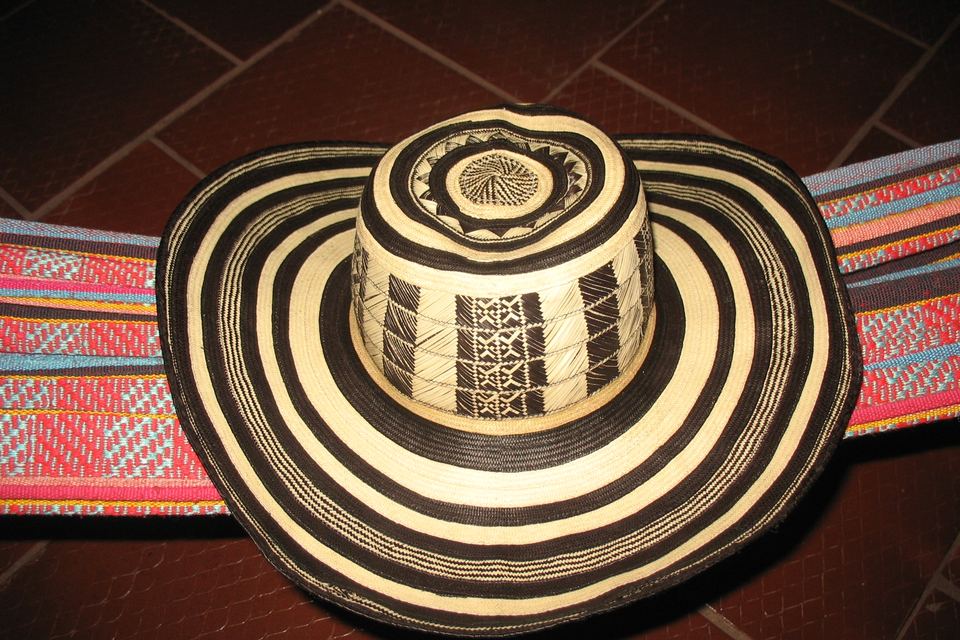
| Sombrero vueltiao | The woven hat of the coast that the man offers in the dance |
| Música tropical | The name for cumbia and other coastal music played by dance orchestras |
The couples dance in a circle around the musicians, and the partners never touch. The woman holds a bundle of lit candles in her right hand and her long skirt in the left. She moves with small steps.
The man dances around her and offers her his hat. The hat is a sombrero vueltiao. He tries to place it on her head, and she keeps him away with the candles. The dance shows a courtship. Older writers saw in it the meeting of the African and Indigenous peoples of the coast. The long full skirt of the woman is called a pollera. The clothes of the man are white.
In the middle of the twentieth century, dance orchestras arranged cumbia for brass and clarinets. The clarinetist Lucho Bermúdez gave cumbia orchestral arrangements, and his orchestra carried it to the cities of the interior.
Radio and the record companies of the coast spread the new sound. Discos Fuentes was among the earliest of these companies. The elites had looked down on cumbia as the music of the poor. The orchestras made it welcome in all classes. Its new form was often called música tropical.
The countries that took up cumbia gave it a local sound. In Mexico, the Colombian singer Luis Carlos Meyer made the first cumbia records outside Colombia. Mexican groups later created styles such as cumbia sonidera, which uses synthesizers. In Peru, groups brought electric guitars to the front. Peruvian cumbia is also known as chicha.
In Argentina, cumbia villera grew in the poor neighborhoods of the cities. Chile has its own cumbia orchestras. Central American bands play cumbia on the marimba, and Venezuelan bands use the organ and the harp. Cumbia bands now use electric bass, trumpets, congas and the accordion. The accordion links cumbia to the vallenato of the same coast.
Feel two beats in a bar as the piece plays. Step from foot to foot on the beats. Next, listen for a short sound on the second half of the beats. In a traditional group the small llamador drum plays this stroke.
Then listen for the instrument that carries the tune. In traditional cumbia it is a gaita or the caña de millo. Modern bands give the tune to the accordion, the clarinet, the brass or the electric guitar. Last, listen for the shake or scrape that runs through the whole piece. The maracas or a scraper keep this steady pulse.
Music: Envato
Count “one and two and three and four and.” Tap your knee on the numbers, and clap on the “ands.”
Next, play the rhythm above at a slow tempo, and clap with the high conga. When the claps stay even, shake a rattle on all the eighth notes. Then share the parts with a friend. The first person taps the low strokes on beats one and three. The second claps the off-beats. Keep the tempo slow until both parts stay steady.
Choose a slow tempo. A click is one beat, so clap halfway between the clicks.
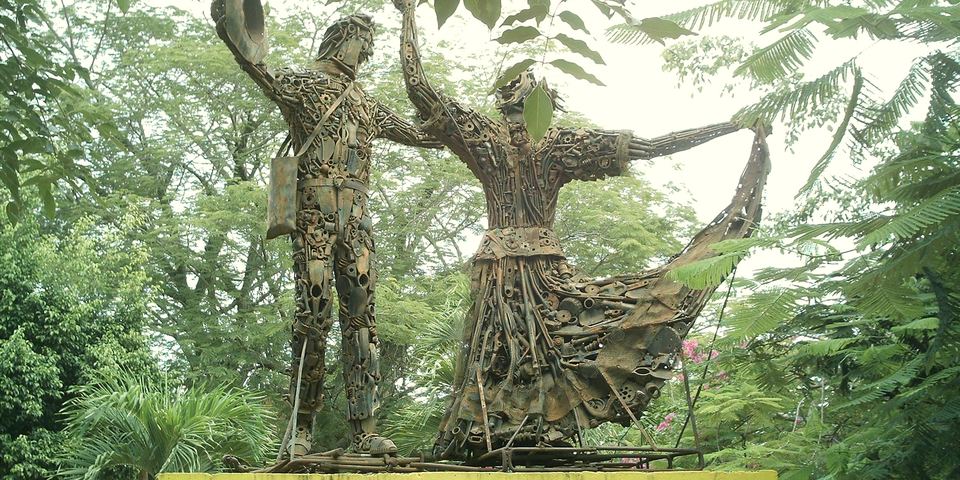
The home of cumbia is the lower Magdalena River and the Caribbean coast of Colombia. The river town of El Banco is known as the imperial city of cumbia. A metal statue of a cumbia couple stands there. Once a year the town holds the national festival of cumbia, which the songwriter José Barros founded to preserve the old rhythms. The Congress of Colombia has declared the festival part of the cultural heritage of the nation.
In Barranquilla, cumbia groups and dancers fill the Carnival yearly. During the Carnival the main parade avenue is called the cumbiódromo. UNESCO lists the Carnival of Barranquilla as intangible cultural heritage. The town of Cereté holds a national festival of the cumbiamba. Beyond Colombia, people dance to cumbia from Mexico to Argentina.
Choose one answer per question. The explanation appears below the correct answer.
Where did cumbia begin?
Cumbia began on the Caribbean coast of Colombia. It later spread across Latin America.
What does the woman hold in the traditional cumbia dance?
She holds lit candles in one hand and her long skirt in the other.
Which drum strikes between the beats in a cumbia group?
The llamador marks the off-beat. The tambor alegre improvises, and the tambora plays the low strokes.
Which gaita plays the melody?
The gaita hembra has five finger holes and plays the melody. The gaita macho keeps a short repeated line.
It is a music and dance of the Caribbean coast of Colombia. It is now one of the most widespread dance musics of Latin America.
It comes from the Caribbean coast of Colombia. Indigenous, African and Spanish traditions all shaped it.
Traditional groups use gaitas or the caña de millo, three drums and maracas. Modern bands add bass, brass, congas and the accordion.
The candles belong to the old dance by night around the musicians. The woman uses them to keep her partner at a distance.
Mexican cumbia grew from Colombian records and dance bands. Mexican groups then gave it their own instruments and regional styles.
Musicians feel two beats in a bar, and they split the beats in two. The drawing on this page writes the same pattern in four beats.
It is a long Indigenous flute of the Colombian coast. It has a head of beeswax and a mouthpiece made from a feather quill.
The man carries the sombrero vueltiao in the dance. It is a woven hat of the Caribbean coast of Colombia.