Metronome
Set two beats to the bar and a slow tempo. Scrape long on the clicks and short twice between clicks.
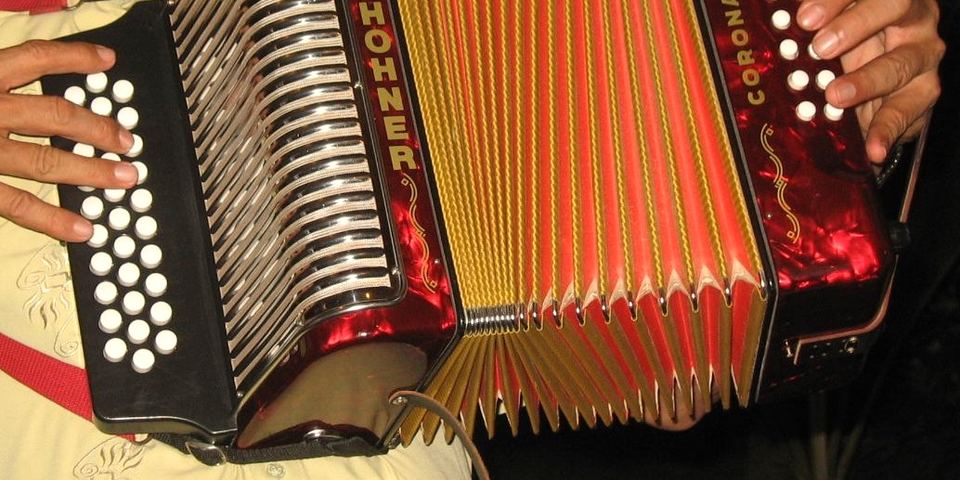
Vallenato is a folk music of the Caribbean region of Colombia. Its home is the valley around Valledupar, and its name means “born in the valley.” A traditional group has three instruments. The accordion plays the melody. A small drum called the caja and a scraper called the guacharaca keep the rhythm.
The accordion plays with congas in this cumbia villera. Cumbia villera is a kind of cumbia from Argentina. Follow the accordion from phrase to phrase, and tap the beat underneath.
Music: Envato
The valley lies between two mountain ranges in the northeast of Colombia. They are the Sierra Nevada de Santa Marta and the Serranía de Perijá. Valledupar is its chief city.
Cattle herders of the region traveled from town to town with their herds. They looked for pasture or went to the cattle fairs. The region had no fast way to send news, so the herders sang the news of one village to the next. They kept the tradition of the Spanish minstrels. In Spanish such a minstrel is called a juglar.
The first vallenato used Indigenous gaita flutes with the guacharaca and the caja. Guitars came later. The accordion arrived from Europe, probably through the islands of Aruba and Curaçao, and it soon led the music.
For many years vallenato was the music of farmers and of the poor. In the middle of the twentieth century, people of all classes in the region took it up. Parties with vallenato moved into the social club of Valledupar. People gathered there to hear the stories of the juglares. They came to listen, and the music was not yet for dancing.
The Vallenato Legend Festival in Valledupar had several founders. Among them were the politician Alfonso López Michelsen, the journalist Consuelo Araújo Noguera and the songwriter Rafael Escalona. Escalona could not play an instrument, yet he wrote some of the best-loved songs of vallenato. The festival takes its name from a religious legend of the town. It holds contests for the accordion, the caja and the guacharaca. Other contests reward new songs and improvised verse.
The accordion of vallenato is a diatonic button accordion of German origin. A button sounds one note when the bellows open and another when they close. It has three rows of buttons and three reeds per note. Players choose models in different keys. Common sets are A, D and G, or G, C and F. Players call a set in B♭, E♭ and A♭ cinco letras.
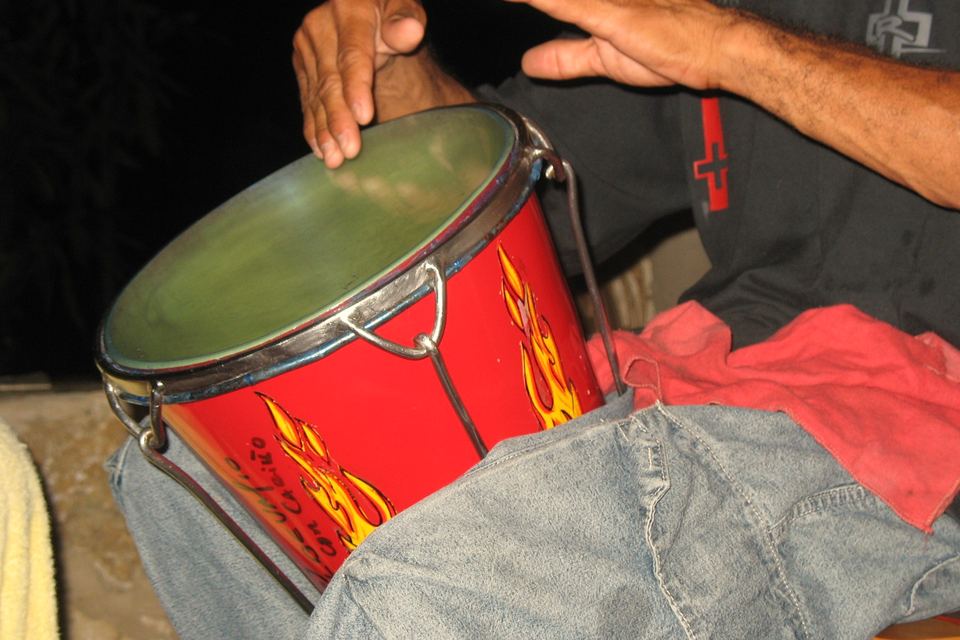
The caja is a small drum. The player holds it between the knees and strikes the skin with the bare hands. It came from the tambora drums of Africans brought to the coast. The old caja had a wooden shell and a skin of cowhide. Ropes held the skin tight. Modern cajas are built like a short conga. They stand about thirty centimeters tall.
The guacharaca is a ribbed stick of palm cane about as long as a violin. Part of its inside is hollowed out. The player rests it on the shoulder and scrapes it with a fork of hard wire. Its name is the name of a bird of the region whose call the scraper once imitated.
The three instruments come from different peoples of the region. The accordion came from Europe, the caja from Africa and the guacharaca from the Indigenous peoples of the Sierra Nevada.
An aire is a rhythm of vallenato. The accordionist marks the aires by their rhythm and their chords. There are four.
Son and paseo are in two-four time. Son is slow and often sad. The accordionist stresses the low bass notes on the left side of the instrument. Paseo probably grew from the son. Its speed varies, and it is the aire recorded most often today.
Merengue and puya are in six-eight time. Merengue tells long stories in verse. Singers often use it for the décima, which is a poem of ten lines. Puya is the fastest aire, and it is thought to be the oldest. In a puya the three instruments take a solo in turn.
| Aire | Time | Character |
|---|---|---|
| Son | Two-four | Slow and heavy in the bass |
| Paseo | Two-four | The most common aire |
| Merengue | Six-eight | Long stories in verse |
| Puya | Six-eight | Fast with solos for all three instruments |
The pattern below is a paseo. It plays on recorded congas and a guiro. The guiro is a Caribbean scraper like the guacharaca. The guiro plays a long scrape on the beat and two short scrapes after it. The congas play the part of the caja.
Count “one and two and” as it plays. The long scrape falls on the numbers, and the two short scrapes fill the second half of the beat. The pattern is kept simple for practice. Vallenato players vary the strokes from verse to verse.
Paseo with a scraper and two congas
96 beats per minute
Vallenato has its own words in the Spanish of the Colombian coast. The table gives the ones that a listener hears in songs and at festivals.
| Word | Meaning |
|---|---|
| Vallenato | Born in the valley. The word is also used for the people of Valledupar. |
| Juglar | A wandering minstrel who sings the news and stories of the region |
| Aire | One of the four rhythms of vallenato |
| Parranda | A gathering of friends and family with vallenato music |
| Piquería | A contest of improvised verse between two singers |
| Verseador | A singer who improvises verses |
| Cajero | The player of the caja |
| Guacharaquero | The player of the guacharaca |
| Rey Vallenato | The title of the winning accordionist at the festival in Valledupar |
| Décima | A poem of ten lines with fixed rhymes |
| Cinco letras | An accordion tuned in B♭, E♭ and A♭ |
Vallenato songs tell stories of love, of places and of daily life in the region. Many began as news carried from village to village. UNESCO describes their lyrics as a mix of realism and fantasy. Their mood ranges from nostalgia and joy to sarcasm and humor.
Merengue songs often use the décima. This form of verse came from Spain, and its lines follow fixed rhymes. Songs were also a way to send messages. The juglares carried them from town to town along with their own news.
A piquería is a contest of improvised verse between two singers. The singers answer one another in rhyme while the accordion plays. Singers show both their wit and their skill on the accordion. A piquería between the accordionists Emiliano Zuleta and Lorenzo Morales gave rise to the song “La gota fría”.
A legend tells of Francisco el Hombre, a juglar who never lost a piquería. Late at night he played alone on the road, and better tunes answered his own. His rival was the devil. Francisco knelt and prayed the Creed forward and backward. The Creed is the Christian statement of faith. Then he played the most beautiful melody anyone had heard, and the devil fled into the mountains.
Modern vallenato groups add a bass guitar, congas, a drum kit and a chorus. Some mix vallenato with cumbia, pop and rock. The Latin Grammy Awards have a category for cumbia and vallenato.
UNESCO lists the traditional vallenato music of the Greater Magdalena region as heritage in need of urgent safeguarding. The listing gives three risks. Armed conflict has harmed the region. A newer style of vallenato has taken much of the place of the traditional form. Fewer parrandas take place in the streets, and these gatherings were where young players learned the music.
Listen first for the accordion. In vallenato it carries the melody and fills the gaps between the sung lines. The right hand plays the tune, and the left hand adds short bass notes and chords. The piece on this page is a cumbia with accordion. Use it to practice following the accordion line from phrase to phrase.
When you hear a traditional vallenato record, listen for the three instruments one by one. The guacharaca makes a steady scraping sound. The caja answers with short strokes of the hands. Then try to tell which aire it is. A slow and heavy song in two is a son, and a fast song in six-eight with solos is a puya.
Music: Envato
Count two even beats to a bar. Say a long sound on the beat, and two short sounds after it. Say it as shh, chi chi.
Start the paseo rhythm above at a slow tempo. Scrape a ridged object or brush a book cover in the same pattern. Raise the tempo only when the strokes stay even. When the rhythm is steady, sing a simple song over it. Vallenato players learn by ear in this way.
Set two beats to the bar and a slow tempo. Scrape long on the clicks and short twice between clicks.
Valledupar is the capital of vallenato. Its yearly Vallenato Legend Festival crowns the best accordionist as the Rey Vallenato. Contests also reward the players of the caja and the guacharaca, the improvisers of verse and the writers of new songs. The town of Villanueva in La Guajira holds its own festival of accordions.
Vallenato is also played at parrandas. These gatherings of friends and family in homes and streets are where young players learn the music. The tradition belongs to the whole Greater Magdalena region, which includes the departments of Cesar, La Guajira and Magdalena. Universities and music schools now teach it as well.
Choose one answer per question. The explanation appears below the correct answer.
Which three instruments make up the traditional vallenato group?
The accordion plays the melody. The caja and the guacharaca keep the rhythm.
What is the guacharaca?
The guacharaca is a ribbed stick of palm cane that the player scrapes with a wire fork.
Which two aires of vallenato move in two beats to the bar?
Son and paseo have two beats in a bar. Merengue and puya have six eighth notes in a bar.
What is a piquería?
In a piquería two singers answer one another in rhyme while the accordion plays.
It is a folk music of the Caribbean coast of Colombia. An accordion, a caja drum and a guacharaca scraper play it.
It means “born in the valley.” The valley is the one around the city of Valledupar.
Players use a diatonic button accordion with three rows of buttons. The models come in several keys.
Its four aires are son, paseo, merengue and puya. The first two are in two-four time, and the others in six-eight.
Both come from the Caribbean coast of Colombia. Vallenato centers on the accordion and sung stories, and traditional cumbia centers on flutes, drums and dance.
The guacharaca part is a good place to start. The accordion takes longer, because its buttons give two notes apiece.
The Vallenato Legend Festival takes place once a year in Valledupar. Its organizers announce the dates on the festival’s own website.
He is the legendary juglar of vallenato. In the story, he beat the devil in a contest of accordion playing.