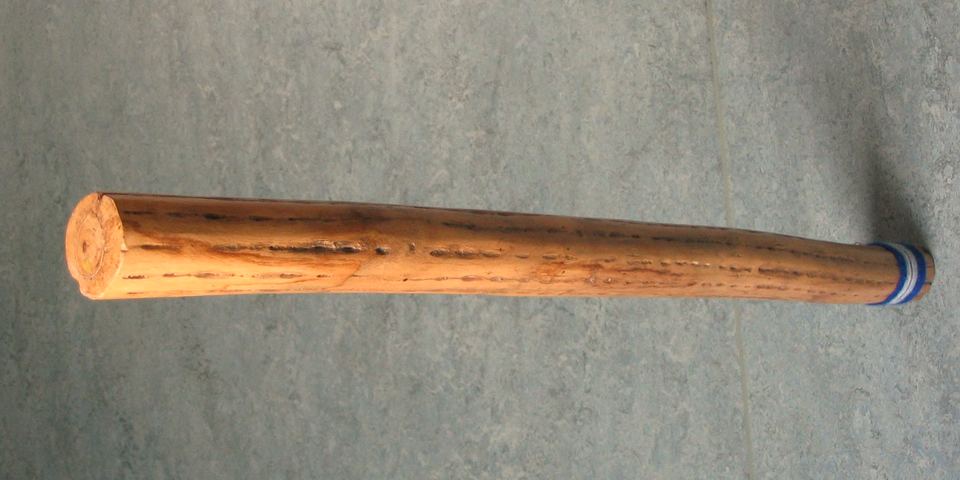
The rainstick
A rainstick is a percussion instrument made from a long hollow tube of dried cactus or bamboo. Small pebbles, seeds or dried beans fill part of it. Pins or thorns inside the tube form a spiral. When the player turns the tube upright, the pebbles fall through the pins. Their tapping sounds like falling rain.
An oud, a piano and a cello carry the music, and a rainstick sounds behind them. The oud is a short-necked lute. Listen for the soft rush of the rainstick under the plucked notes of the oud.
Music: Envato (soundroll-music)
The sound of the rainstick
In both recordings, a rainstick is turned upright so that its filling falls. The second was made in a studio. The sound fades as the last of the filling reaches the bottom.
Names of the rainstick
In Spanish the rainstick is called palo de lluvia, which means rain stick. It is also called palo de agua, or water stick.
Where the rainstick is played
The origin of the rainstick in South America is debated. Some accounts credit the Mapuche people of Chile. Others trace it to peoples of the Amazon. Remains of rainsticks have also been found on the coast of Peru and in the central Andes. They come from cultures older than the Incas.
Similar instruments developed separately in Southeast Asia, Central Asia, Australia and Africa. These are often made of bamboo.
The role of the rainstick in music
The Mapuche played the rainstick in the belief that it could bring rain. Among peoples of the Amazon, the player strikes one end of the stick on the ground to mark the beat of a ceremony. They use it in this way in ceremonies for planting and harvest.
Music for the rainstick
Today the rainstick is a percussion instrument and a way to make the sound of rain or running water. Plastic and metal rainsticks are made for use in schools.
How the rainstick is made
A Mapuche rainstick is made from a hollow cactus dried in the sun. The maker removes the spines and drives them back into the cactus like nails. Pebbles or other small objects go inside, and the ends are sealed.
Bamboo rainsticks have small sticks of wood or bamboo set in a spiral. A homemade rainstick can use a cardboard tube with nails or toothpicks.
How the rainstick is played
Tilt the rainstick slowly, and the filling falls through the pins. The angle of the tube and the kind of seed or stone change the strength of the sound. Turn it over to start the sound again.
You can also tap the stick lightly for a more controlled sound, or shake it like a shaker.
How the rainstick has changed
Rainsticks are now sold to many tourists in Latin America and in the southwestern United States. Factory-made rainsticks of plastic or metal are filled with small synthetic beads or with seeds.
Choosing a rainstick
Traditional rainsticks are cactus or bamboo, and school rainsticks are often plastic. A longer tube gives a longer sound, because the filling has farther to fall.
Listen before you buy. The filling should fall evenly along the whole tube, and both ends should be firmly sealed.
How to make a rainstick
Take a long cardboard tube. Push toothpicks or short nails through its wall in a spiral from one end to the other. Seal one end, pour in a handful of rice or dried beans, and seal the other end.
Tilt the tube slowly and listen. Make a second tube with a different filling, and compare the two sounds.
A short check
Choose one answer per question.
What makes the filling of a rainstick tap as it falls?
The pebbles or seeds strike the pins or thorns on their way down. The many small taps sound like rain.
What is the Spanish name of the rainstick?
Palo de lluvia means rain stick. It is also called palo de agua, which means water stick.
Sources
Common questions
What is a rainstick made of?
Traditional rainsticks are dried cactus or bamboo. Modern ones may be plastic or metal and are filled with beads or seeds.
Who invented the rainstick?
The origin is debated. The Mapuche of Chile are often credited, and peoples of the Amazon also have a long tradition of the instrument.
Why does a rainstick sound like rain?
Many small pebbles or seeds strike the pins one after another. The quick taps blend into a sound like rain.
Is a rainstick a musical instrument?
Yes. It is a percussion instrument, and it is also used for the sound of rain and water.
What was the rainstick used for?
The Mapuche played it in the hope of bringing rain. Peoples of the Amazon used it to mark the beat in ceremonies for planting and harvest.
How do you play a rainstick?
Tilt it slowly so that the filling falls. For shorter sounds, tap it or shake it.