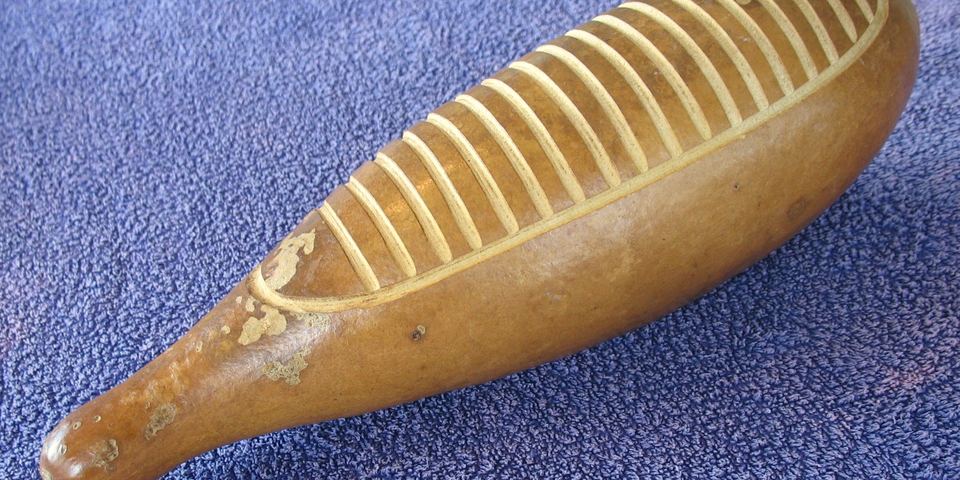
The guiro
The guiro is a percussion instrument of the Caribbean and Latin America. It is a hollow gourd with parallel notches cut along one side. The player scrapes the notches with a stick to make a rasping sound. The guiro plays in the rhythm section of Cuban and Puerto Rican music, including son, salsa and danzón.
This piece is a rumba for voices and percussion. Rumba is a family of Cuban song, dance and drum styles. Listen for the rasp of the guiro among the congas and the shaker. A slow stroke across the notches gives a long scrape, and a quick stroke gives a short one.
Music: Envato (PremiumBeat)
The sound of the guiro
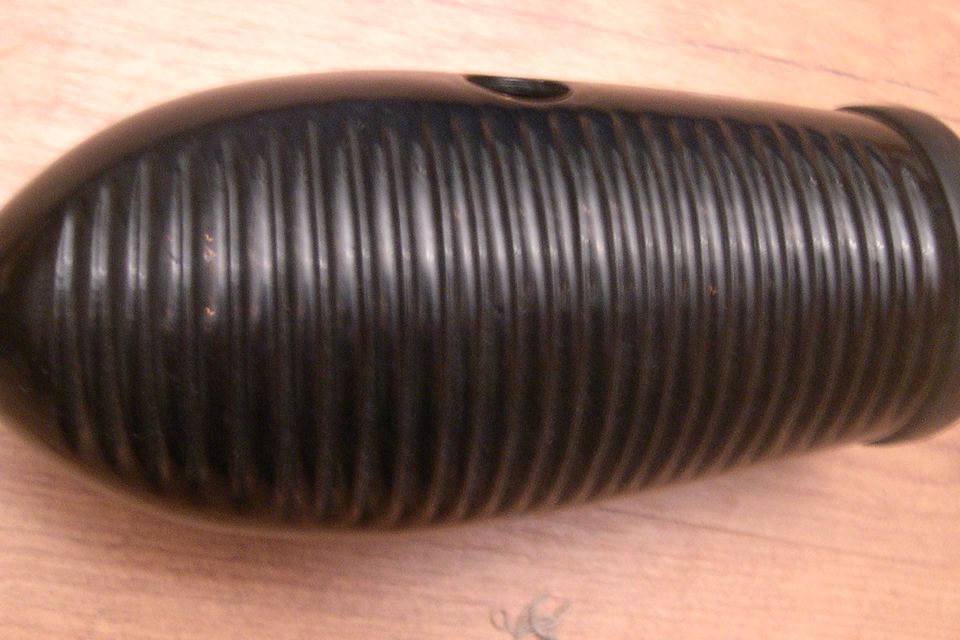
The recording below is a short pattern on a modern plastic guiro.
Names of the guiro
Güiro is the Spanish name, and English often writes it without the two dots. The word comes from the Arawakan language of the Taíno people. In that language it meant the fruit of the güira tree and the instrument made from that fruit.
Where the guiro is played
The guiro is played across Latin America and the Caribbean. It is most common in Cuban and Puerto Rican music. In the Yucatán Peninsula of Mexico, it accompanies two Mayan dances, the mayapax and the jarana.
The role of the guiro in music
The guiro belongs to the rhythm section. It plays a central part in son, trova and salsa. Like the maracas, it is often played by a singer of the group.
Music for the guiro
In Cuba the guiro is heard in danzón. In Puerto Rico it belongs to the music of the jíbaro, the country people of the island, and to plena, seis and danza. Cumbia from the Caribbean coast of Colombia uses it too.
Composers of orchestral music have also written for it. Igor Stravinsky used a guiro in The Rite of Spring.
How the guiro is made
The guiro is a hollowed gourd with an open end. The maker carves parallel notches across one side. The calabash gourd is the traditional material, and many guiros today are made of wood or fiberglass.
How the guiro is played
The player scrapes the notches with a stick or with a scraper of thin metal tines. Long strokes and short strokes, up and down, make the rhythm.
How the guiro has changed
The Taíno people of Cuba, Puerto Rico and the Dominican Republic made an early form called the güajey. It was a long gourd or an animal bone with notches. Scrapers made of bone were also played in ancient Mexico and in Africa.
Choosing a guiro
Try a guiro in long strokes and short strokes before you buy it. Listen for an even rasp along the whole row of notches, and check that the stick or tines fit the notches well.
Sources
Common questions
What is a guiro made of?
The traditional guiro is a dried calabash gourd. Modern guiros are also made of wood or fiberglass.
Where does the guiro come from?
The guiro comes from the Caribbean. The Taíno people of the islands made an early form of it.
How do you play the guiro?
Scrape the notches with the stick, up and down. Mix long strokes and short strokes to follow the rhythm of the music.
What is the difference between a guiro and a güira?
The guiro is made from a gourd or from wood. The güira of the Dominican Republic is a metal scraper.
Which music uses the guiro?
Salsa, son, danzón, plena and cumbia use the guiro. It plays with the other percussion of the rhythm section.
World MusicScrapersBachataClave rhythmMetronome