The charango
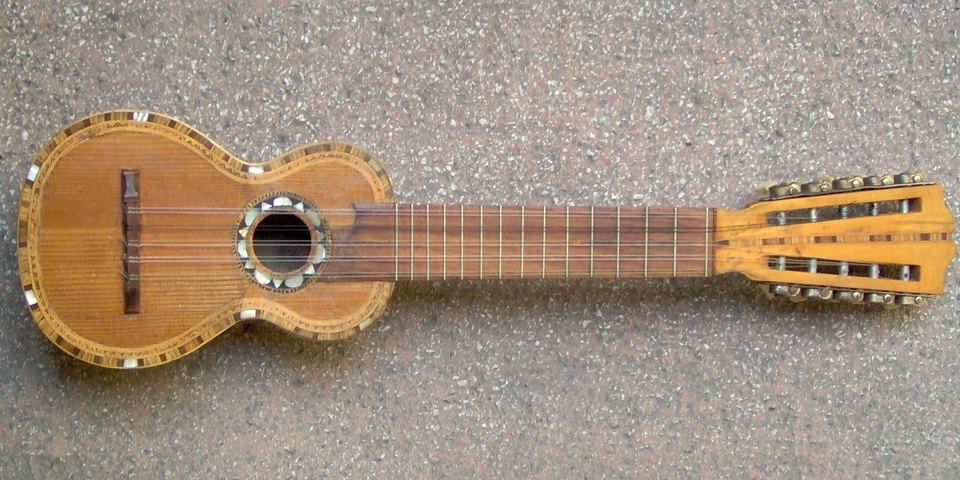
The charango is a small lute of the Andes with ten strings in five pairs. A pair is called a course. Quechua and Aymara communities made it after the Spanish brought stringed instruments to South America. It is played in Bolivia, Peru, Ecuador, northern Chile and northwestern Argentina. All its strings are tuned within one octave.
A charango and a pan flute play this piece over the sound of falling rain. Listen for the bright strings of the charango above the softer pan flute.
Music: Envato (Triple7Music)
The sound of the charango
A quiet improvisation on a charango comes first. Next you hear its open strings in the usual tuning.
Names of the charango
A charango player is called a charanguista. The origin of the word charango is debated. A common view links it to charanga, which is a Spanish word for a small band.
In rural Bolivia the instrument has other names as well. They include mediana, guitarrilla and quirqui.
Where the charango is played
The charango belongs to the Andes. It probably took its present form in colonial times. Some historians place its birth in the colonial city of Potosí, which is now in Bolivia. Others trace it to the Ayacucho region of Peru. Neither view has been proven.
The role of the charango in music
The charango was first an instrument of traditional Andean music. Players use it for strummed chords and for fast melodies. Its close tuning lets the fingers of the right hand play quick runs.
How the charango is made
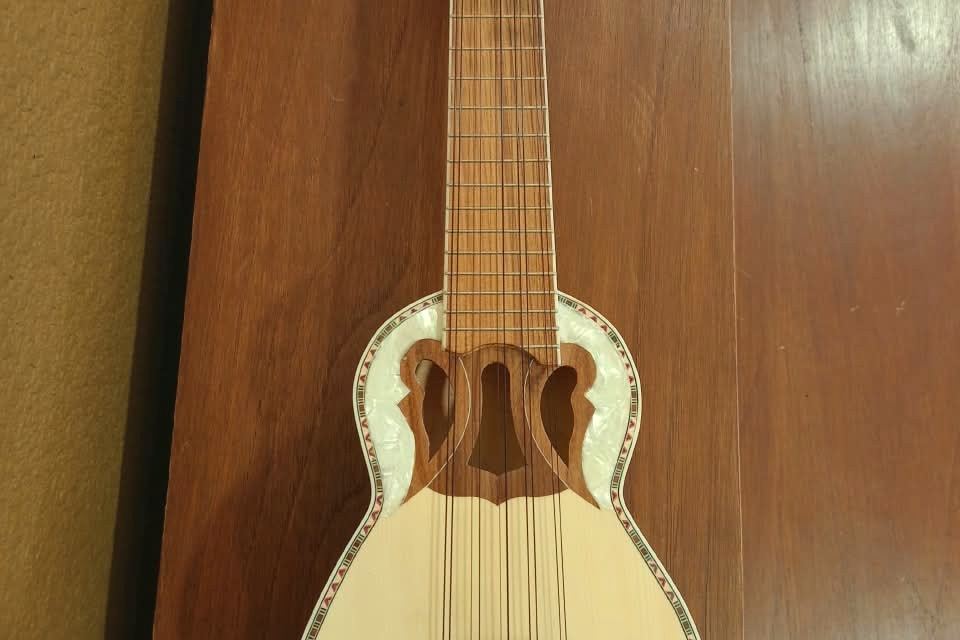
The traditional charango has a back made from the dried shell of an armadillo. Most charangos today are made of wood, and the back keeps the rounded shape of the shell.
The body and the neck are usually carved from a single block of wood. The whole instrument is about sixty-six centimeters long. The head is large, because it holds ten tuners.
How the charango is played
The usual tuning, from the fifth course to the first, is G, C, E, A and E. The middle course has two E strings an octave apart. The pitches fall and then rise again across the strings. This kind of tuning is called re-entrant.
The courses G, C, E and A have the same note names as the strings of a ukulele. Some of them sound in a different octave. A ukulele player can use the same chord shapes on these four courses. Tune the pairs with the tuner before you play.
How the charango has changed
The charango family has grown over time. The walaycho is smaller and tuned higher. The charangón and the ronroco are larger and lower. Makers now also build electric charangos.
Choosing a charango
Most new charangos have a wooden back. The preferred tops are cedar or spruce, as on guitars.
Check the size before you buy. The walaycho is smaller and higher, and the ronroco is larger and lower. A standard charango is about sixty-six centimeters long.
Most charangos now have geared tuners like those of a classical guitar. Older instruments have friction pegs like those of a violin.
A short check
Choose one answer per question.
Why is the tuning of the charango called re-entrant?
The pitches do not rise steadily from one course to the next. They fall to the low E of the middle course and then rise again.
Which course of the charango holds its lowest note?
The middle course has an E string an octave below its partner. That lower E is the lowest note, because the tuning is re-entrant.
Sources
Common questions
What is a charango made of?
The traditional charango has an armadillo-shell back and a wooden top. Most charangos today are made entirely of wood.
How many strings does a charango have?
A standard charango has ten strings in five pairs. Some regional types have from four to fifteen strings.
How is a charango tuned?
From the fifth course to the first, the usual tuning is G, C, E, A and E. The middle course has two E strings an octave apart.
Where does the charango come from?
It comes from the Andes, where Quechua and Aymara communities made it in colonial times. Bolivia and Peru both claim its birthplace.
Is a charango like a ukulele?
It looks like something between a small ukulele and a bowl-backed mandolin. Its tuning resembles the ukulele tuning with a second E course added.
What is a ronroco?
The ronroco is a larger, lower relative of the charango. It also has ten strings in five pairs, and it is tuned a fourth, a fifth or an octave lower.