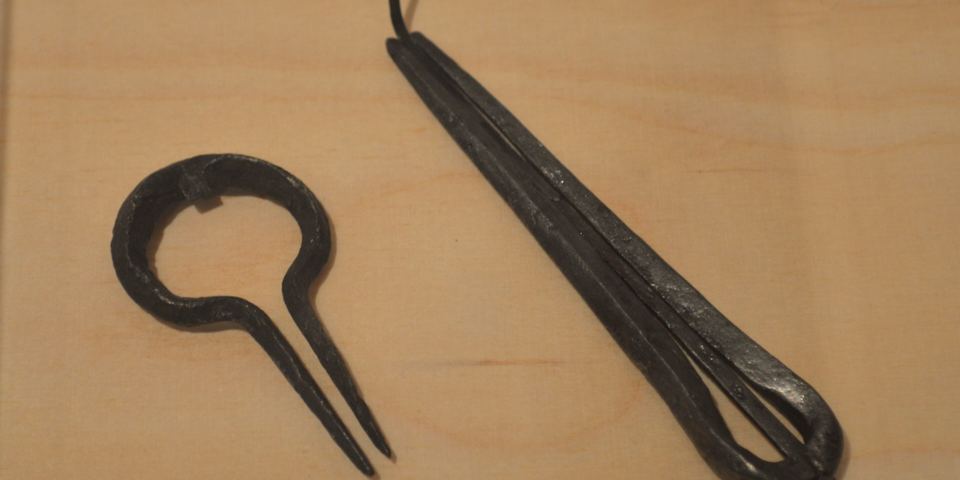
The jaw harp
The jaw harp is a small instrument with a thin tongue of metal or bamboo fixed in a frame. The player holds the frame against the parted teeth or lips and plucks the tongue. The tongue sounds one fixed note, and the mouth is its resonator. Changing the shape of the mouth brings out higher tones, which form a melody.
The sound of the jaw harp
The first two recordings come from one long performance on a metal jaw harp. Listen for the higher tones that move above the steady low note. The last recording is a single pluck.
Names of the jaw harp
In English it is the jaw harp, the mouth harp or the Jew's harp. The origin of the old name is uncertain. No link with Jewish people has been shown.
Other names include the khomus of the Sakha people, the vargan of Russia, the morsing of South India and the morchang of Rajasthan. The Philippines has the kubing, and Vietnam has the đàn môi. Indonesia has the karinding.
Where the jaw harp is played
Jaw harps are played across Asia and Europe and in many other regions. The Sakha people of Siberia play the khomus. Kyrgyz players use an iron harp called the temir komuz. In India, the morsing and the morchang are played.
The role of the jaw harp in music
In Indian music, the morsing and the morchang serve as rhythm instruments. The morsing is one of the instruments of Carnatic music. Sakha players also imitate speech on the jaw harp. This style is known as the talking vargan.
Music for the jaw harp
Some peoples of Siberia linked the jaw harp with shamanism. In Western music, some composers have written for it, and it appears in some rock and country songs.
How the jaw harp is made
A jaw harp has a frame and one tongue, the thin strip that vibrates. Metal harps use frames of brass, iron, copper or silver with a tongue of steel. Some harps of Cambodia and Taiwan are made of bamboo. Some makers cut, harden and tune the metal tongue to a pitch.
How the jaw harp is played
The player rests the frame against the parted teeth or lips and plucks the free end of the tongue. The tongue sounds a steady low note. The mouth works as a resonator. When the player changes the shape of the mouth, different overtones sound. Overtones are the higher tones inside a sound, and a melody moves through them.
How the jaw harp has changed
The oldest known jaw harps come from Shaanxi, in China, and are about four thousand years old.
In the twentieth century, Soviet authorities banned the instrument because of its links with shamanism. Older players kept it alive. Under Japanese colonial rule in Taiwan it was banned among the Atayal people. Many communities now work to keep their jaw harp traditions.
Choosing a jaw harp
A jaw harp sounds one fixed note, so harps are made in different pitches. To play with other instruments, choose a harp tuned to the key of the music. A steel tongue is common on metal harps.
Sources
Common questions
What is a jaw harp?
A jaw harp is a lamellophone, an instrument with a vibrating tongue. The player holds its frame to the mouth and plucks the tongue, and the mouth shapes the sound.
Where does the jaw harp come from?
The oldest known jaw harps come from Shaanxi in China. The instrument is now played in many regions. They range from Siberia and India to Europe.
Why is it called a Jew's harp?
The origin of the name is uncertain, and no link with Jewish people has been shown. Many players now call it the jaw harp or the mouth harp.
How do you play a jaw harp?
Rest the frame against your parted teeth or lips and pluck the free end of the tongue. Change the shape of your mouth to bring out different higher tones.
What is a khomus?
The khomus is the jaw harp of the Sakha people of Siberia. Sakha players also imitate speech on it, in a style known as the talking vargan.
What is a morsing?
The morsing is the jaw harp of South India. It is one of the instruments of Carnatic music, where it plays as a rhythm instrument.
World MusicKalimbaIndonesian musicGamelan