The guqin
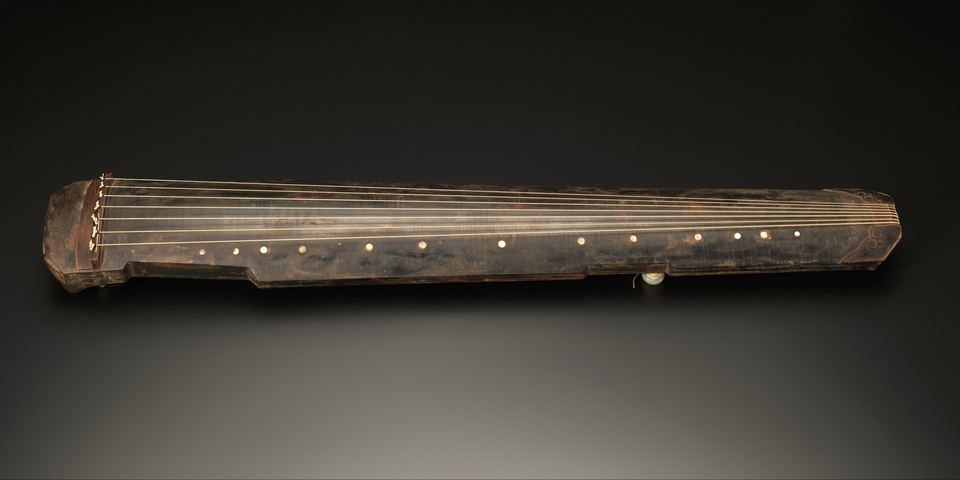
The guqin is a seven-string zither of China. Chinese writings mention it nearly three thousand years ago. It has no bridges and no frets. Thirteen inlaid dots along its top mark the places for harmonics and stopped notes. The guqin has a quiet tone. It was the instrument of scholars, and it is linked with Confucius.
Autumn Wind Poem is a short classical piece for the guqin. Its melody can be sung to a poem by Li Bai, who was a poet of the Tang dynasty. Listen for the left hand sliding along a string after the pluck. The note keeps sounding while its pitch moves.
The sound of the guqin
The short recording repeats the opening of Autumn Wind Poem. Its Chinese name is Qiu feng ci, and qiu feng means autumn wind.
Names of the guqin
Qin was the old name of the instrument. In time the word qin came to mean many string instruments, even the piano. The prefix gu, which means ancient, was added to make the meaning clear. The guqin is also called the seven-stringed qin.
Where the guqin is played
The guqin belongs to China. Examples have been found in tombs about two thousand five hundred years old. A related instrument, the geum, survives in the Confucian ritual music of Korea.
The role of the guqin in music
The guqin is almost always a solo instrument, because its quiet tone cannot compete with most other instruments. It may play with the xiao, an end-blown bamboo flute, with other qin, or with a singer.
Music for the guqin
Qin pieces usually last from three to eight minutes. Famous pieces include Flowing Water and Three Variations on the Plum Blossom Theme. A recording of Flowing Water was sent into space on the Voyager spacecraft.
Traditionally the qin was played alone or with a few friends in a quiet room. Players also played it outdoors. Today it is also heard in concert halls through microphones.
How the guqin is made
The top board is rounded, and the bottom board is flat. Traditionally the top is paulownia or Chinese fir, and the bottom is catalpa. The finish is raw lacquer mixed with powdered deer horn.
Strings were once twisted silk. Most players now use steel strings wound with nylon, which last longer and sound louder.
How the guqin is played
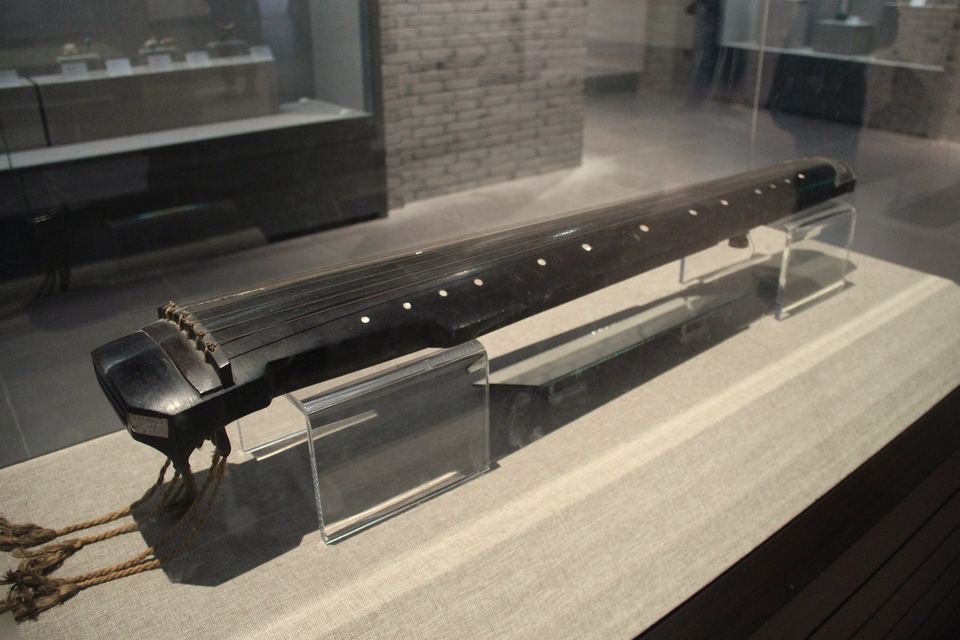
The guqin has three kinds of sound. An open string gives the plain sound. A light touch of the left hand at a dot gives a harmonic. This is called the floating sound. A stopped string gives the pressed sound, and the left hand can slide along it.
The most common tuning is pentatonic. It is often written as C, D, F, G, A, C and D. The last two notes lie an octave above the first two. In the past the qin had no fixed pitch.
How the guqin has changed
Guqin music is written in a tablature. It shows the string, the finger and the stroke. It does not show the rhythm, so players learn the rhythm from a teacher. Since the twentieth century, printed qin music has often added staff notation above the tablature.
UNESCO lists guqin music as intangible cultural heritage.
Choosing a guqin
Most new guqins have steel strings wound with nylon. Silk strings give the older sound, but good silk strings are scarce.
Play a harmonic at the thirteen dots in turn and listen for a clear tone. On antique instruments the lacquer shows a pattern of fine cracks called duanwen.
First steps on the guqin
Learn the three kinds of sound one at a time. Start with open strings. Move on to harmonics at the dots, and last to stopped notes. A teacher normally teaches the rhythm of the pieces. Teacher and student sit facing one another, and the student copies the teacher.
A short check
Choose one answer per question.
How many strings does the guqin have?
The modern guqin has seven strings. By tradition the earliest qin had five.
What do the thirteen dots on the guqin mark?
The dots, called hui, mark the points where a light touch gives a harmonic. They also guide the stopped notes. The guqin has no frets or bridges.
Sources
Common questions
What is the difference between the guqin and the guzheng?
The guqin has seven strings and no bridges. The guzheng has many more strings, and the strings rest on movable bridges.
How many strings does a guqin have?
The modern guqin has seven strings. The strings run the full length of the body, beside a row of thirteen inlaid dots called hui.
Can the guqin play with other instruments?
Yes. It plays with a few soft instruments. The usual partner is a narrow xiao flute in F, which does not cover the quiet tone of the qin.
What is guqin tablature?
Guqin tablature tells the player which string to play, with which finger and with which stroke. The rhythm is learned from a teacher.
Is the guqin a lute?
No. The guqin is a zither, because its strings run along the whole body with no neck. A well-known English book used the word lute in its title, so the wrong name still appears.
What are the hui on a guqin?
The hui are the thirteen inlaid dots of mother-of-pearl or shell along the top. They mark the harmonic points of the strings.
World MusicGuzhengEast Asian stringsErhu