The güira
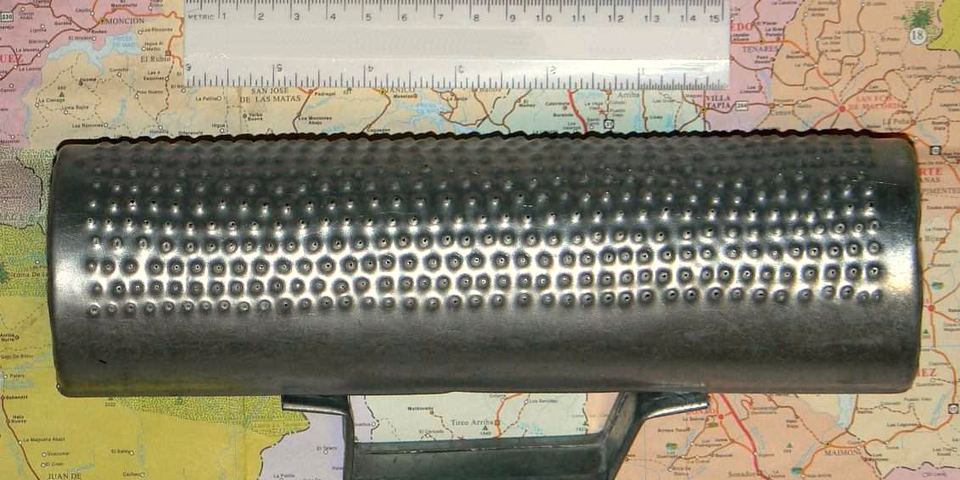
The güira is a percussion instrument from the Dominican Republic. It is a tube of thin sheet steel covered with small raised bumps. The player holds it by a handle and scrapes it with a stiff brush of metal tines. The güira keeps the pulse in merengue and bachata, and its metal sound carries over a full band.
This piece is a merengue. Merengue is a style of dance music from the Dominican Republic. A bar has two beats. Clap on the beats as you listen. Next, say the güira pattern over the music: "and a ONE, and a TWO."
Music: Envato (BrownHouseMedia)
The sound of the güira
This short recording is the güira alone. Listen for the swish of the metal tines across the bumps.
Names of the güira
Güira is pronounced GWEE-rah. A person who plays it is a güirero.
The güira is often confused with the guiro. The guiro is a scraper made from a dried gourd, and its sound is woody.
Where the güira is played
The güira comes from the Dominican Republic, where it is thought to be the most widespread instrument in the country. It belongs above all to merengue típico. This traditional merengue is led by the accordion.
Other countries have taken it up. In Colombia the güira has replaced the wooden guacharaca in much vallenato and in many dance bands.
The role of the güira in music
The güira drives the tempo. In merengue típico it interlocks with the tambora. The tambora is a small drum laid on its side. The player strikes it with one stick and one bare hand. Güireros and tamboreros often lead the percussion together.
Music for the güira
The güira plays in the fast merengue típico, also called perico ripiao, and in the slower pambiche. It is heard in bachata and in modern cumbia as well.
How the güira is made
Makers hammer many small dimples into a sheet of thin steel and roll it into a tube about thirty-three centimeters (thirteen inches) long. A large rounded handle keeps the holding hand from tiring.
The brush is often a metal hair pick. Some players use a scraper with teeth of cane or plastic. A variant called the torpedo has closed ends and beads inside, so it can also be shaken.
How the güira is played
The player holds the güira by its handle in one hand. The other hand, usually the stronger one, draws the brush across the bumps.
The basic pattern sounds on all the beats. Pairs of quick notes lead into the strokes. Count "and a ONE, and a TWO." The result is a galloping figure. Players also change how much the metal is damped, which makes the sound drier or more ringing.
Choosing a güira
Many güiras come with a brush, but players often choose a metal hair pick of their own. Try both, and keep the one that gives an even sound on all the strokes.
First steps on the güira
Start the metronome at a slow tempo. Draw one long stroke down the güira per beat.
Then add two short strokes before the stroke on the beat to make the gallop. Keep the long strokes steady as the tempo rises.
A short check
Choose one answer per question. The explanation appears below the correct answer.
What is the güira made of?
The güira is a tube of thin steel covered with small raised bumps.
How does the güira differ from the guiro?
Both are scrapers. The metal güira sounds bright and metallic, and the gourd guiro sounds woody.
Where does the güira come from?
The güira comes from the Dominican Republic, where it belongs to merengue.
What does the basic güira pattern sound like?
A pair of quick notes leads into the beat, which gives a galloping figure.
Sources
Common questions
Is a güira the same as a guiro?
No. Both are scrapers, but the güira is metal and the guiro is a gourd. The güira sounds brighter and carries farther.
What do you scrape a güira with?
Players use a brush with stiff metal tines. A metal hair pick is the most common choice.
Which music uses the güira?
Merengue típico, bachata and modern cumbia use it. Colombian vallenato bands play it too.
Why does the güira have a large handle?
The rounded handle spreads the weight across the hand. A player can then hold the güira through a long dance set.
What is merengue típico?
It is the traditional merengue of the Dominican Republic. The accordion leads it, and the tambora and the güira play with it.
World MusicBachataScrapersMaracasLevel 3 course