The uilleann pipes
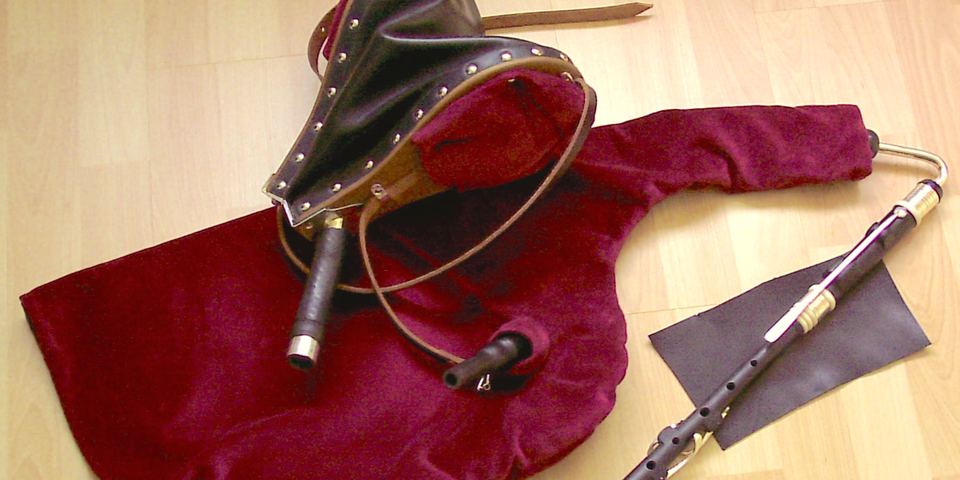
The uilleann pipes are the national bagpipe of Ireland. The player fills the bag with a small bellows strapped to the waist and the right arm. The other arm squeezes the bag to send air to the reeds. A chanter plays the melody, three drones hold steady notes, and keyed regulators add chords.
Patsy Touhey plays the jig “The Maid on the Green” on this early record from 1919. A jig is an Irish dance tune in six-eight time. A beat holds three quick notes, so count the tune in groups of three.
The sound of the uilleann pipes
A reel on the uilleann pipes comes first. A reel is a dance tune with four beats to a bar. The early disc holds three reels, and this excerpt is from “The Maid that Left the Country”. Old discs add some surface noise.
In the second recording, a chanter alone plays a reel. It has no drones or regulators, and it is pitched in C.
The last recording is a medley of reels. A medley is a set of tunes played one after another. Patsy Touhey recorded it on the same day as the jig.
Names of the uilleann pipes
Uilleann is a form of the Irish word for elbow. The Irish name píob uilleann means pipes of the elbow. The name comes from the way the pipes are filled with air. The older English name is union pipes. It appears in writing late in the eighteenth century.
The pipes are also sometimes called the Irish pipes.
Where the uilleann pipes are played
The uilleann pipes belong to Ireland. They took shape early in the eighteenth century. Bellows pipes appeared in Scotland and in northern England at about the same time. Irish pipemakers later built and sold uilleann pipes in the United States as well.
The role of the uilleann pipes in music
The pipes play the dance music and the slow airs of Irish tradition. The chanter carries the tune. The drones sound a steady tonic below it, and the regulators add short chords and accents.
The tone is sweeter and quieter than that of most bagpipes. The pipes are usually played indoors and almost always sitting down.
Music for the uilleann pipes
Irish music was mostly solo music until late in the nineteenth century. Sets pitched in D are now used most often with other instruments. Flat sets, which are pitched lower, are used more for solo playing.
Some pipers close the chanter between notes, so that the notes stand apart. This style is called closed piping. In open piping the notes run together.
How the uilleann pipes are made
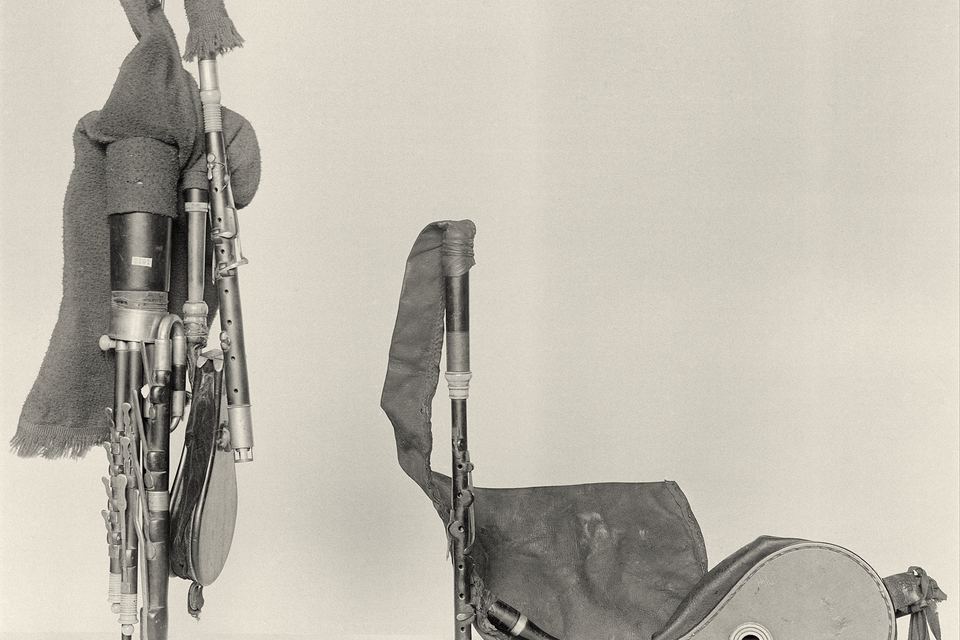
A full set has a chanter, three drones and three regulators. A single bag feeds them all. The drones are open pipes tuned in octaves, and they use single reeds. The chanter and the regulators use double reeds. These are like the reed of an oboe.
The chanter has eight finger holes. Many chanters also have metal keys for sharps and flats. Making a good chanter reed is so hard that pipers call the reed the piper’s despair.
How the uilleann pipes are played
The player sits with the bag under one arm and the bellows under the other. The chanter rests on the right thigh, often on a leather strap, and this closes its bottom end.
With all holes closed, the chanter falls silent. The player can therefore separate notes cleanly. Pressing harder on the bag sends the chanter into its second octave. The wrist or the hand presses the keys of the regulators to add chords.
How the uilleann pipes have changed
Most early sets were flat sets, pitched in keys such as C, B and B♭. Late in the nineteenth century, Irish pipemakers working in Philadelphia built louder pipes in D for large halls. Most sets made today are in D.
A tutor book of the eighteenth century called the early form the Pastoral or New bagpipe. Its chanter played only in the open style, in which the notes are connected.
Choosing a set of uilleann pipes
Most beginners start on a practice set. It has a bag, a bellows and a chanter. It has no drones or regulators. A half set adds the three drones, and a full set adds the regulators.
Choose the pitch next. A set in D plays with most other instruments of Irish music. A flat set has a mellower tone and suits solo playing.
First steps on the uilleann pipes
The first skill is to pump the bellows steadily while you keep an even pressure on the bag. Practice this before you add the chanter. Then play slow scales on the chanter as it rests on your thigh. Lift it off the thigh only for the bottom D.
A short check
Choose one answer per question.
What fills the bag of the uilleann pipes?
A small bellows, strapped to the waist and the right arm, pumps air into the bag.
What do the regulators add?
The regulators are closed pipes with keys. The wrist presses the keys to add chords.
Why does the chanter fall silent when all its holes are closed?
The chanter rests on the thigh, which closes its bottom end. With all the holes closed, no air can escape.
Sources
Common questions
What is the difference between uilleann pipes and Scottish bagpipes?
Scottish Highland pipes are blown by mouth and played standing. Uilleann pipes are filled by bellows and played sitting down. They sound sweeter and quieter, and they have regulators for chords.
How do you pronounce uilleann?
In English it is said ILL-in or ILL-yin.
What key are uilleann pipes in?
Most modern sets are in D, and the bottom note of the chanter is near the D above middle C. Older flat sets are in C, B, B♭ and other keys.
What is a practice set?
A practice set is a bag, a bellows and a chanter. It has no drones or regulators. Advanced players also use one to play the chanter alone with other musicians.
How many octaves can the uilleann pipes play?
The chanter plays two full octaves. Unlike most bagpipe chanters, it can be overblown into its second octave.
What are the drones of the uilleann pipes?
They are three open pipes that sound one steady note in three octaves. They lie across the right thigh and can be switched off with a key.
World MusicBagpipeBodhránTunerTin whistle