Metronome
Start at about sixty clicks a minute. A compás of soleá lasts twelve clicks.
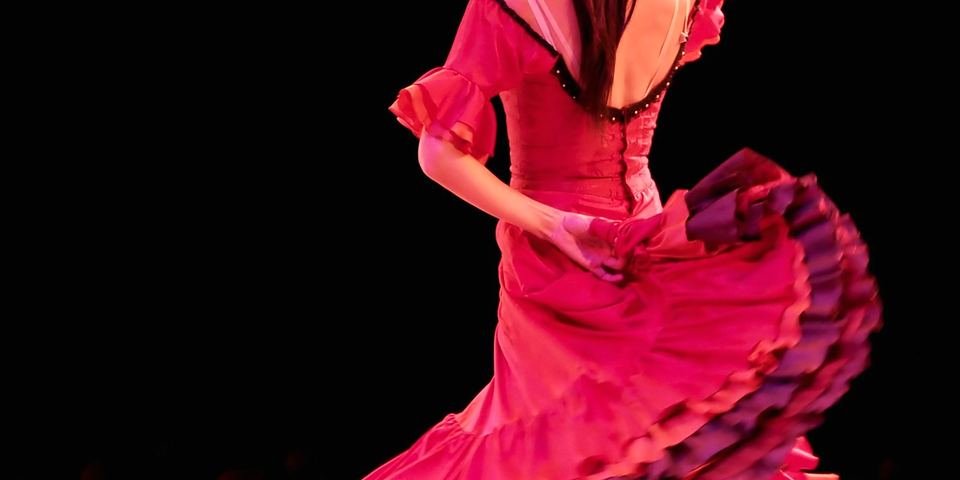
Flamenco is the song, dance and guitar music of Andalusia in southern Spain. Gitano communities, the Roma of Spain, shaped it together with other Andalusians. Song is cante, dance is baile and guitar playing is toque. Handclaps called palmas keep the compás. The compás is the rhythmic cycle of a style.
This flamenco piece is for nylon-string guitar and percussion. The section on the flamenco guitar below explains how flamenco players strum and pick.
Music: Envato (AudioZen)
Compás is the Spanish word for meter. In flamenco it also means the rhythmic cycle of a style. The most typical cycle has twelve counts. In soleá they fall into groups of three, three, two, two and two. The last count of a group carries the accent. In a march the accent falls on the first count of a group. In flamenco it falls on the last, and this gives the compás its forward pull.
Without a guitar, the compás is kept by palmas or by knuckles on a table. Cupped hands give a soft and muffled clap. Flat fingers struck on the palm give a sharp clap. Shouts of encouragement, called jaleo, also fall in time with the compás. Olé is the best-known shout. Bulerías is a fast and festive style. In Jerez the palmas for bulerías are often clapped in groups of six. The recording is a base of palmas and cajón for bulerías from Jerez.
The cajón is a wooden box drum from Peru. Enslaved Africans in coastal Peru developed it. The player sits on it and strikes its front with the hands. Flamenco musicians brought it to Spain from Peru in the late twentieth century. Its deep and sharp strokes now play the compás beside the palmas.
A palo is a style of flamenco. A palo has its own compás, mode, chords and verse form. There are more than fifty, and musicians sort them into families. The serious palos form the cante grande, or great song. The lighter palos form the cante chico, or small song.
Soleá is serious and steady, and it is often called the mother of the palos. Seguiriya is one of the most serious palos. Its twelve counts begin at a different point of the cycle, so its accents feel uneven. Bulerías is fast, and it grew among the Gitanos of Jerez. Alegrías comes from Cádiz and uses a major key. Tangos move in four beats, and fandangos and sevillanas in three.
Some palos are sung without a guitar. The tonás and the martinete, the song of the blacksmith's forge, are examples. They have no fixed compás. The last family is the cantes de ida y vuelta. The name means songs of the round trip. These palos traveled to Latin America and came back to Spain with new rhythms. The guajira and the rumba belong to this family.
| Palo | Compás | Character |
|---|---|---|
| Soleá | Twelve counts | Serious and steady, in the flamenco mode |
| Seguiriya | Twelve counts, from another starting point | The most serious, in the flamenco mode |
| Bulerías | Twelve counts, fast | Festive and playful |
| Alegrías | Twelve counts | Bright, in a major key, from Cádiz |
| Tangos | Four beats | Lively, in the flamenco mode |
| Fandango | Three beats | Sung verses in a major key with guitar passages in the flamenco mode |
| Tonás | No fixed compás | Sung without a guitar |
A flamenco singer is a cantaor. Cante jondo, or deep song, is another name for the cante grande. It covers the most serious palos. Cante chico covers the lighter palos. The singer is the center of traditional flamenco, and the guitar and the dance follow the voice.
A performance is a chain of verses called coplas or letras. Many coplas have three or four short lines. The singer stretches single syllables over long ornaments and glides from note to note. Some steps of the melody are smaller than a half step. Most traditional songs stay within a range of six notes, and the singer finds variety in the color of the voice. Singers keep the old melodies, but they vary them in the moment, so no two singers sing a copla in the same way.
Between the verses the guitar plays its own melodies, called falsetas. The listeners call out jaleo at the high points. Flamenco people speak of duende, a dark power that grips a singer at the best moments. The poet Federico García Lorca gave a famous lecture on it.
A flamenco dancer is a bailaor. The dancer holds the back upright and moves the arms and hands in curved lines. Zapateado is the rhythmic footwork of the heels and toes. The strokes of the shoe ring out like a drum, and the feet add their own rhythm to the compás.
In the improvised style, the dancer and the musicians follow signals and calls. The dancer marks the end of a section with the feet, and the guitarist answers. A dance in alegrías has a fixed order of sections. It begins with an entrance and moves to a slow, quiet section. A long passage of footwork follows, and the dance ends in fast bulerías. Classical flamenco dance companies set the steps in advance and stage them in theaters.
A flamenco guitarist is a tocaor. The flamenco guitar is lighter than the classical guitar. Its top is thinner, and the wooden strips under the top, called braces, are lighter. Its back and sides are often Spanish cypress, and its top is spruce. The strings sit low over the frets, so the guitar responds quickly and its tone is bright and percussive. A plate called the golpeador protects the top. The player taps it to accent the compás.
Rasgueado is a fast strum. The player fans the fingers out across the strings one after another. Picado is a run of single notes played with two fingers in turn. In alzapúa the thumb moves down and up across the strings like a pick. Trémolo repeats one melody note quickly with three fingers while the thumb plays the bass. A falseta is a melody that the guitarist plays between verses.
Flamenco players often use a capo, which they call a cejilla. It raises the pitch of all the strings, so the guitarist keeps the same chord shapes in the key of the singer. Most players cross their legs and hold the neck almost level.
The first button below plays the guitar piece from the top of the page again. The second button plays a remate in soleá. A remate is a closing figure at the end of a cycle. The third button plays a figure that moves between the chords of A and B♭. This motion is common in bulerías.
Music: Envato (AudioZen)
Many palos use the flamenco mode. It is close to the Phrygian mode. The Phrygian mode is the scale from E to E on the white keys. Its second note lies only a half step above the first, and this step gives the mode its dark color. Flamenco often raises its third note, so the chord of E is major.
The Andalusian cadence is a falling pattern of four chords. It runs through A minor, G, F and E. In flamenco the chord of E is the point of rest. The chord of F, a half step above it, carries the strongest pull toward it. Guitarists play the mode on E or on A with open strings, and the cejilla moves it to other keys. Some palos use major keys, and a few use minor keys.
Flamenco comes from Andalusia. The art also has roots in Murcia and Extremadura. The Gitano community played a central part in its growth. In the nineteenth century the word flamenco was also a name for the Gitanos. Flamenco took shape in the towns of lower Andalusia. Jerez, Cádiz and Seville are among them. It drew on Andalusian folk song, on the dances of Spain and on the music of the Gitano families.
In the late nineteenth century flamenco moved into the singing cafés of Andalusian cities. The singer Silverio Franconetti opened one of the first of them in Seville. In these cafés singers, dancers and guitarists became professionals. They competed for the public, and many palos took their present form.
In the early twentieth century flamenco moved to theaters and bullrings. The shows in them were called flamenco opera. Some feared that the old deep song would be lost. To preserve it, the composer Manuel de Falla and the poet Federico García Lorca held a contest of cante jondo in Granada. Guitarists such as Ramón Montoya and Sabicas later made the flamenco guitar a concert instrument of its own.
Flamenco is now inscribed on the UNESCO list of intangible cultural heritage. Families, social groups and flamenco clubs, called peñas, pass the art on. Flamenco is heard at religious festivals, at rituals and at private celebrations. Jerez has a chair of flamenco studies. This is a group of scholars who study and teach the art. Conservatories in Spanish cities such as Córdoba and Murcia teach flamenco.
The flamenco guitar has two main sounds. Strummed chords give weight and rhythm, and runs of single notes give speed and melody. Play the guitar piece at the top of the page and notice when the guitar strums and when it picks single notes. Then listen for the points of rest at the ends of phrases, where the music comes back to its central chord.
Next, play the palmas with the cajón and count along. Find the accents of bulerías and clap them softly. When you hear a full performance with a singer, listen for the order of events. The guitar opens and sets the compás. The singer enters, and the verses follow. Falsetas fill the spaces between the verses, and the dancer answers the music with the feet.
Count from one to twelve at a slow, even speed. Clap loudly on three, six, eight, ten and twelve. Clap softly on the other counts.
When the accents feel steady, count a little faster. Then play the palmas recording again and clap with it. Clap softly, and clap louder on the accents. Later, play the Andalusian cadence on a guitar or a piano while a friend claps the compás.
Start at about sixty clicks a minute. A compás of soleá lasts twelve clicks.
Choose one answer per question. The explanation appears below the correct answer.
In the soleá compás, which counts carry the accents?
The twelve counts fall into groups of three, three, two, two and two. The groups end with an accent.
What are palmas?
Palmas are handclaps. Footwork is zapateado, and the guitar interludes are falsetas.
Which chords make the Andalusian cadence that falls to E?
The cadence falls through A minor, G and F to E. In the flamenco mode on E, the chord of E is the point of rest.
What is a falseta?
A falseta is a guitar melody between the verses. It gives the singer a rest and shows the style of the guitarist.
It is the art of song, dance and guitar from Andalusia in southern Spain. Gitano and other Andalusian communities created it.
It is the rhythmic cycle of a palo. Many palos use twelve counts with accents in fixed places.
Count twelve beats and stress three, six, eight, ten and twelve. The twelfth count is the strongest point of the cycle.
Soleá, seguiriya, bulerías, alegrías, tangos and fandangos are among the best known. They have their own rhythm and mood.
The flamenco guitar is lighter. It has a thinner top, lower strings and a tap plate called the golpeador. Flamenco players often cross their legs and hold the neck almost level.
It came to flamenco from Peru. Today flamenco groups use it widely to keep the compás.
Duende is the name flamenco artists give to a dark power that grips a performer at the best moments. Lorca described it in a famous lecture.
It is a shout of encouragement from the listeners or the other performers. Shouts like it are called jaleo.