The steady beat (free)
Music has a steady beat, like the tick of a clock. Your child marches to the beat and claps it.
Level 1 is for children aged three to six. A grown-up sits beside the child and reads the words aloud. The child needs no reading. A lesson takes about five minutes and begins with music to move to. The child claps, sings and listens.
Music has a steady beat, like the tick of a clock. Your child marches to the beat and claps it.
Some sounds are high, and some sounds are low. The child reaches up high for a high sound and touches the floor for a low one.
Some music sounds big and strong, and some music sounds soft and gentle. Big music gets loud claps, and gentle music gets quiet ones.
For fast music, your child runs in place. For slow music, your child walks with slow steps.
Some sounds stop quickly, and some sounds last a long time. Your child listens to long sounds and claps short, short, long.
The cuckoo is a bird whose call has two notes. Singers call these notes so and mi. Your child sings the call: so, mi, so, mi.
In echo clapping, one person claps a short rhythm, and the other person claps it back. Here the site claps first, and your child echoes it.
A lullaby is a quiet song for a child going to sleep. You and your child sing the start of Brahms' Lullaby together.
Instruments sound different from one another. Your child hears five instruments and tells which one is playing.
A picture can show the beat. Big dots and small dots stand for the beats, and your child claps on the big ones.
By the end of the Western path, a child will be able to:
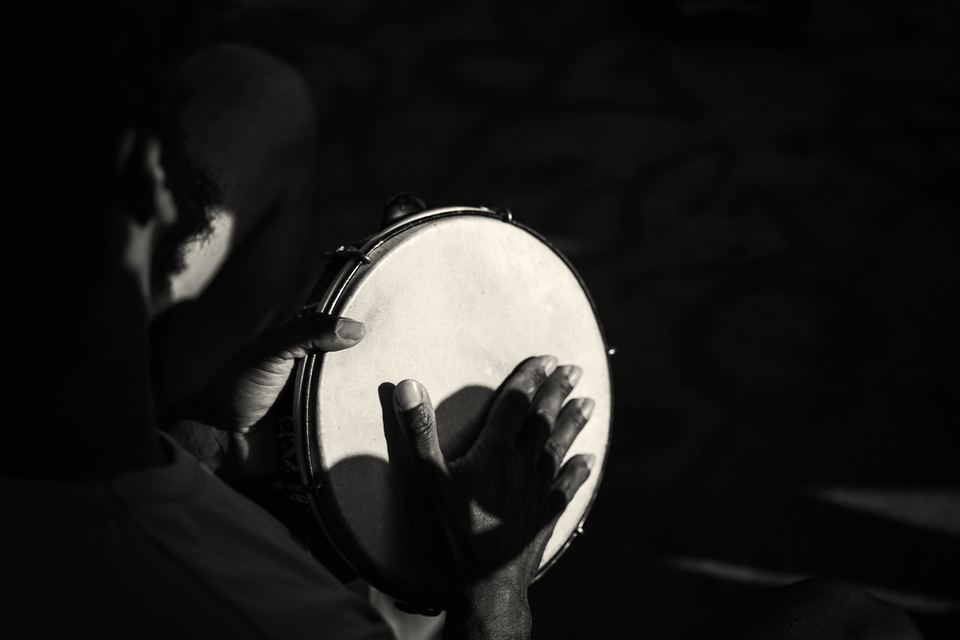
The same melody is played three ways. The first version is a Western chorale. The second version is Hindustani. It opens with an alap, which is a slow section with no regular beat. A section in teentaal follows. Teentaal is a rhythm cycle of sixteen beats. A tanpura drone sounds under the whole Hindustani version. The third version is a jazz bossa nova.
The lessons of this level follow Western music. A child can also hear Hindustani music and jazz on these free pages.
The online tanpura plays a soft, steady drone for humming. The tala player plays the tabla, a pair of Indian drums, for clapping along. The sargam page plays Sa, Re and Ga. They are the first Indian singing names. The Listening Room has early jazz among its recordings.
The skill map lists the skills of the Western path and the lessons that teach them. It also shows the skills the child has completed in the lessons.
The check replays three activities of the path. The site listens to the clapping and the singing, and the grown-up confirms what the child did. A child may try again right away.
Level 2 follows Level 1. In Level 2, a child begins to read rhythms and plays a first tune on the keyboard or the recorder.