Metronome
Start at about sixty clicks a minute. A click is one beat of the batida.
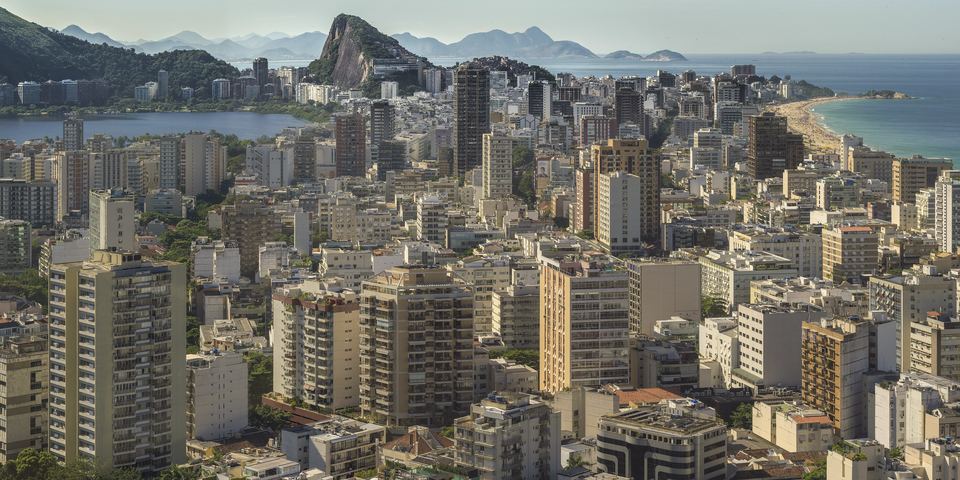
Bossa nova is a style of Brazilian song that grew from samba in Rio de Janeiro. The name means new trend in Portuguese. A guitarist plucks a syncopated samba pattern on a nylon-string guitar, and the singer sings quietly over unusual chords. Many bossa nova songs became jazz standards. A standard is a well-known song that jazz musicians play.
Listen for the soft bass on the beats of this bossa nova piece. As in the batida, many chords fall on the first beat, halfway through it or after the second beat.
Music: Envato
Nova means new in Portuguese. Bossa was old Brazilian slang for a natural flair or a stylish way of doing something. An older samba song already used the word in this sense. Together the words mean a new trend or a new wave.
In the beach culture of Rio de Janeiro, young musicians used bossa for a fresh way of playing or singing. A Brazilian writer traced the name to the notice for a university concert in Rio. The name soon passed to the whole style.
Batida is the Portuguese word for beat or stroke. In bossa nova it means the pattern of the guitarist's right hand. The batida turns the full percussion of a samba school into two parts for one guitar. The thumb copies the surdo. The surdo is the large bass drum of samba. The fingers copy the tamborim. The tamborim is a small frame drum struck with a stick.
Bossa nova is usually written in 2/4 time. In this meter a bar has two beats. The thumb plucks a bass note on the beat. It usually moves between the root of the chord and the fifth below. The fingers pluck the upper notes of the chord together. They strike on the two eighth notes of beat one and then on the second sixteenth note of beat two. Players often vary the second bar, so the pattern sways across two bars.
The grid shows two bars of the batida. The recording plays it on our recorded guitar over the chords C major seven, D minor seven and G seven.
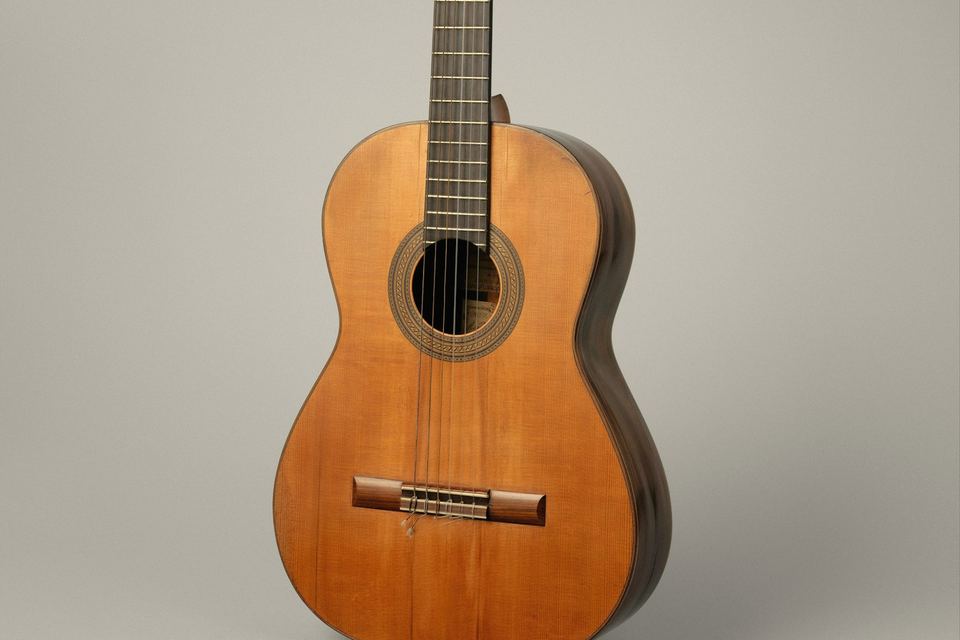
Bossa nova is most often played on a nylon-string guitar. Brazilians call it the violão. The player plucks with the fingers and uses no pick. The nylon strings give a soft tone, and the low notes of the thumb stay quiet under the voice.
The purest form of bossa nova is one voice with one guitar. Even in a large band, a guitar usually keeps the batida underneath. Bossa nova is played straight, so its eighth notes are even. In jazz the first eighth note of a pair is often held a little longer. Musicians call that feel swing. The recording below plays a short bossa nova pattern on the guitar.
Son clave is the basic rhythm pattern of the Cuban son. The bossa nova clave is close to it, and only one stroke differs. Son clave has a side with three strokes and a side with two. In the bossa nova clave, the second stroke of the two-stroke side comes one sixteenth note later.
Drummers often play this pattern as a rim click on the snare drum. They keep a soft, steady pulse with brushes or on the hi-hat. In a percussion section, the surdo repeats a short figure in the bass. A player shakes the cabasa in a steady line of sixteenth notes. The cabasa is a shaker with a chain of metal beads. Hear both patterns on the piano with a low note on the beat.
Bossa nova uses rich chords, many of them with added notes. A major seventh chord is one example. It adds the seventh note of the scale to a major chord. Minor seventh chords, ninth chords and chords with a sixth and a ninth are also common.
The inner notes of these chords often move by half steps from one chord to the next. A quiet line moves inside the harmony beneath the melody. Samba guitarists played similar chords long before bossa nova began, so the harmony grew in Brazil as well as in jazz. Jazz musicians later took up many of these songs as standards.
Many Brazilian singers before bossa nova sang loudly in a brassy, almost operatic style. Bossa nova singers sing softly and with restraint. The voice stays near the range of speech, and the singer places the words lightly against the beat of the guitar.
The songs are sung in Portuguese. Their themes are love, longing, homesickness and nature. Saudade is a Portuguese word for a deep longing for someone or something absent. It runs through many of the songs. Jazz singers in the United States later sang many of them in English translations.
Before bossa nova, the leading style of Brazilian song was the samba-canção. It was a slow and dramatic form of samba. Young musicians in the Zona Sul, the beach neighborhoods of Rio de Janeiro, wanted a quieter sound. They met in apartments and in the small nightclubs of the Beco das Garrafas. This is a dead-end alley in Copacabana.
The new style first appeared on a record by the singer Elizeth Cardoso. The record included two songs by the composer Antônio Carlos Jobim and the poet Vinicius de Moraes. A young guitarist from the state of Bahia played the guitar on them. His batida and his quiet voice became the model for the style. His album Chega de Saudade launched bossa nova. Its title song is by Jobim and de Moraes.
The consulate of Brazil later presented bossa nova in a concert at Carnegie Hall in New York. Jazz musicians in the United States recorded many bossa nova albums. An album by an American saxophonist with Brazilian musicians won the Grammy for Album of the Year. Jobim and de Moraes wrote Garota de Ipanema. In English it is known as The Girl from Ipanema. It is one of the most recorded songs in history.
In Brazil, bossa nova later gave way to a new popular music known as MPB. Its songs spoke more directly about society. The style stayed popular abroad. In Japan it became a favorite music of cafés, and its records are still reissued there.
Bossa nova is sung in the Portuguese of Brazil. Musicians in many countries still use its Portuguese words for the instruments, the beat and the feeling of the songs. The table lists the common terms. Saudade has no single English equivalent. The feeling mixes sweetness with sadness.
| Word | Meaning |
|---|---|
| Bossa | Flair or style. Bossa nova means a new trend. |
| Violão | The nylon-string guitar |
| Batida | The beat or stroke of the guitarist's right hand |
| Samba-canção | A slow and dramatic samba song. It was the leading style before bossa nova. |
| Surdo | The large bass drum of samba |
| Tamborim | A small frame drum struck with a stick |
| Saudade | A deep longing for someone or something absent |
| Zona Sul | The beach neighborhoods of Rio de Janeiro |
| MPB | Música popular brasileira. It is the popular music that followed bossa nova. |
Bossa nova is mainly music for listening. Samba has its own dance steps, but bossa nova has none of its own in Brazil. When the music became popular, a bossa nova dance was promoted as a fashion. The dancers swayed from side to side on soft knees, alone or in pairs. A basic step went forward, tapped, went back and closed. Dancers also adapted the box step of the rumba to the music. The fashion faded after a few years, and people went on listening to the music.
Bossa nova belongs to the Zona Sul of Rio de Janeiro. Ipanema, Leblon and Copacabana are its home neighborhoods. The Beco das Garrafas in Copacabana is the alley of the nightclubs where the style first grew. Rio's international airport carries the name of Antônio Carlos Jobim.
The Instituto Antonio Carlos Jobim in Rio de Janeiro preserves his musical and written work. It opens this work to students and researchers, and it also keeps the archives of other Brazilian musicians. Outside Brazil, bossa nova is heard in jazz clubs and appears in the songbooks of jazz musicians. Jazz schools teach many of its songs.
Count two slow, even beats in all the bars of the piece. Next, listen for the lowest notes and notice whether they fall on the beats. In bossa nova the thumb of the guitar or the bass usually plays there.
Then listen for the chords between the beats. They arrive early and lean the music forward. Listen next for the color of the harmony. Notice how chords with added notes sound soft and unresolved. Last, listen to the whole piece at once and notice how quiet it stays.
Music: Envato
Start without the guitar. Tap a steady beat with your left hand on a table. With your right hand, tap the finger part of the batida from the grid above. Count “one e and a, two e and a” and tap on one, on the and of one, and on the e of two.
Then take a nylon-string guitar and hold a C major seventh chord. Pluck the bass with the thumb on the beats. Pluck the upper three strings together with the fingers on the same points as before. Play slowly with a metronome. When it feels steady, change to D minor seven and G seven, as in the recording above.
Start at about sixty clicks a minute. A click is one beat of the batida.
Choose one answer per question.
What does bossa nova mean?
In Portuguese, bossa nova means new trend or new wave.
Which guitar is most often used for bossa nova?
Players use a nylon-string guitar and pluck it with the fingers.
How does the bossa nova clave differ from son clave?
Son clave has a side with three strokes and a side with two. In the bossa nova clave, the second stroke of the two-stroke side comes one sixteenth note later.
In the batida, which samba drums do the thumb and the fingers copy?
The thumb plays the steady bass of the large surdo. The fingers play the syncopated part of the small tamborim.
It is a Brazilian song style that grew from samba. It has a quiet voice and a nylon-string guitar. Its chords are rich and full of added notes.
It started in the South Zone of Rio de Janeiro. Musicians there mixed samba with ideas from jazz, choro and classical music.
Pluck with the fingers on a nylon-string guitar. The thumb keeps the bass notes on the beats, and the fingers play the chords in a syncopated samba pattern called the batida.
The nylon-string guitar and the voice are central. A piano, a bass, drums and percussion are often added. A saxophone or a flute often plays the melody in jazz versions.
Bossa nova is Brazilian music with roots in samba. Jazz musicians adopted many of its songs, and many of them are now jazz standards.
Antônio Carlos Jobim wrote the music, and Vinicius de Moraes wrote the Portuguese words. Its Portuguese title is Garota de Ipanema.
Saudade is a Portuguese word for a deep longing for someone or something absent. Many bossa nova songs carry this feeling.
In Brazil it is music for listening, and it has no dance of its own. A bossa nova dance was in fashion for a few years, and its dancers swayed softly from side to side.
World MusicClave rhythmGuitar chordsHow to play guitar