The synthesizer
A synthesizer is an electronic instrument that builds its sound from electric signals. An oscillator makes a raw tone. A filter shapes its brightness, and an envelope shapes how the notes start and fade. Most synthesizers are played from a keyboard. They are heard in pop, film music, hip hop and electronic dance music.
Analog synthesizers play this electronic piece. Listen for how the sounds begin and end. The envelope of a synthesizer shapes both.
Music: Envato (watermello)
The sound of the synthesizer
The first recording below is a lead melody on one analog synthesizer over an arpeggio on another. An arpeggio plays the notes of a chord one at a time. Listen for the steady pattern of the arpeggio under the melody. The second recording plays a bass arpeggio.
In the third recording, the filter opens and closes four times on one buzzing tone called a sawtooth wave. Listen to the tone grow brighter and darker. The same note sounds the whole time, and only its color changes. The fourth recording is a voice-like sound. The last is one held note, so you can hear how it starts and fades.
Names of the synthesizer
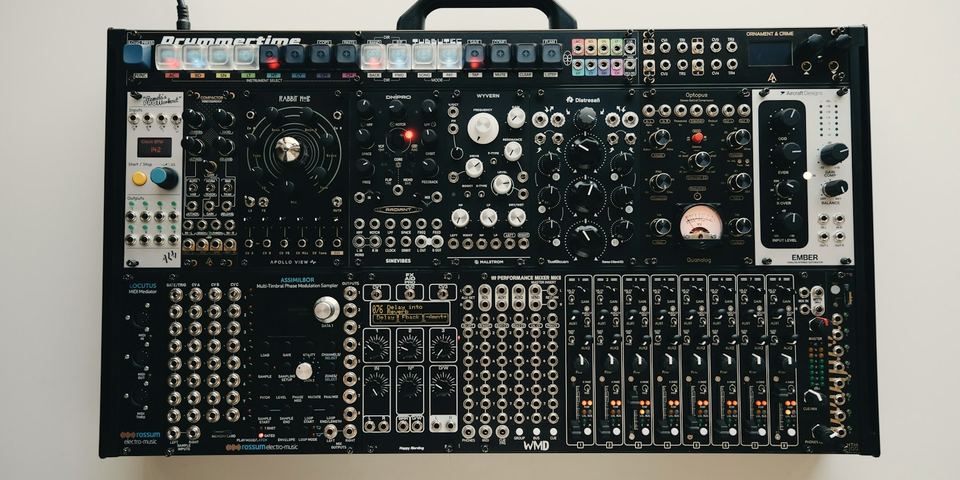
The word synthesis means putting together, and a synthesizer puts a sound together from simple electric parts. Musicians often say synth for short. A synthesizer with its own keyboard is a keyboard synthesizer. A synthesizer without a keyboard is a sound module. The player controls it from a separate MIDI keyboard. MIDI is the shared language that lets electronic instruments and computers play together. A modular synthesizer is built from separate units joined by cables. An analog synthesizer makes its sound with electric circuits. A digital synthesizer computes its sound, and a software synthesizer runs on a computer.
History of the synthesizer
Electronic instruments appeared early in the twentieth century. The telharmonium sent its music over telephone lines. The theremin was played by moving the hands near two antennas. The ondes Martenot and the trautonium followed. These instruments had their own fixed sounds.
The first machines called synthesizers filled a room. The RCA Mark II was the first synthesizer that could be programmed. Engineers at RCA built it and installed it at the Columbia-Princeton Electronic Music Center in New York. It read its music from punched paper tape and used hundreds of vacuum tubes. The composer Milton Babbitt wrote some of its best-known works.
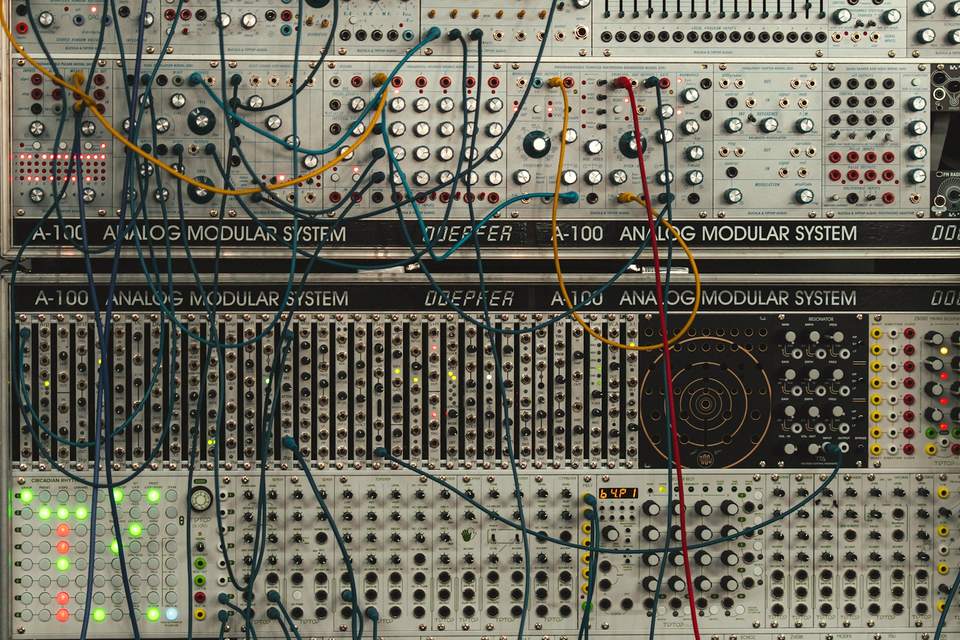
In the nineteen-sixties, Robert Moog in New York State and Don Buchla in California built modular synthesizers. Their modules were joined with patch cables. Moog's voltage-controlled oscillator set its pitch with a voltage, and the design became the standard. Moog's instruments had a keyboard, which made them easy for musicians to play. Buchla's system used touch plates that responded to the position and pressure of the fingers.
The Minimoog put the main parts of a modular system into one portable instrument with a keyboard. It was the first synthesizer sold in music stores, and it made the synthesizer a stage instrument. Early synthesizers played one note at a time. Later in the nineteen-seventies came polyphonic synthesizers, which could play chords and store sounds in memory.
Digital synthesizers spread in the nineteen-eighties. The Yamaha DX7 used frequency modulation. This kind of synthesis came from research at Stanford University. It was the first digital synthesizer to sell in large numbers. MIDI gave electronic instruments a shared language, so keyboards, computers and drum machines could play together. Software synthesizers later moved the instrument into the computer. In recent decades analog synthesizers have returned, and modular systems are popular again.
The role of the synthesizer in music
A synthesizer can play a bass line, a lead melody, chords or a soft background called a pad. It can also imitate other instruments or make sounds that no acoustic instrument makes. Many string, brass and choir sounds in modern songs come from synthesizers.
In a studio, producers often play synthesizer parts from a MIDI keyboard. The computer records the notes and lets the producer change the sound later. A sequencer can repeat a pattern of notes for a whole song, while the producer turns the knobs to change its color.
Music for the synthesizer
Synthesizers moved from the studio onto the stage. Progressive rock and funk players used them for leads and bass lines. Synth-pop and electronic dance music later made them the main sound of a song. In Germany, the Berlin school built long pieces from slowly changing patterns played by sequencers.
Film composers use synthesizers for dark textures and pulsing rhythms. The arpeggiator, which plays the notes of a held chord in turn, is common in electronic dance music. Hip hop producers use deep synthesizer bass lines under their beats. Early video games had sound chips that worked as tiny synthesizers.
How the synthesizer works
In subtractive synthesis, an oscillator makes a wave that is rich in overtones. Overtones are the fainter, higher pitches that sound above the main pitch of a note. A sawtooth wave sounds bright and buzzy. A square wave sounds hollow and a little like a clarinet. A sine wave has no overtones and sounds pure. A noise generator makes a hiss, which is useful for the sounds of wind and drums.
A filter then removes part of the overtones. A low-pass filter cuts the high frequencies and makes the tone darker. The cutoff control sets where the filter starts to cut. The resonance control boosts the frequencies near the cutoff, and the sound gains a sharp edge. Moog's ladder filter was the one part of his design that he patented, and makers still copy it.
An amplifier then shapes the loudness of the notes. An envelope controls it in four stages, which are attack, decay, sustain and release. A short attack gives a sharp pluck, and a slow attack gives a soft swell. A low-frequency oscillator, or LFO, moves the pitch or the filter slowly. The sound then wobbles or pulses.
Other synthesizers work in other ways. Additive synthesis builds a tone from many sine waves. In frequency modulation, one oscillator changes the pitch of another at great speed. The result is a bright, bell-like tone. Sampling synthesizers start from short recordings of real sounds and play them at different pitches.
How the synthesizer is played
Most synthesizers are played from a piano-style keyboard. While one hand plays the keys, the other hand turns knobs or moves the pitch-bend wheel and the modulation wheel. A monophonic synthesizer plays one note at a time, and a polyphonic synthesizer can play chords.
Many keyboards respond to the speed of the keys, and some respond to pressure after a key is down. A sequencer plays a stored pattern of notes, and an arpeggiator plays the notes of a held chord in turn. On a modular synthesizer the player builds a sound by joining modules with patch cables. Players often change the sound during a piece as much as they play notes.
What makes a fine synthesizer
Stable oscillators come first. In an analog instrument they must stay in tune as the circuits warm up. Small differences between the voices give analog sound its warmth. Good designs keep those differences small, so chords stay in tune.
Much of the character of a synthesizer comes from its filter. Famous designs such as the Moog ladder filter are still copied in hardware and in software. A fine filter sounds smooth as it sweeps. It stays clean when the resonance is high.
Good controls make a synthesizer easy to play. Knobs and sliders should move smoothly and change the sound without jumps. A good keyboard senses how fast a key goes down. Clear labels and one knob per function let a player shape the sound quickly on stage.
In digital and software synthesizers, the quality lies in the sound engine and its design. Clean oscillators with no harsh digital noise mark a good instrument. So does fine control of the settings.
Choosing a synthesizer
A beginner can start with a small keyboard synthesizer or with software played from a MIDI keyboard. Look for clear controls for the oscillator, the filter and the envelope. Check how many notes it can play at once. These notes are called voices, and chords need several voices.
A full-size keyboard helps players who also play the piano. With one knob per function, a beginner learns synthesis faster than with menus. Many players start with software, which costs little, and add hardware later. Headphones and a small amplifier or powered speakers complete the setup.
Who keeps these instruments
The first synthesizers are now museum pieces. The RCA Mark II still stands at the Computer Music Center of Columbia University in New York, where it was installed. It no longer works. The Deutsches Museum in Munich keeps the Siemens studio for electronic music. The electronics firm Siemens built this room of equipment in Munich in the middle of the twentieth century.
The Bob Moog Foundation in Asheville, North Carolina, keeps Moog's archive and runs a museum called the Moogseum. Its exhibits show how electricity becomes sound. The National Music Centre in Calgary owns TONTO. This giant synthesizer was built from several early systems, and it is on display and can still be played. University studios for electronic music keep modular systems for students to learn on.
First steps on the synthesizer
Start with one simple sound. Choose a sawtooth wave on the oscillator, and play a single note in the middle of the keyboard. Turn the filter cutoff slowly down and up, and listen to the tone darken and brighten.
Next, change the envelope. Set a short attack and a short release for a plucked sound. Set a slow attack and a long release for a soft pad. Then add a slow LFO to the pitch for a gentle vibrato. Write down the settings of the sounds you like. Practice the keyboard part with a metronome.
A short check
Choose one answer per question.
What does an oscillator make?
The oscillator makes the raw tone, a wave such as a sawtooth or a square wave.
What does a low-pass filter do?
A low-pass filter lets low frequencies pass and cuts high ones. Closing it makes the tone darker.
What does an envelope shape?
An envelope sets the attack, decay, sustain and release of a note.
What is an arpeggiator?
Hold a chord. The arpeggiator then plays its notes one at a time in tempo.
Sources
- Wikipedia: Synthesizer
- Wikipedia: RCA Mark II Sound Synthesizer
- Wikipedia: Moog synthesizer
- Wikipedia: Minimoog
- Wikipedia: Buchla Electronic Musical Instruments
- Wikipedia: Yamaha DX7
- Wikipedia: Columbia-Princeton Electronic Music Center
- German Wikipedia: the Siemens studio for electronic music
- Bob Moog Foundation: the Moogseum
- Wikipedia: TONTO
Common questions
What is the difference between a synthesizer and a keyboard?
A synthesizer lets you build and change its sound with oscillators, filters and envelopes. A home keyboard plays a set of ready-made sounds.
What is the difference between analog and digital synthesizers?
An analog synthesizer makes its sound with electric circuits. A digital synthesizer computes the sound with a processor.
Do I need to play the piano to play a synthesizer?
Piano skills help, because most synthesizers use a piano-style keyboard. Many sounds, such as bass lines and leads, need only one note at a time.
What is a patch?
A patch is one sound setting of a synthesizer. The name comes from the patch cables of the first modular synthesizers.
What is a modular synthesizer?
It is a synthesizer built from separate modules. Oscillators and filters are examples. The player joins them with patch cables.
What is subtractive synthesis?
It starts with a wave rich in overtones and removes part of them with a filter. Most classic analog synthesizers work this way.
Who invented the synthesizer?
No single person did. Engineers at RCA built the first machine called a synthesizer. Robert Moog and Don Buchla built the first modular synthesizers that musicians could play.
What does an arpeggiator do?
It plays the notes of a held chord one at a time and in tempo. The player chooses the order, such as up, down or up and down.