The glockenspiel
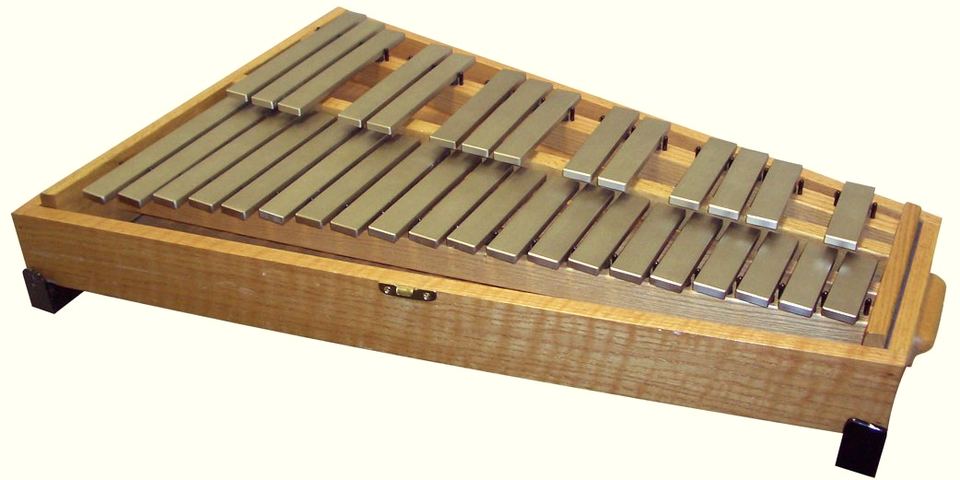
The glockenspiel is a set of tuned metal bars laid out like the keys of a piano. You strike the bars with hard mallets, and they ring with a bright sound. Music for it is usually written two octaves below the notes you hear. It is heard in orchestras, bands and school music rooms.
A glockenspiel, a music box and bells play this lullaby. Listen to how long the glockenspiel notes ring after the mallet leaves the bar.
Music: Envato (Praded)
The sound of the glockenspiel
You can hear one note of an orchestral glockenspiel. Listen to how long the note rings after the mallet strikes.
Names of the glockenspiel
Glockenspiel is a German word made from the words for "bells" and "play." The first glockenspiels were sets of small bells.
The marching form of the instrument is called a bell lyre in the United States, in the United Kingdom and in Canada.
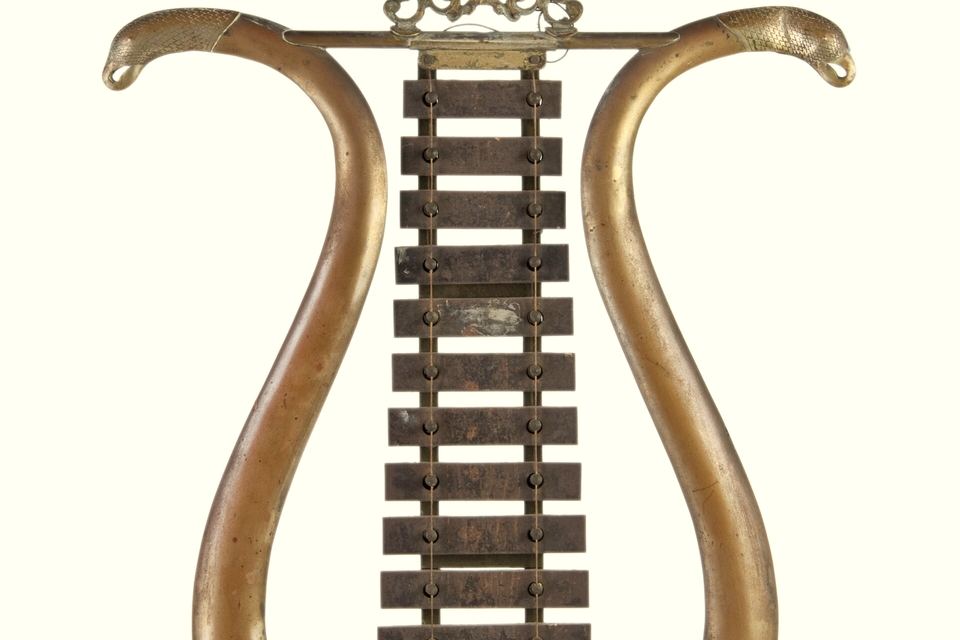
Where the glockenspiel is played
The glockenspiel comes from the European tradition of tuned bells. Wind ensembles, marching bands and popular musicians use it as well as orchestras.
Small glockenspiels are common in classrooms. In the Orff approach to music teaching, children play glockenspiels and xylophones whose bars can be removed.
The role of the glockenspiel in music
The glockenspiel adds a bell-like color to a melody.
In a classroom, a child can play a melody on it with only a few bars in place.
Music for the glockenspiel
In orchestras and bands it plays short, bright passages. In the classroom, children play songs, ostinatos and simple accompaniments on it. An ostinato is a short pattern repeated again and again.
How the glockenspiel is made
The bars are made of steel or aluminum. They are arranged in two rows, like the white and black keys of a piano. Shorter bars give higher notes.
Mallets of brass or aluminum give the brightest sound. Plastic or nylon mallets are used for general playing, and rubber mallets give a warmer tone. Most glockenspiels cover two and a half to three octaves. Larger ones often have a sustain pedal like that of a vibraphone. The pedal lets the bars keep ringing.
How the glockenspiel is played
The player holds mallets in both hands and strikes the bars. A light stroke that bounces off the bar lets it ring.
The front row holds the notes without sharps or flats, so a beginner can play the C major scale on it.
How the glockenspiel has changed
The early instrument used small bronze bells struck with a stick. Metal plates later replaced the bells, and a version with a keyboard appeared in the eighteenth century. Playing with mallets became standard in the nineteenth century.
Choosing a glockenspiel
A classroom glockenspiel with removable bars suits young children. They can play a tune with only the bars they need. Older students can move to an orchestral glockenspiel with two rows of bars.
Check that the set comes with mallets. Plastic or rubber mallets are kinder to the ears in a small room.
Sources
Common questions
What is the difference between a glockenspiel and a xylophone?
A glockenspiel has metal bars and a bright sound. A xylophone has wooden bars and a drier, shorter sound. People often mix up the two names.
What does glockenspiel mean?
The German word joins the words for "bells" and "play." It comes from the bells that the first instruments used.
Does the glockenspiel transpose?
Yes. Its music is usually written two octaves below the sound, so the player hears the written notes two octaves higher.
Which mallets should a beginner use?
Plastic or rubber mallets suit beginners and small rooms. Brass mallets give the brightest sound, so players use them in an orchestra.
Is a glockenspiel a good first instrument?
It is a good first instrument for melody. The notes are bars that you can see, so young children learn high and low and the names of the notes on it.