Shruti box drone
The shruti box holds Sa and Pa without a break. Set it to the Sa that suits your voice.
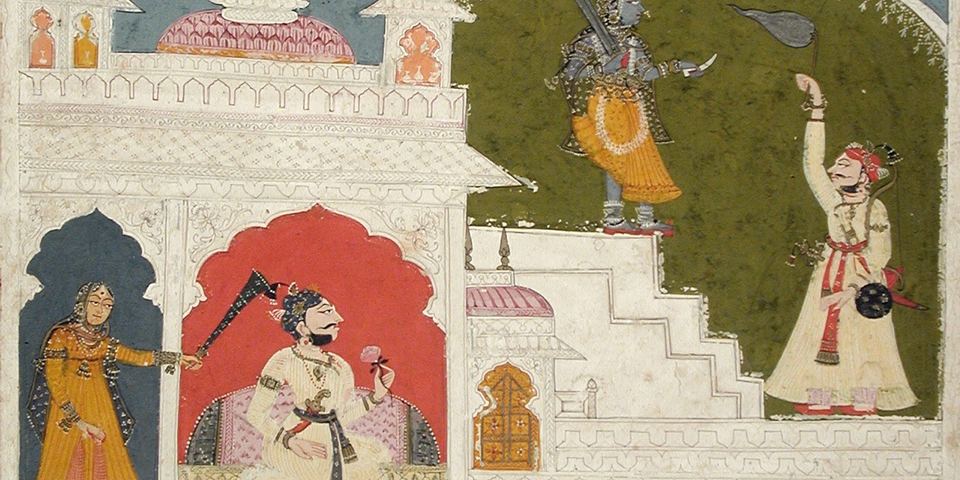
Raag Darbari Kanada, often called Darbari, is a raga of the late night. It belongs to Asavari thaat. Ga, Dha and Ni are komal, or lowered. Re and Ma are shuddha, or natural. With Sa on C, the notes are C, D, E♭, F, G, A♭ and B♭. Singers swing komal Ga and komal Dha slowly.
Imdad Khan plays a gat in Raag Darbari Kanada on the sitar. A gat is a fixed composition for an instrument. This disc was first issued in June 1911. Follow the phrases that dip to komal ga before they fall to Re and Sa.
The aroh is the ascent, and the avroh is the descent. Darbari rarely falls in a straight line. In its avroh, dha comes before ni. After Pa the line dips to Ma and rises to Pa again before it falls to ga. A line that turns back on itself in this way is called vakra.
In the sargam below, a lowercase name marks a komal swara: ga, dha and ni. A dot under a swara marks the lower octave, and a dot over Sa marks the upper Sa. The notes are given with Sa on C.
| Phrase | Sargam | Notes | Listen |
|---|---|---|---|
| Aroh | Sa Re ga Ma Pa dha ni Ṡa | C D E♭ F G A♭ B♭ C | |
| Avroh | Ṡa dha ni Pa, Ma Pa ga, Ma Re Sa | C A♭ B♭ G, F G E♭, F D C | |
| Pakad | Sa Re ga Ma Re Sa, ḍha ṇi P̣a Sa, ḍha ṇi Re Sa | C D E♭ F D C, A♭ B♭ G C, A♭ B♭ D C |
Andolan is a slow swing of the pitch around a swara. In Darbari, singers swing komal Ga and komal Dha. They also tune Ga a little below the usual komal Ga. This lower Ga is called ati komal.
On the piano the phrases keep fixed pitches, so only their outlines are heard. The voice adds the swing.
A common pakad of Darbari has three short phrases. The first rises from Sa to Ma and falls through Re to Sa. The second moves from the lower dha and ni down to the lower Pa. It then rises to Sa. The third comes back to Sa from the lower dha and ni through Re.
Sing the pakad slowly over a drone. Let ga swing gently before it falls to Re.
The shruti box holds Sa and Pa without a break. Set it to the Sa that suits your voice.
The vadi is the most important swara of a raga, and the samvadi is the second most important. The vadi of Darbari is Re, and its samvadi is Pa. With Sa on C, they are D and G.
Darbari belongs to the deep night. Musicians perform it after midnight.
Darbar is a Persian word for a royal court, and Darbari means of the court. Tradition says that Tansen, the court singer of the Mughal emperor Akbar, brought this raga into Hindustani music. He is said to have shaped it from the Kanada ragas of the south. Akbar is said to have asked often to hear it.
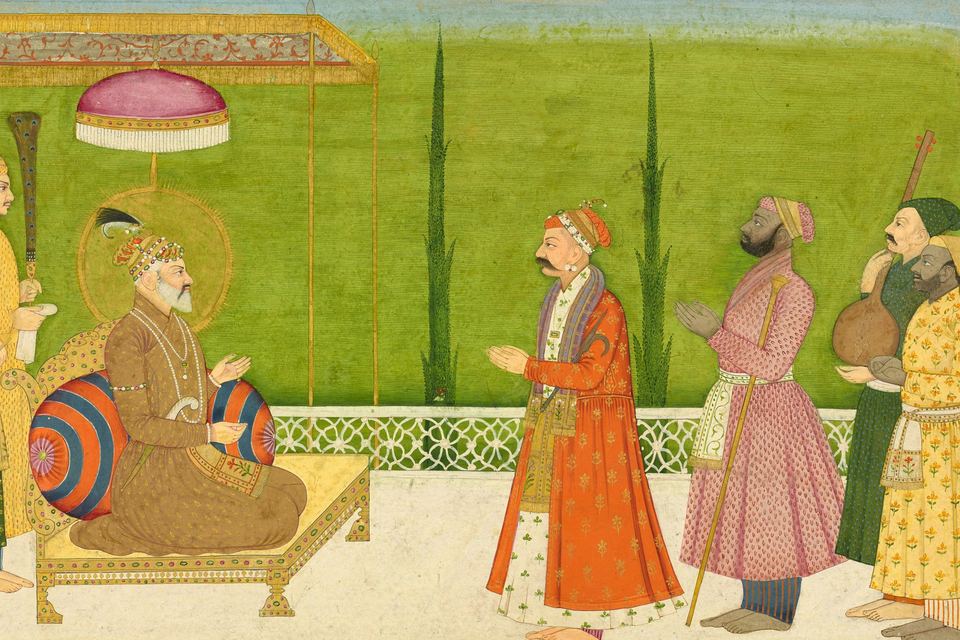
Carnatic music also has a raga called Darbari Kanada. It comes from Natabhairavi, which is the twentieth melakarta. The melakartas are the seventy-two parent scales of Carnatic music. Both the ascent and the descent of the Carnatic raga turn back on themselves.
With Sa on C, the swaras of Darbari form the C natural minor scale. In Western music, this scale is also the Aeolian mode. Asavari thaat has the same seven notes.
Choose one answer per question.
Which swaras of Darbari are komal?
Ga, Dha and Ni are komal. Re and Ma are shuddha.
Which swaras does Darbari swing with andolan?
Singers swing komal Ga and komal Dha slowly. Ga is also tuned a little low.
When is Darbari traditionally performed?
It is a raga of the deep night. Musicians perform it after midnight.
Darbari uses Sa, shuddha Re, komal Ga, shuddha Ma, Pa, komal Dha and komal Ni. With Sa on C, they are C, D, E♭, F, G, A♭ and B♭.
Darbari belongs to Asavari thaat, which has the same seven swaras.
Re is the vadi of Darbari, and Pa is its samvadi. With Sa on C, they are D and G.
Tradition credits Tansen with bringing it into Hindustani music. Tansen was the court singer of the emperor Akbar.
Its low tuning and its slow swing mark the raga at once. A phrase that swings on ga before it falls to Re and Sa is typical of Darbari.
The word comes from darbar, which means a royal court. Darbari means of the court.