Strings
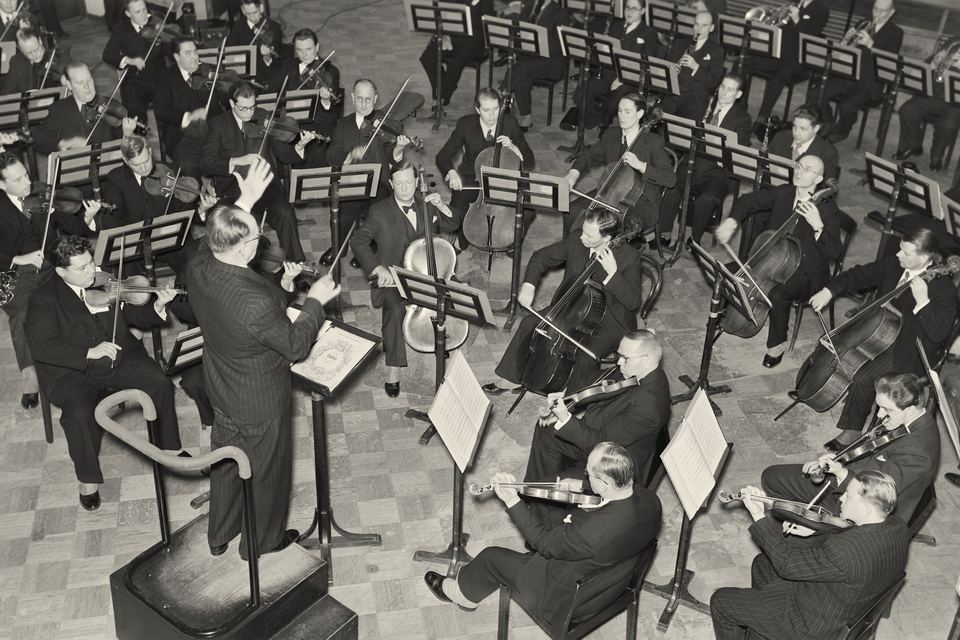
The strings are the violin, the viola, the cello and the double bass. Players draw a bow across the strings or pluck them.
Instrumentation is the choice of instruments for a piece and of the parts that the instruments play. In the study of music, the word also covers what the instruments can do. Orchestration is instrumentation for an orchestra. A symphony orchestra has four main sections: strings, woodwinds, brass and percussion.
The strings are the violin, the viola, the cello and the double bass. Players draw a bow across the strings or pluck them.
The woodwinds are the flute, the oboe, the clarinet and the bassoon. The piccolo, English horn, bass clarinet, contrabassoon and saxophone join them in some pieces.
The brass are the French horn, the trumpet, the trombone and the tuba. Some pieces add the cornet or the euphonium.
The percussion section plays the timpani, the snare drum, the bass drum, the cymbals, the triangle and the tambourine. It also plays mallet instruments such as the glockenspiel.
The harp often joins the orchestra. A piano, a celesta or an organ may also play in the orchestra or as a soloist.
Music for an instrument is written in the clef that suits its range. The alto clef puts middle C on the middle line. A high part in a bass-clef instrument may move to the tenor clef.
| Instrument | Family | Clef |
|---|---|---|
| Violin | Strings | Treble |
| Viola | Strings | Alto |
| Cello | Strings | Bass, with tenor for high notes |
| Double bass | Strings | Bass |
| Flute | Woodwinds | Treble |
| Oboe | Woodwinds | Treble |
| Clarinet | Woodwinds | Treble |
| Bassoon | Woodwinds | Bass, with tenor for high notes |
| French horn | Brass | Treble |
| Trumpet | Brass | Treble |
| Trombone | Brass | Bass, with tenor for high notes |
| Tuba | Brass | Bass |
The lowest note of a string instrument is its lowest open string. Press a note to hear it on the piano.
| Instrument | Lowest open string | Listen |
|---|---|---|
| Violin | G3 | |
| Viola | C3 | |
| Cello | C2 | |
| Double bass | E1 |
A transposing instrument sounds a different pitch from the written note. Concert pitch is the pitch that sounds, as on the piano.
On a clarinet in B♭ or a trumpet in B♭, a written C sounds as B♭. That note is a major second lower. On a horn in F, a note sounds a perfect fifth below the written note. On an alto saxophone in E♭, a written C sounds as E♭.
Some instruments sound in another octave. The piccolo sounds an octave higher than written, and the glockenspiel two octaves higher. The double bass and the guitar sound an octave lower.
| Instrument | A written C sounds as |
|---|---|
| Clarinet in B♭ | B♭ a major second lower |
| Trumpet in B♭ | B♭ a major second lower |
| Horn in F | F a perfect fifth lower |
| Alto saxophone in E♭ | E♭ |
| Piccolo | C an octave higher |
| Double bass | C an octave lower |
A string quartet has two violins, a viola and a cello. Write the parts on separate staves in their own clefs: treble for the violins, alto for the viola and bass for the cello.
Give the melody to the first violin at the start. Let the cello play the lowest notes of the chords. The second violin and the viola fill in the other notes of the chord.
For a clarinet in B♭, write its part a major second higher than the sound you want. The written D then sounds as the C that you hear in your score.
Instrumentation can mean the instruments of any piece, or the study of what the instruments can do. Orchestration means writing music for an orchestra, or arranging other music for one.
They are the strings, the woodwinds, the brass and the percussion. The harp and the keyboard instruments join them in many pieces.
The lowest viola string is the C below middle C. With middle C on the middle line, the low notes of the viola stay close to the staff.
The name gives the pitch that sounds when the player reads C. On a clarinet in B♭, a written C sounds as B♭.
No. The piano sounds the written pitch, and that pitch is called concert pitch.
A string quartet has a first violin, a second violin, a viola and a cello.