Chautaal
Chautaal has twelve matras in six vibhags of two. It is the main tala of the dhrupad, and the pakhawaj plays it.
The aim of this lesson
Clap the four talis of chautaal and wave on both khalis while you say its bols. You complete the lesson when all the claps are on time and no clap falls on khali.
Ektaal or chautaal
Bhatkhande writes chautaal with the same marks as ektaal: X, 0, 2, 0, 3 and 4. So the claps and the waves fall on the same matras.
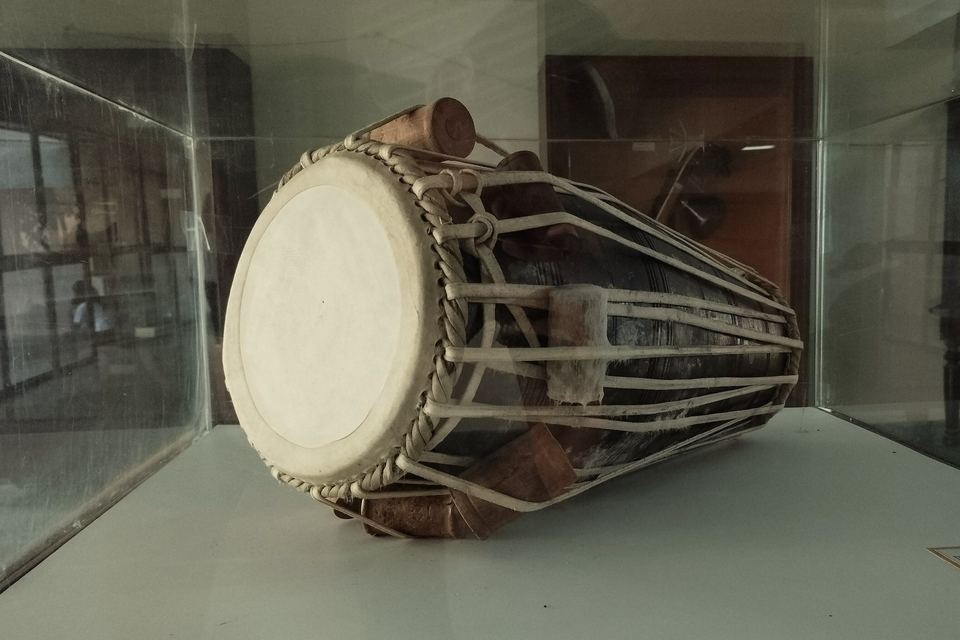
The two talas differ in their bols and in their music. Ektaal goes with the khayal on the tabla. Chautaal goes with the dhrupad on the pakhawaj. The pakhawaj is a barrel-shaped drum with two heads.
Dhrupad
Dhrupad is an old and serious form of Hindustani singing. Listen to this dhrupad in Raag Kedar on an early disc.
The theka of chautaal is Dha Dha, Din Ta, KiTa Dha, Din Ta, TiTa KaTa and GaDi GaNa. Say the bols slowly before you clap.
Press Hear the theka of chautaal. Here the tabla plays the bols of the pakhawaj. It plays the cycle twice and lands on sam once more.
Clapping chautaal
Say the bols as you clap. Clap on matras one, five, nine and eleven. On matras three and seven, wave your hand.
The site plays four soft ticks before the cycle starts. This tempo is a little slower than in ektaal.
Clap into the microphone, or tap the screen.
After clapping
Saying the bols aloud while you clap is called padhant. It helps you feel where the vibhags begin.
Practice on another day: say the theka of chautaal and then the theka of ektaal. Clap both. The hands do the same thing, but the bols change.
The full level
- Membership costs US$4.99 a month. It includes all the lessons in the three paths of Level 4, the Level 4 tests and the certificates.
- You can cancel at any time, and the certificates do not expire.
Next lesson: Tilwada