The Music Stem / Build the skills
Build the skills
Practice with real music
Each lesson begins with music to hear. Then you sing or play it yourself.
Courses
A course in each tradition
Western
Western MusicNotation, pulse, meter, intervals, scales, harmony, musical form and composition.Open the course →
Hindustani
Hindustani MusicSwara, Sa and the drone, raga, tala, melodic ornamentation, and improvisation.Open the course →
Jazz
Jazz MusicSwing, blues, song forms, chord progressions, improvisation and ensemble performance.Open the course →For beginners
Where to Begin
You can start here with your first lesson in music, or return to music after years away. All ages are welcome. You need no experience and no special equipment.
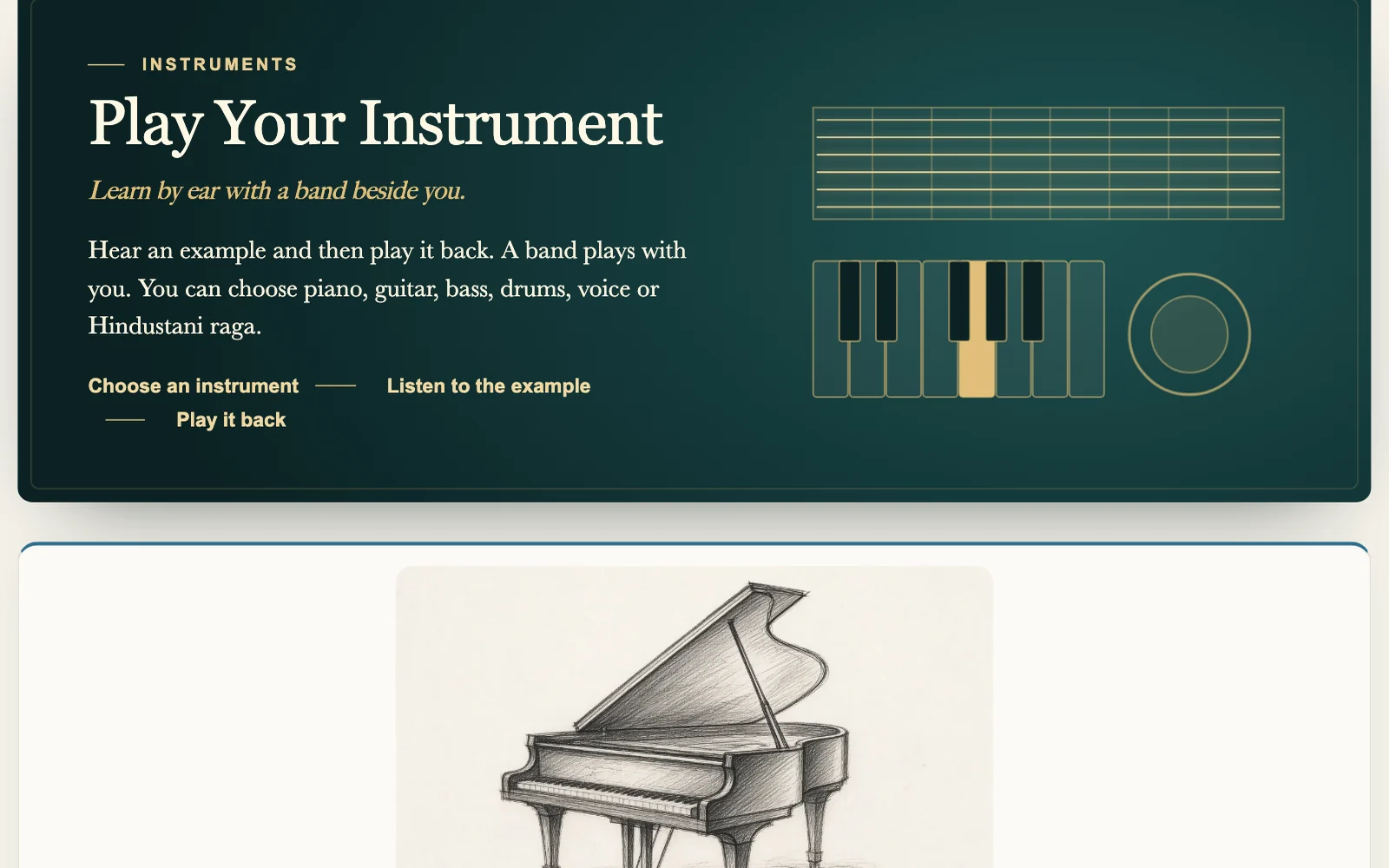
Piano course · First lesson
Find Middle CFind middle C and learn your way around the keyboard. C is the white key directly to the left of each pair of black keys.Start Playing →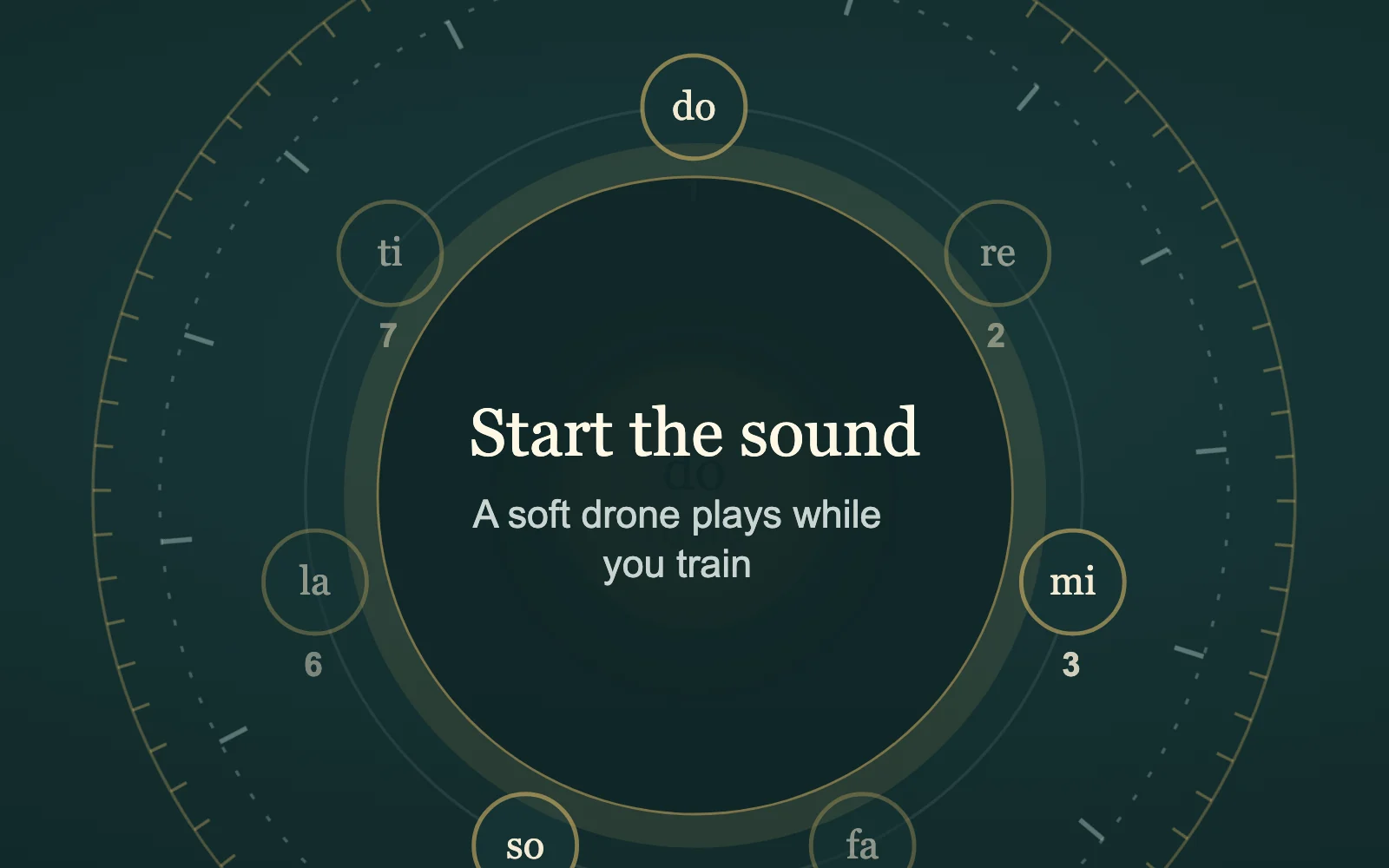
Ear Lab · First Game
Train Your EarHear the tonic first. It is the note where the music comes to rest. Then find the step of the scale for each new note.Start Listening →Ear training
Listening and ear training
Cantus Room
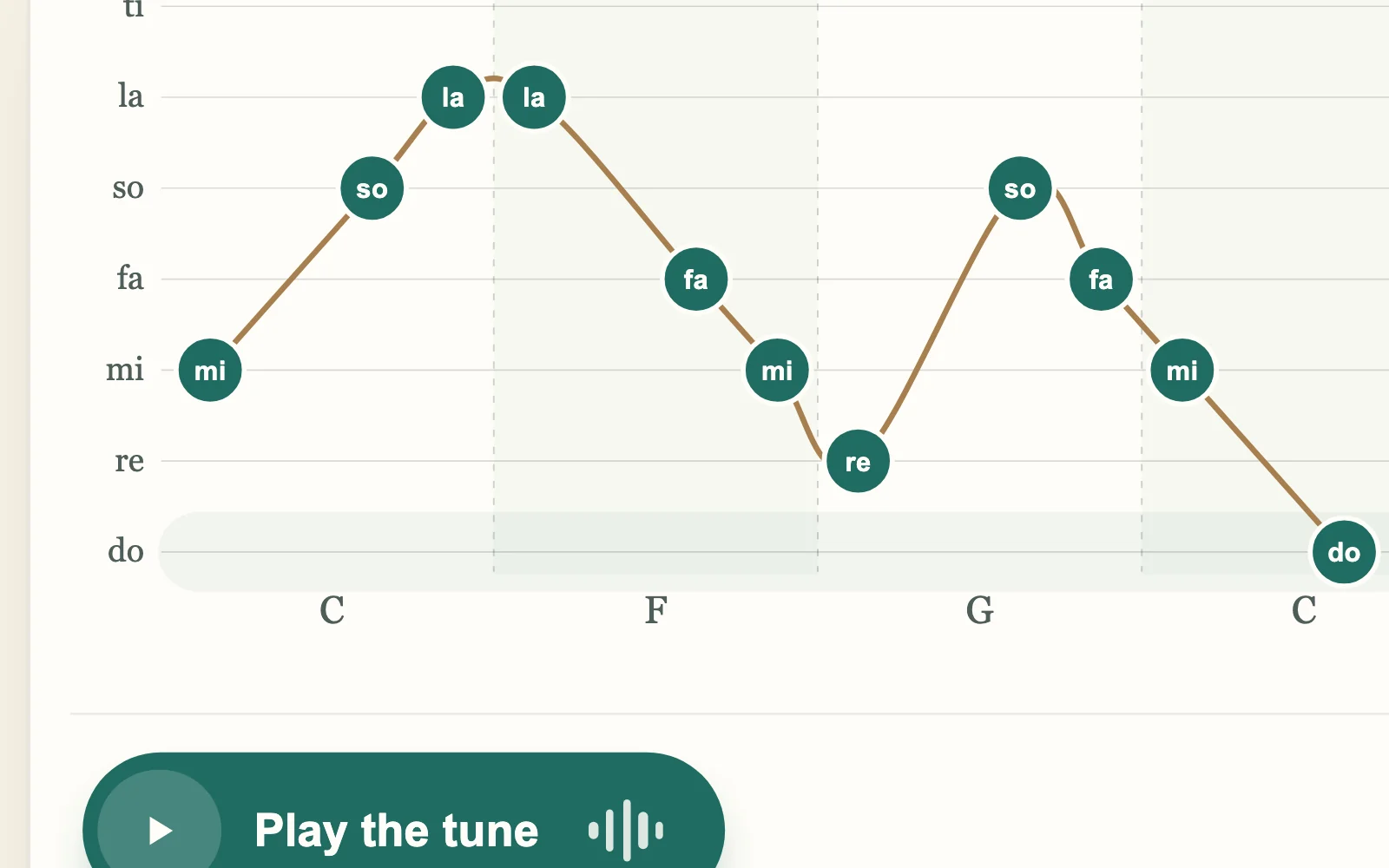
Sing a tune and see it writtenEach note you sing appears on the staff. Play your tune back with Western harmony, a Hindustani drone or jazz swing.Open the Cantus Room →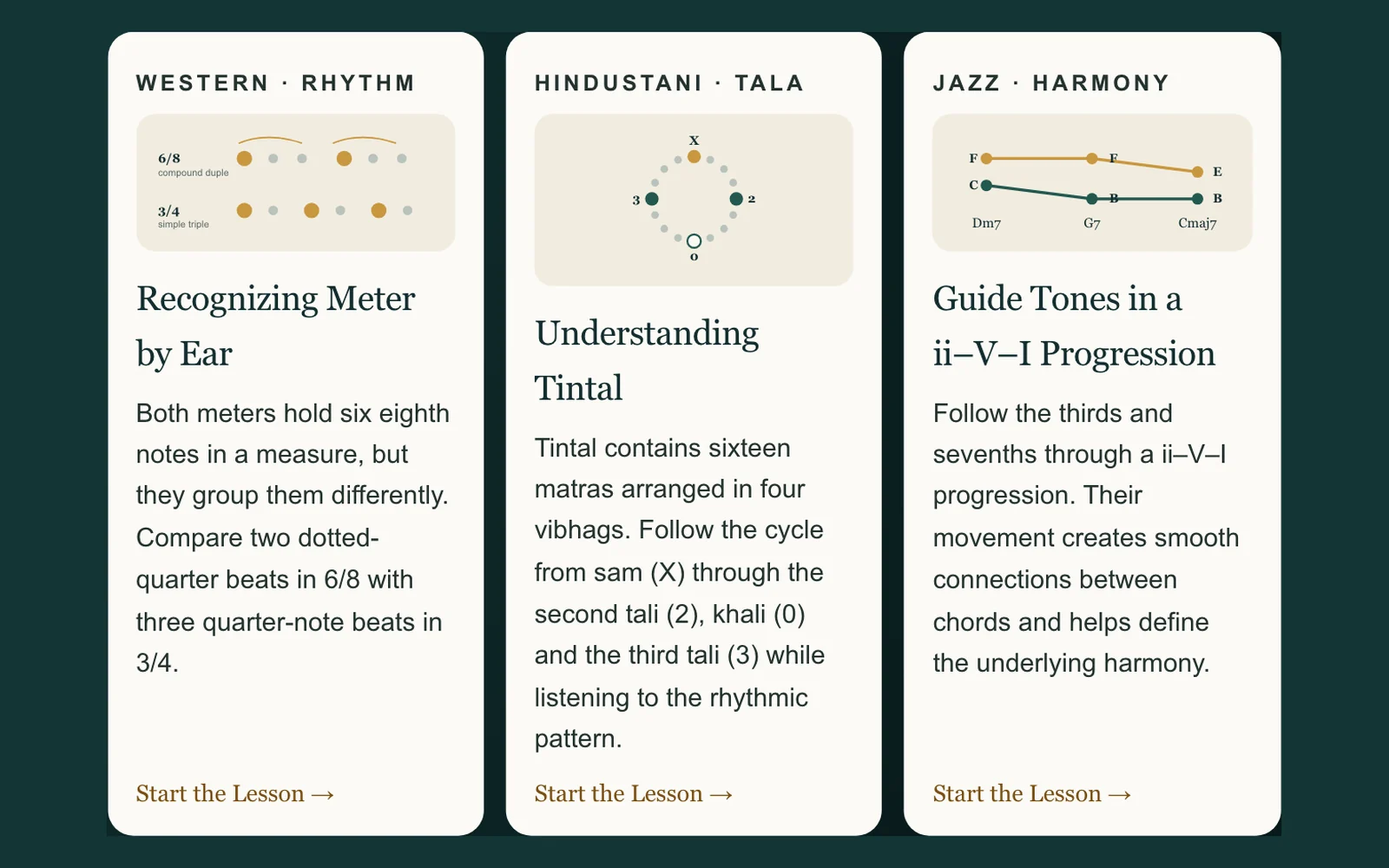
Ear lessons
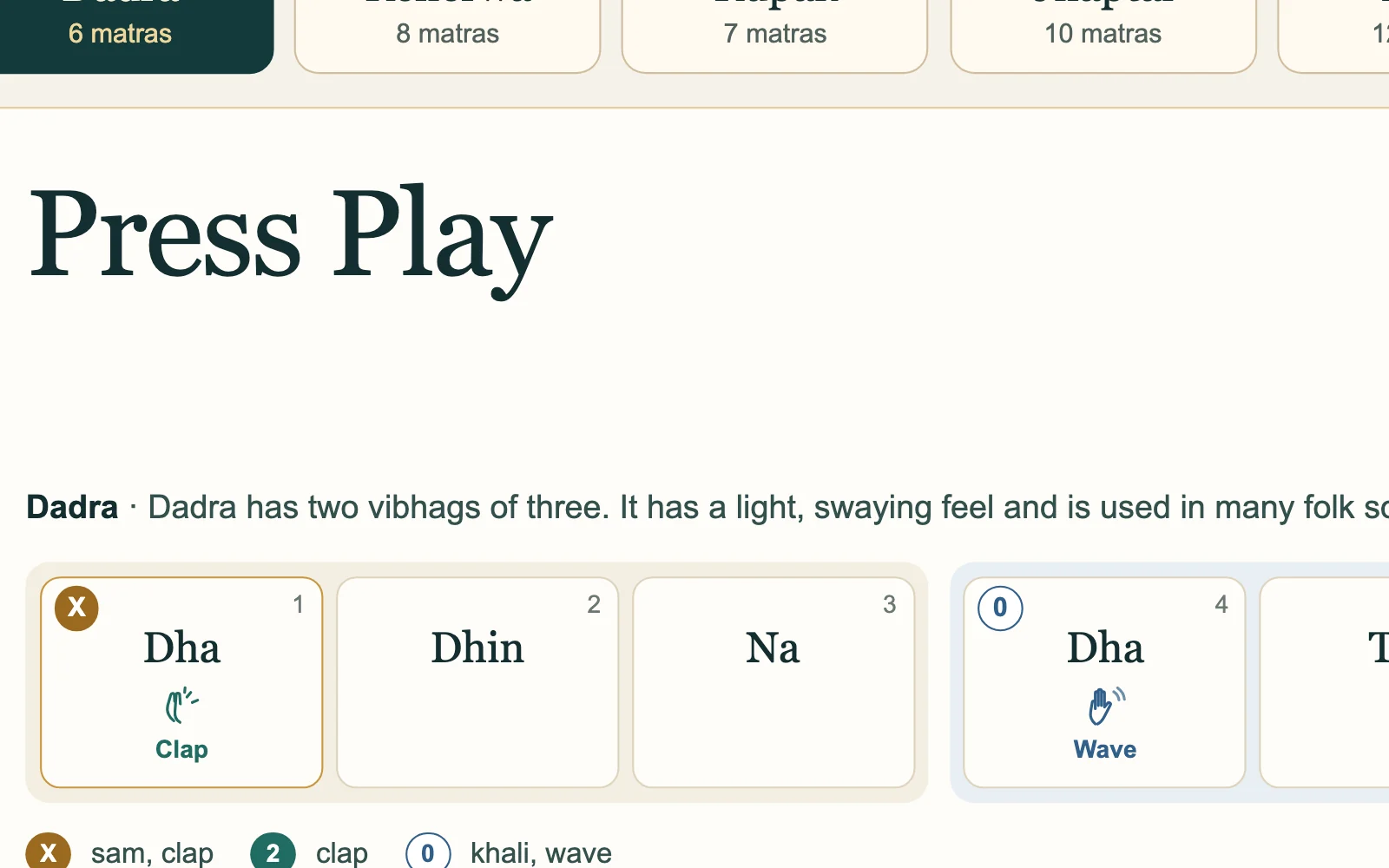
Meter, tala and guide tones by earFollow a diagram while you listen.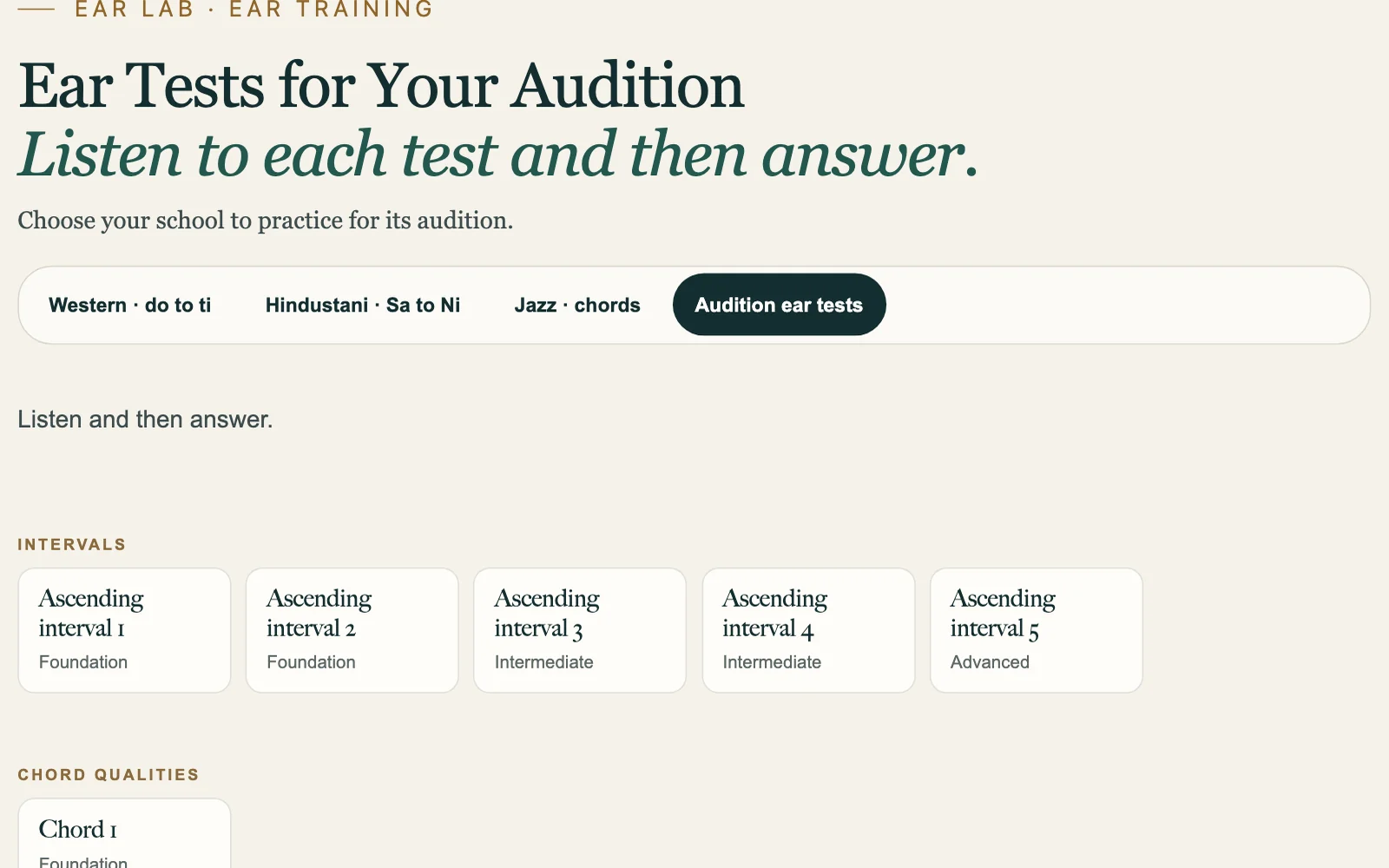
Ear tests
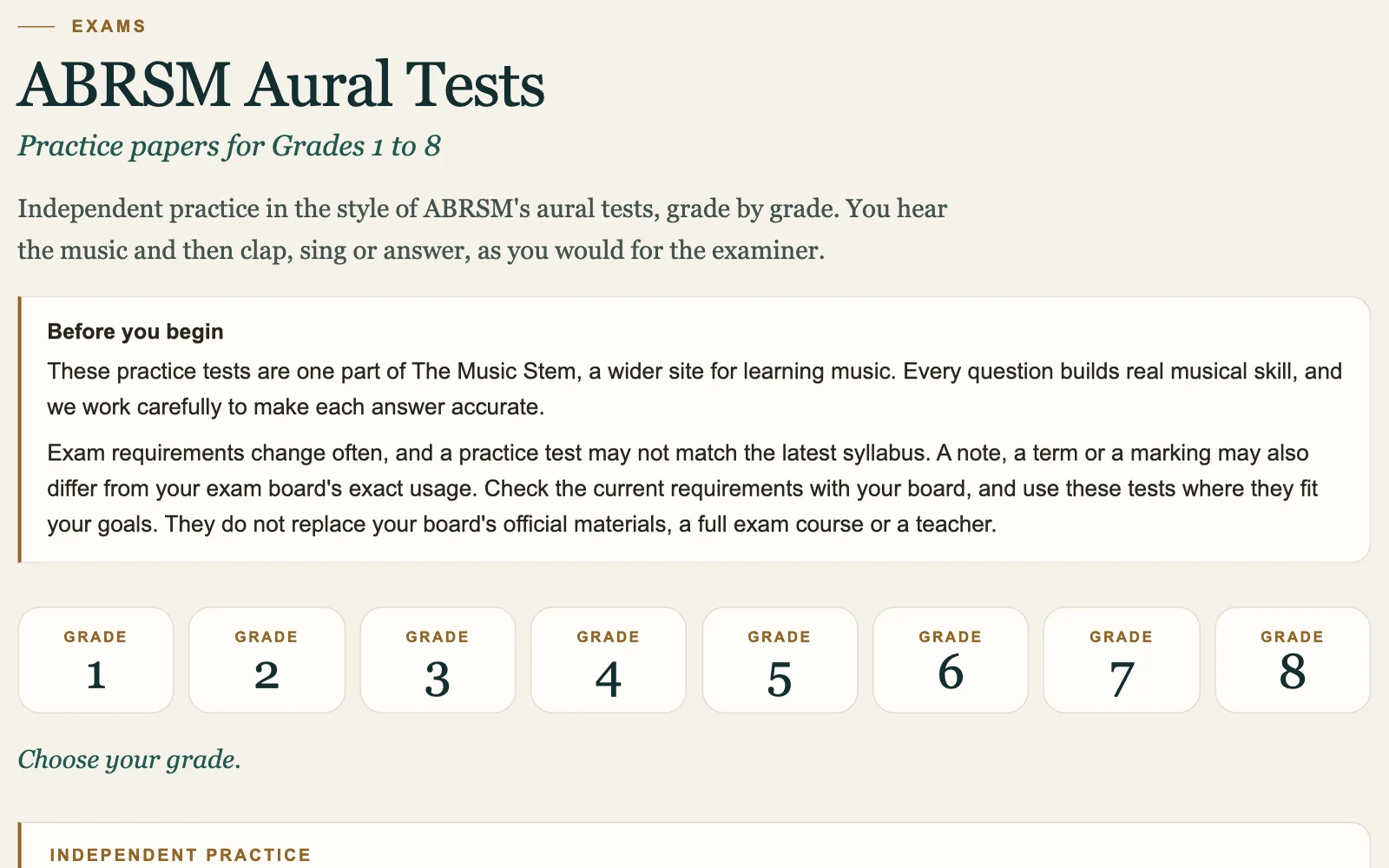
Ear tests for your auditionPractice the ear tests that schools give. Answer each one and see your result.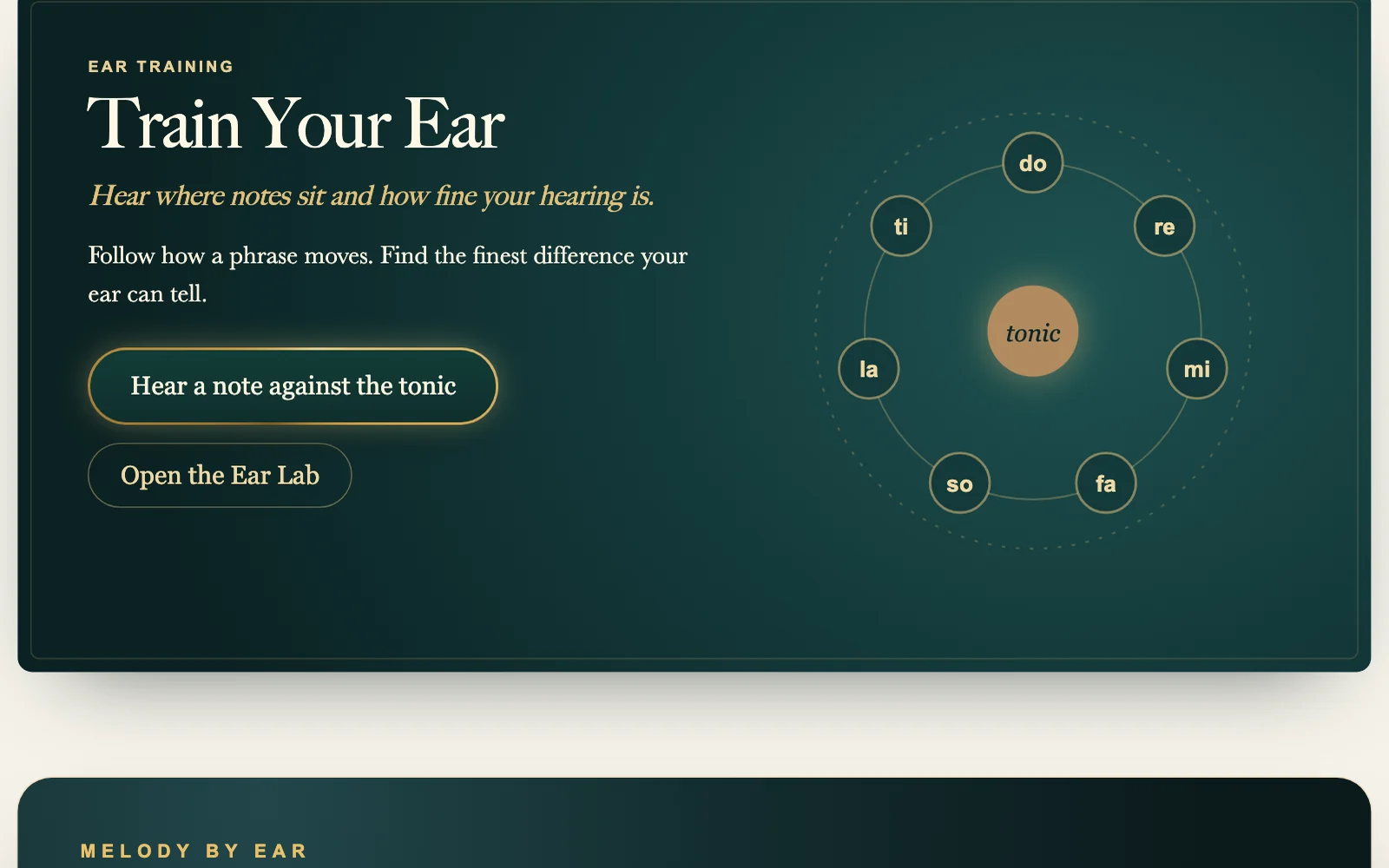
Instruments
Play the piano or your own instrument
Cantabile Hall
Play a recorded grand pianoPlay the full keyboard with the sustain pedal. You can also follow a piece as its notes fall onto the keys.Enter Cantabile Hall →Instruments
Guitar, bass, drums, piano and voiceLearn songs by ear while the band keeps time.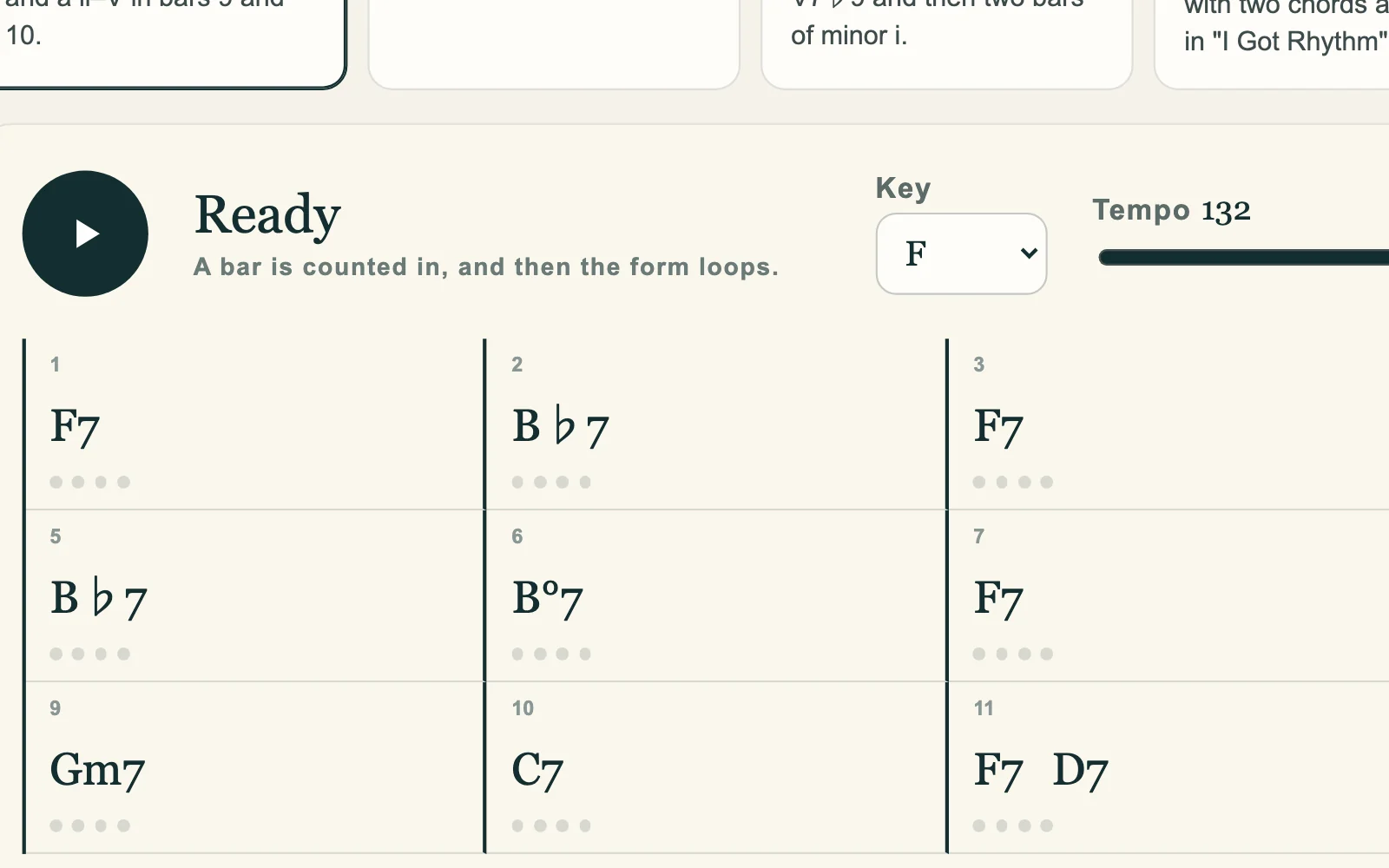
With the band
Jazz BackingA rhythm section plays in the key you choose. You improvise along with it.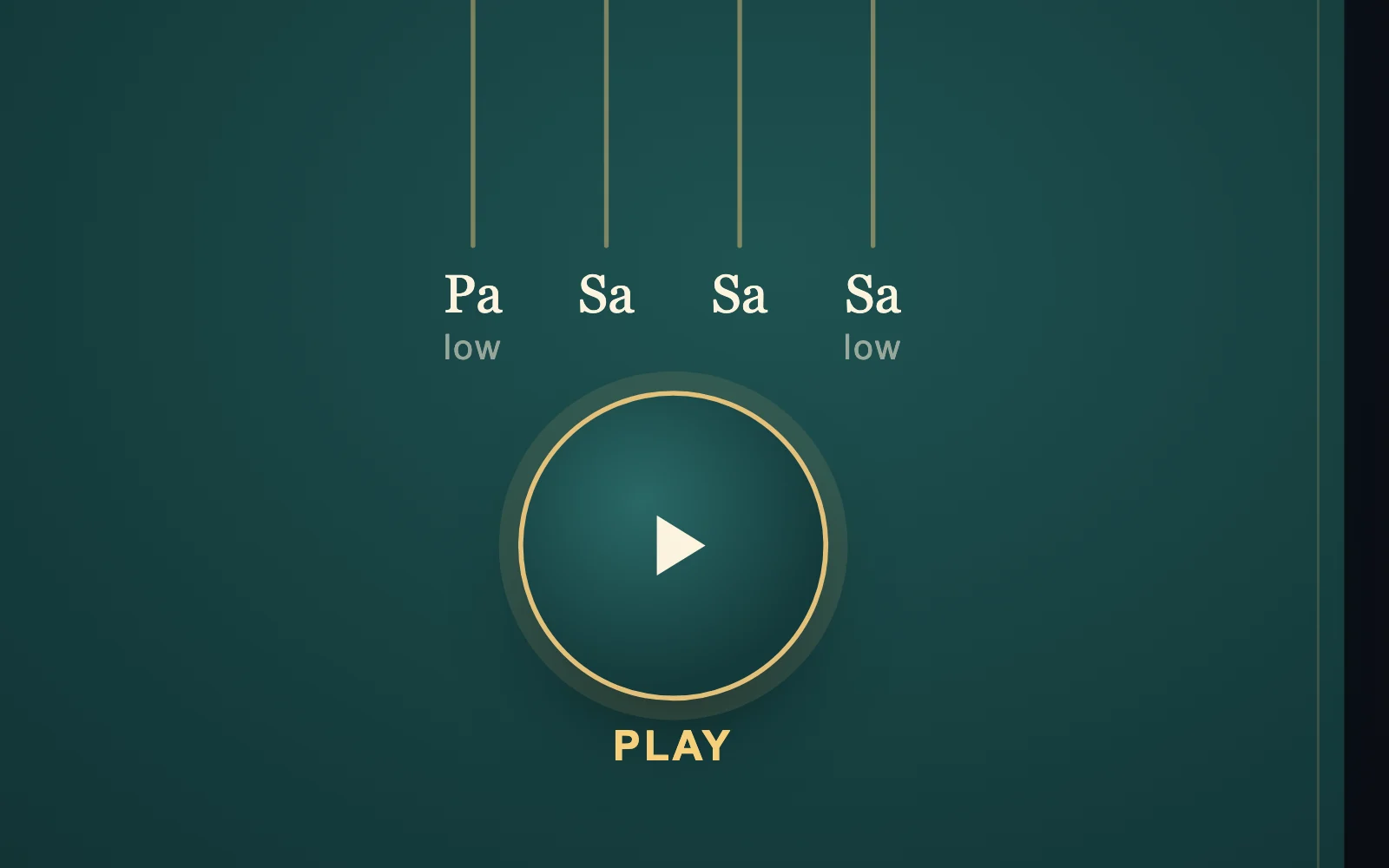
StemLab
Check your timing and pitch
Timing
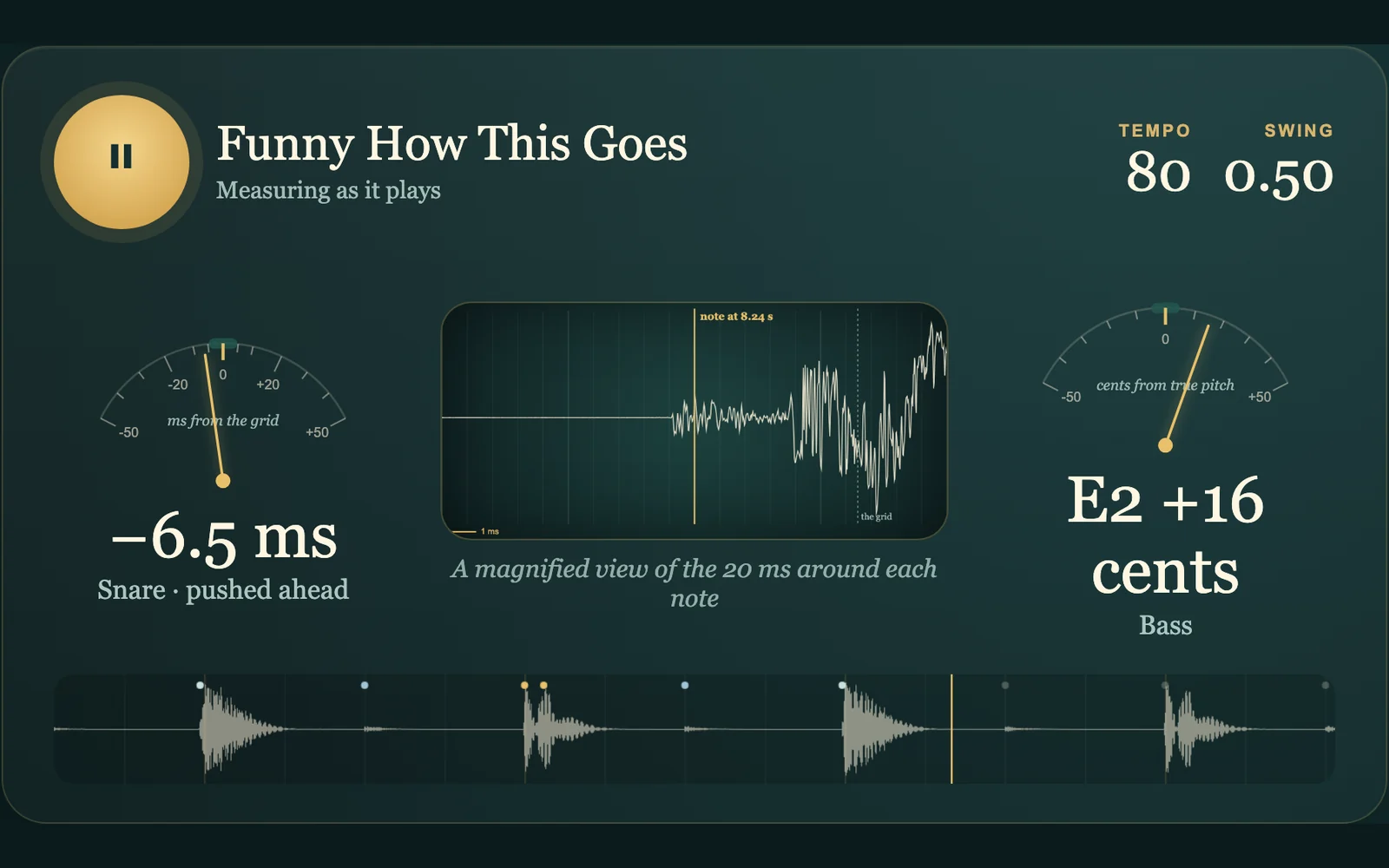
Timing to the MillisecondSee each drum hit timed as the song plays.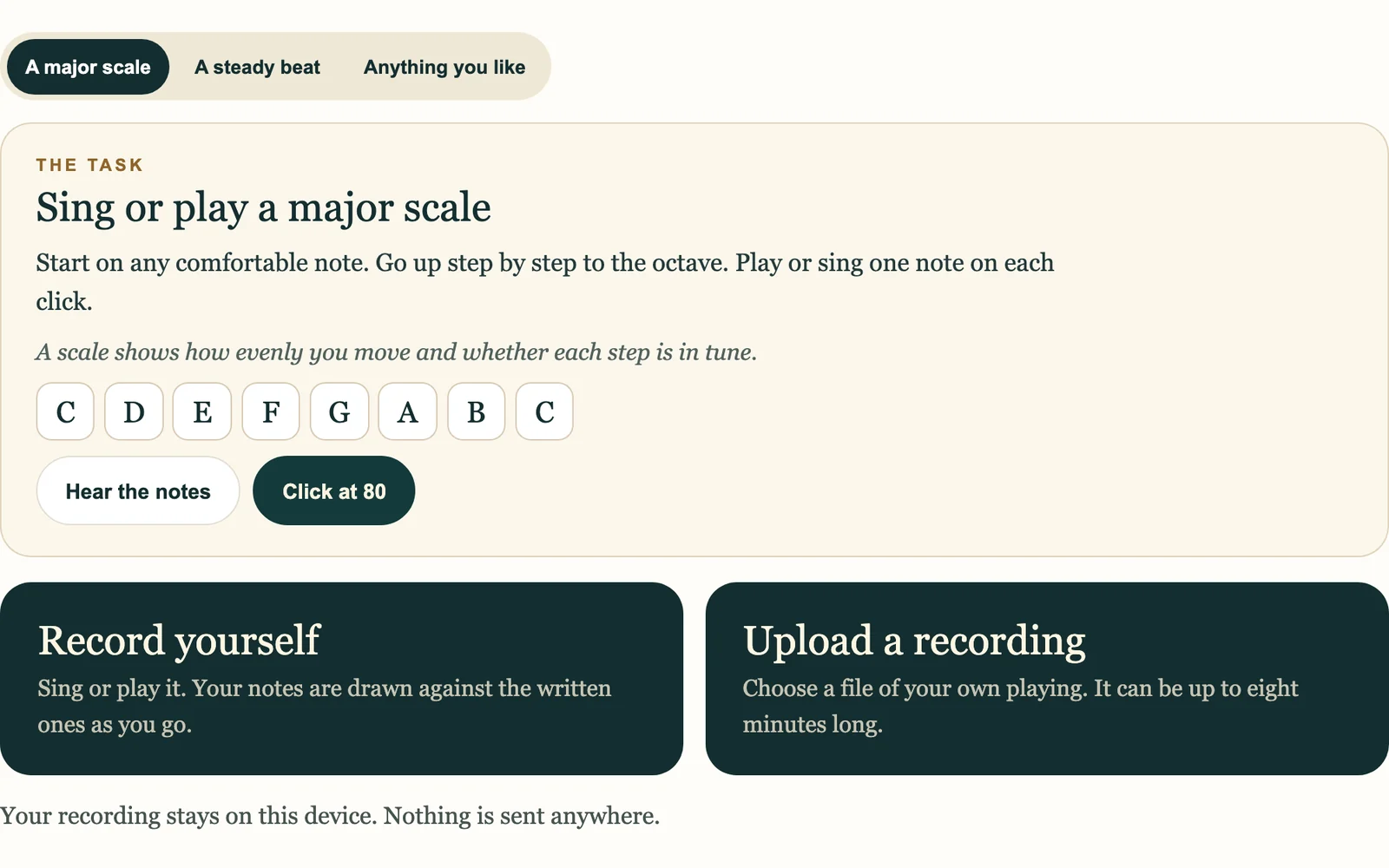
Your playing
Measure Your PlayingSee how close each note is to the beat and the pitch.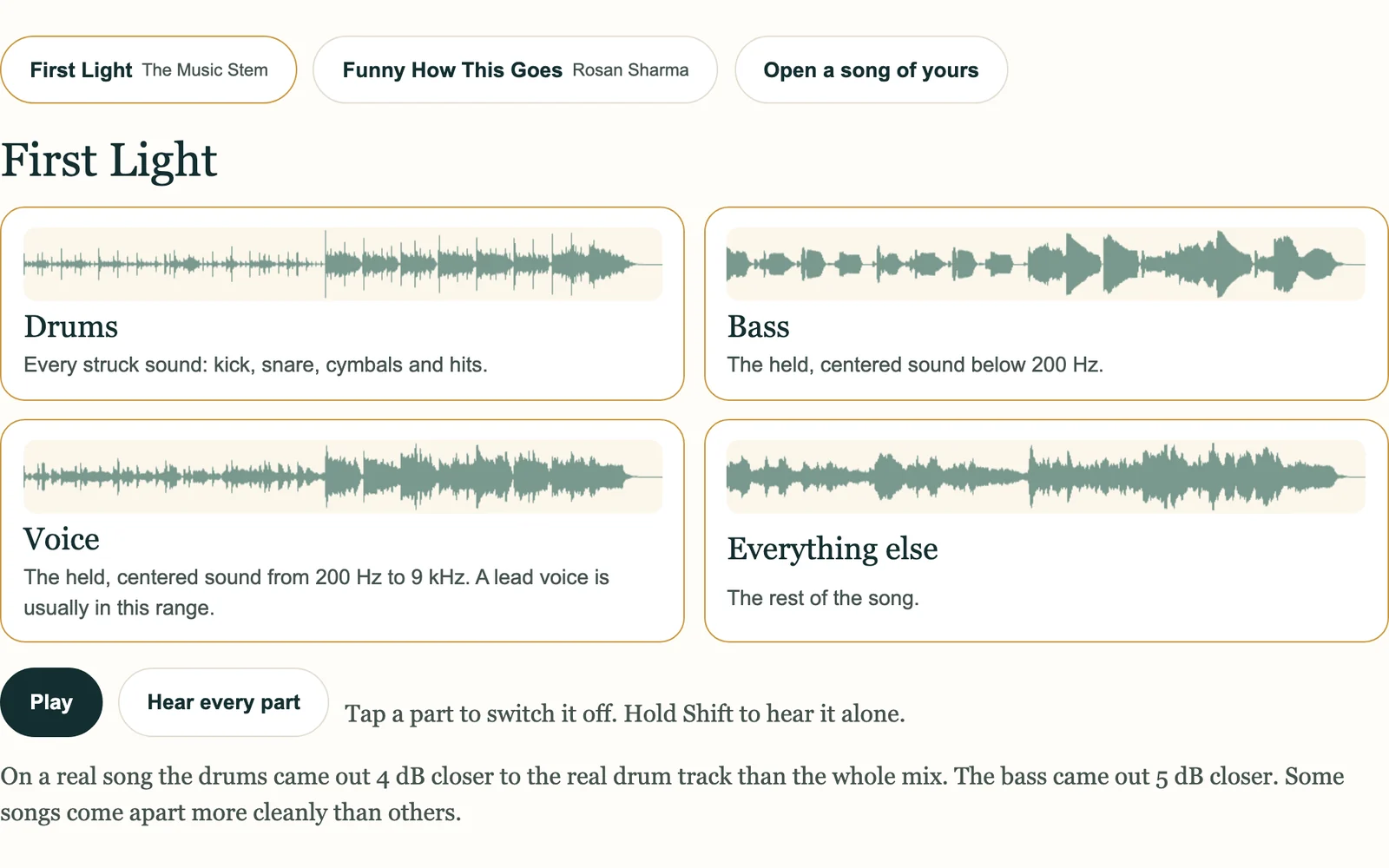
Any song
Stem SplitterSeparate a song file of your own into drums, bass, voice and other parts.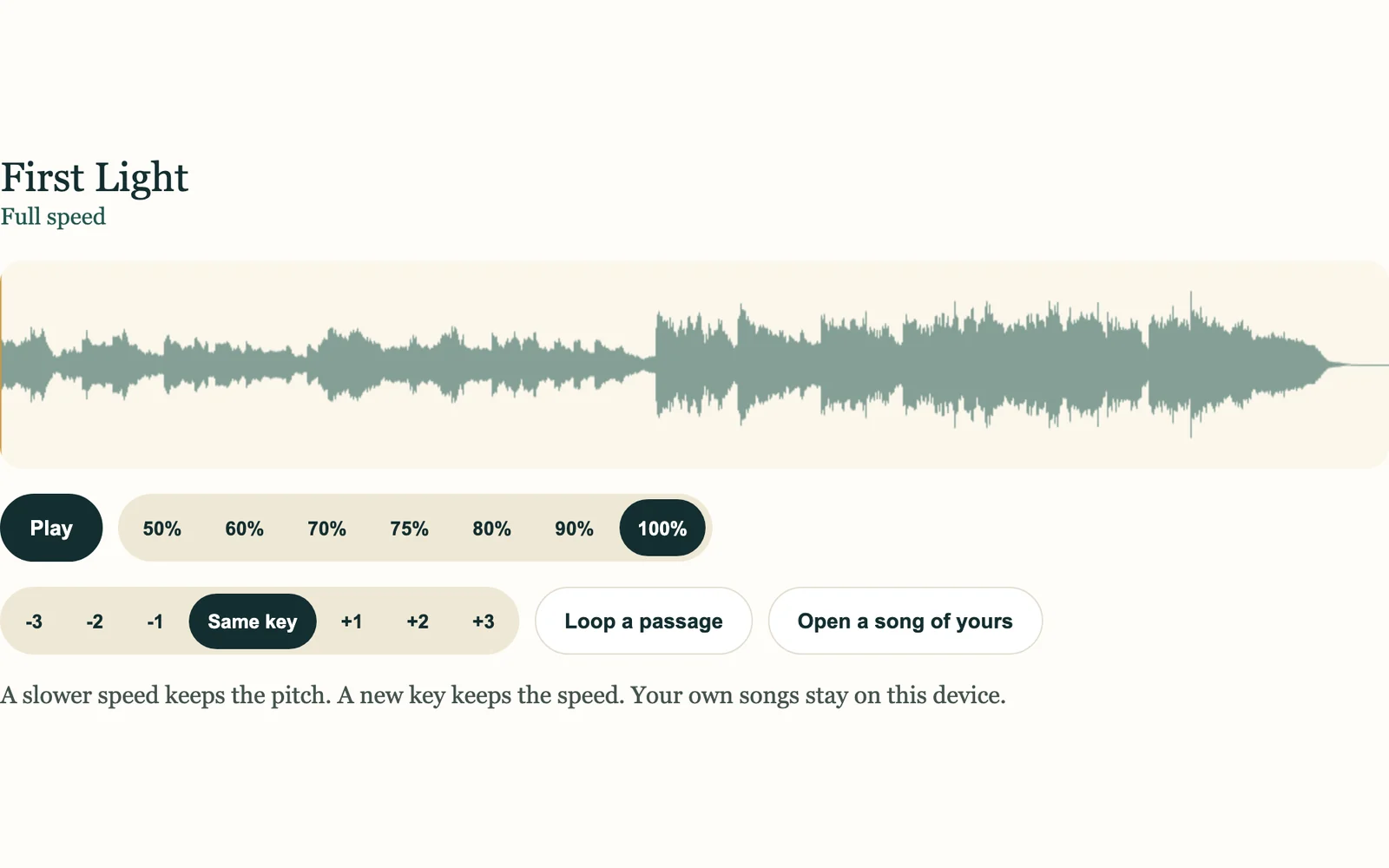
Slow it down
Practice PlayerSlow a song down without changing its pitch.About these courses
Each course teaches one tradition: Western, Hindustani or jazz. Each lesson begins with real music to hear. You then sing, play or write what you heard.
Who it is for
Beginners of any age start here, and so do musicians who are returning after years away. Students who are preparing for lessons, exams or auditions use the same courses. You need no experience. A phone or a computer with speakers or headphones is enough.
How to choose where to begin
- If you have never studied music, start with the first piano lesson. It shows how the keyboard is laid out and where middle C is.
- If you sing or play by ear, start in the Ear Lab. You hear the tonic first. The tonic is the main note of the key. You then find where each new note sits in the scale.
- If you study Hindustani music, start with the Riyaz Tanpura, which plays a steady drone. Find your Sa and sing long notes over the drone.
- If you play jazz, start with Jazz Backing. The rhythm section plays in your key while you improvise.
How the practice rooms work with the courses
A lesson on intervals leads to the interval drills in Ear Training. A lesson on rhythm leads to the rhythm game on this page and to the timing tools in StemLab. StemLab measures each note of your own playing against the beat and against the correct pitch. You see which notes came before or after the beat and which notes were sharp or flat.
The path to an exam or an audition
The skills on this page are the skills that graded exams and auditions test. The practice papers follow the format of each exam board. The audition guides follow what each school asks for. Both are gathered on the Exams and Auditions page.