The Music Stem / Ear Training
Ear Training
Online Ear Training for Notes and Chords
Ear training teaches you to recognize what you hear. In the Ear Lab, a few chords set the tonic, the note where the music comes to rest. Then one note sounds, and you identify its place in the scale. Jazz Ear trains seventh chords and common jazz progressions. The Hindustani levels train the notes and ragas of Indian classical music over a steady drone.
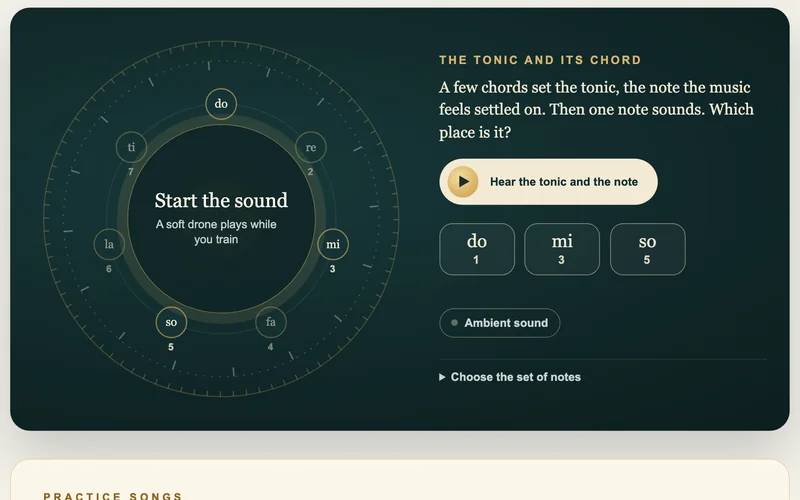 Ear TrainingHear a note against the tonic and identify its place in the scale.Open Ear Training
How the Ear Lab Works
The chords I, IV, V and I set the tonic. Then one note sounds. You choose its place in the scale, which can be any note from do to ti. The tonic changes between questions, so you learn each note by its place in the key.
The levels begin with the tonic chord, which is do, mi and so. The next level uses the notes from do to so. Later levels use the whole scale and notes above and below the tonic.
After each answer you can hear the tonic and the note together. After two misses on the same note, the Ear Lab plays the scale from the tonic up to that note. The notes you confuse come back first, so you practice the notes you find hardest.
Why Scale Degrees Matter
A singer who hears each note's place in the key finds it easier to sing a melody at sight. The same skill helps a player write down a tune by ear and find a melody on an instrument. Aural exams test it in melodic dictation and in singing back.
Hindustani Ear Training
A tanpura, a plucked drone instrument, sounds Sa, the tonic. You identify each swara, or note, from Sa to Ni. Later levels add the komal (flat) swaras and tivra (sharp) Ma. Further levels play phrases from the thaats, the parent scales of Hindustani music. They also use ragas such as Bhupali, Yaman, Bhairav, Malkauns, Desh and Kafi. You hear whether a phrase rises in aroha or falls in avaroha, and you identify the raga of a phrase.
Jazz Chords by Ear
Jazz Ear plays the root on the bass and then the chord on the piano. You identify the chord type: major seventh (maj7), minor seventh (m7), dominant seventh (7) or half-diminished (m7♭5). Later sets add diminished and altered chords, the ii–V–I in major and minor, turnarounds and the twelve-bar blues. A band of piano, walking bass and ride cymbal plays the progressions. After each answer, the chord's notes light up on the keys with their degrees.
Ear Tests for Auditions and Aural Exams
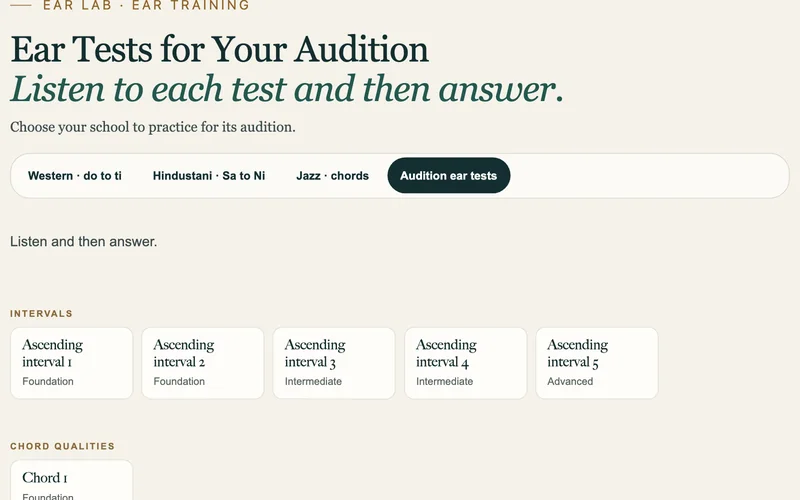
The audition ear tests ask for ascending intervals and for chord qualities: major, minor, diminished and augmented. They also play short melodies for you to repeat and rhythms for you to tap back.
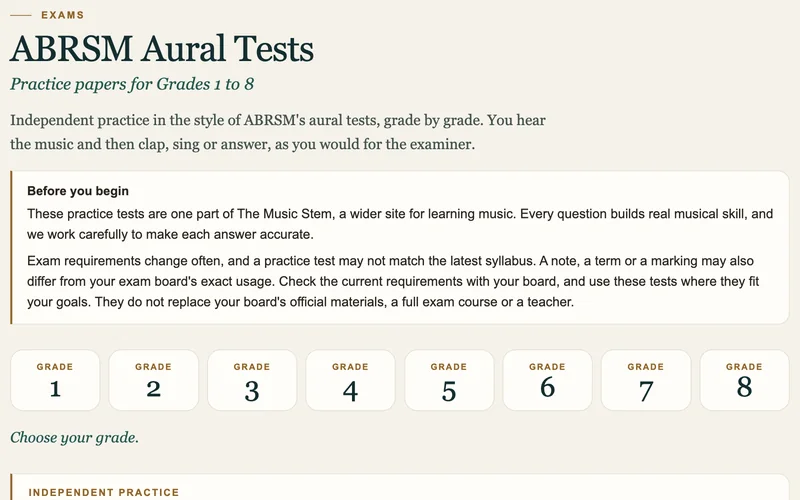
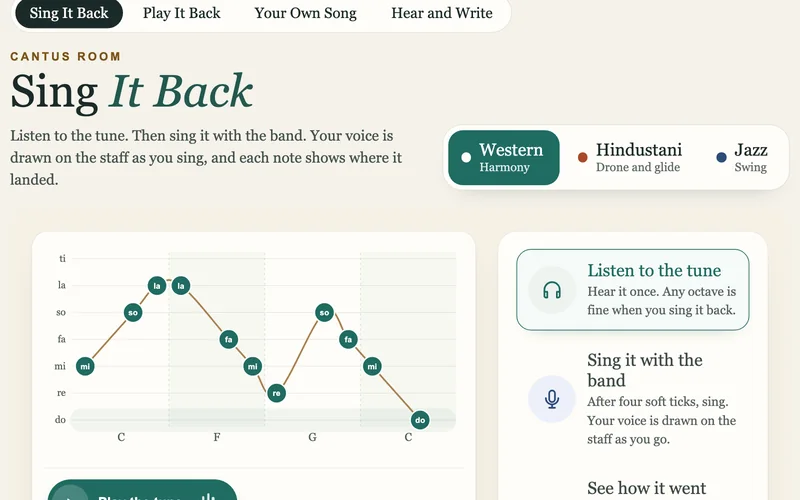
ABRSM is a British board that sets graded music exams. Its aural tests are the listening part of each exam. Our practice papers follow the parts of those tests. You clap the pulse, sing back a phrase, spot a change and identify the cadence. In the Cantus Room, each note you sing or play appears on the staff. Its Hear and Write mode gives you practice in melodic dictation, which means writing down a tune you hear.
The Ear Test
The Ear Test finds the smallest difference in pitch and in timing that your ear can tell. For pitch, you say whether the second of two notes was higher or lower. For timing, you say whether the last of four even notes came early or late. The differences shrink as you answer, and your result appears in cents and in milliseconds.
More Ear Practice
More Tools from The Music Stem
See a mistake on this page? Write to info@themusicstem.com or read how to report an error.