Music audition guide · United Kingdom
Guildhall Audition: What Each Department Asks
The Guildhall School of Music & Drama in London runs its own application for the Bachelor of Music (BMus). You apply directly to the school, and each department sets its own audition. Wind, brass and percussion candidates work on a piece with a teacher during the audition. Jazz candidates play with the school's own band.
 Start UK conservatoire audition practicePractice the parts of the audition in order. Each part explains what the panel listens for.Open
The Music Stem is not affiliated with the Guildhall School of Music & Drama.
How to apply
Most UK universities and conservatoires take applications through UCAS, the shared UK application service. Guildhall does not. You apply yourself on the school's own online form, and it does not accept applications sent by education agents. Applicants who meet the entry criteria are offered an audition, an interview or an assessment of their portfolio. The panel looks at how well you perform now and how much you could grow.
Most performers give one audition. There is no first recording round to pass before it. Vocal candidates have two rounds. Applicants for Composition, and for Electronic and Produced Music, send a portfolio first, and the school chooses from it who gets an interview.
Where you can audition
- In London. Live auditions take place at the school.
- By video. Performers who cannot come to London can send a recorded audition. The admissions team sends a separate login for the upload.
- Overseas. Guildhall also holds live auditions in some cities in Asia and North America, and its overseas page lists them. Candidates there bring their own accompanist. Candidates in some subjects cannot audition overseas. These include classical percussion, jazz percussion and composition.
Guildhall auditions are not normally limited in time.
What each department asks
- Violin, viola and cello. You play the first movement of a concerto and one contrasting piece.
- Double bass and guitar. You play two contrasting pieces. Guitarists choose them from different eras.
- Harp. You play two contrasting pieces, scales and arpeggios in all keys, and a sight-reading test. Harpists also play a quick study, a short piece that the school sends about three weeks ahead.
- Piano. You play three contrasting pieces of your choice from memory. No sight-reading or scales are listed for BMus piano.
- Voice. You prepare three contrasting pieces in different languages and a short spoken text, such as a poem or a monologue. You perform all of them from memory. In the first round you choose the first piece and the panel chooses the second. In the second round the panel chooses from the rest, and a short interview follows. The program may include a musical theater piece, but the department's focus is classical singing.
- Wind, brass and percussion. The audition has sight-reading, a coached session and an interview. In the coached session a teacher works with you on one of your prepared pieces. A pianist is provided in London. Percussionists also join an ensemble workshop.
Each department page links to the pieces and requirements for each instrument.
The jazz audition
You play two jazz standards and improvise on both. The first is a swing tune at a medium or moderately fast tempo. The second has a contrasting tempo or feel. The school's band accompanies you. You bring lead sheets, which show the melody and the chord symbols on one page, written in concert pitch, the pitch a piano plays. You direct the band yourself, and the panel watches how you work in an ensemble.
You also play along with a recording of a solo that you have learned by ear and written down. The transcription must be at least thirty-two measures long. You send a short written commentary, either on one of your own compositions or on your transcription. The interview covers your experience and your plans, and it may include sight-reading or an ear-training question.
Composition
You upload three contrasting compositions. Send the scores as PDF files, with recordings or audio where you have them. Only portfolios of a suitable standard lead to an interview. BMus candidates also complete a paper of harmony and counterpoint. Its level is about Grade 7 in UK theory exams such as ABRSM, an upper-intermediate level. The school emails the paper about a week before the interview, and you send it back within a week. The interview is in London or by video call.
How to prepare
The coached session. Choose a prepared piece you know well enough to change on request. Ask a teacher to give you instructions while you play it through, such as a new tempo or a different dynamic plan. Practice making each change at once.
The voice program. Plan three pieces that differ in language, period and character. Learn the translation of every word so that you sing each line with its meaning. Rehearse your spoken text aloud as often as your songs.
Jazz with a band you have not met. Practice counting in a tempo and showing the form to new musicians. Mark the head, the solos and the ending clearly on your lead sheets. Play your transcription with the recording until your phrasing and timing match the original.
The harmony and counterpoint paper. Work through four-part harmony and two-part counterpoint at Grade 7 level. You have about a week, so practice finishing a full paper in two or three sittings and leave time to check it.
Piano pieces of your choice. You choose all three pieces, so order them for contrast and open with the one you play most securely. Play the whole program from memory for a listener at least twice before your audition.
Practice on The Music Stem
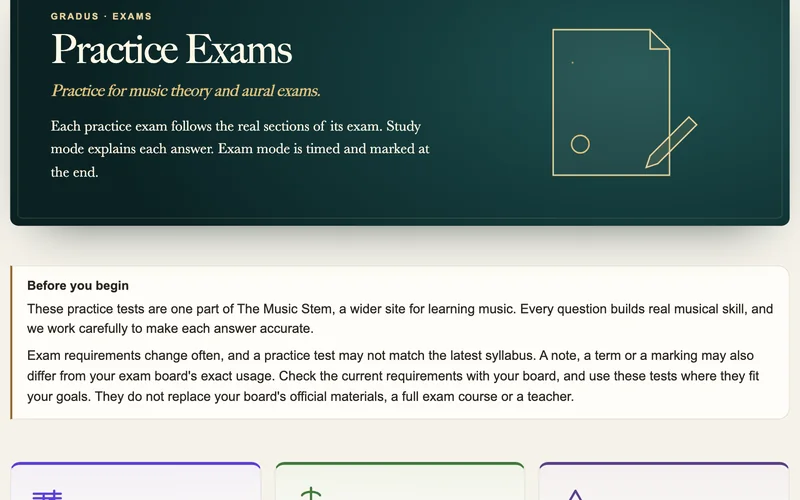 Music theory practice testsMusic theory practice tests prepare you for the Grade 7 theory level of the composition paper.Open →
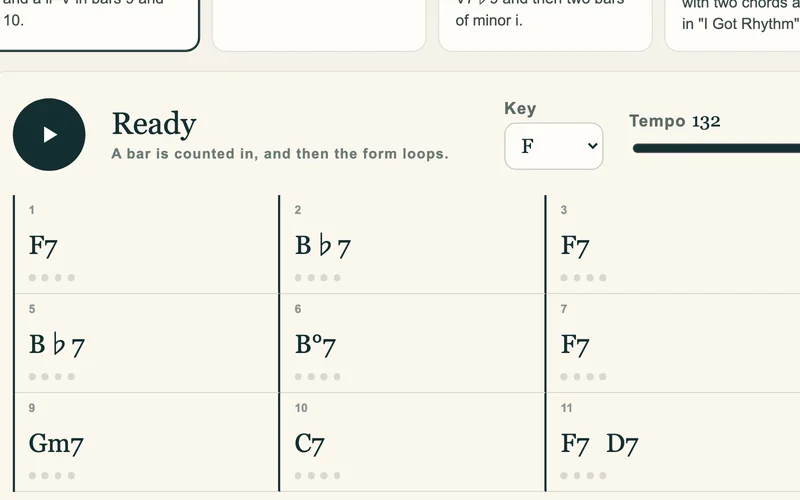 Improvisation practiceImprovisation practice gives jazz applicants swing tunes to improvise over.Open →
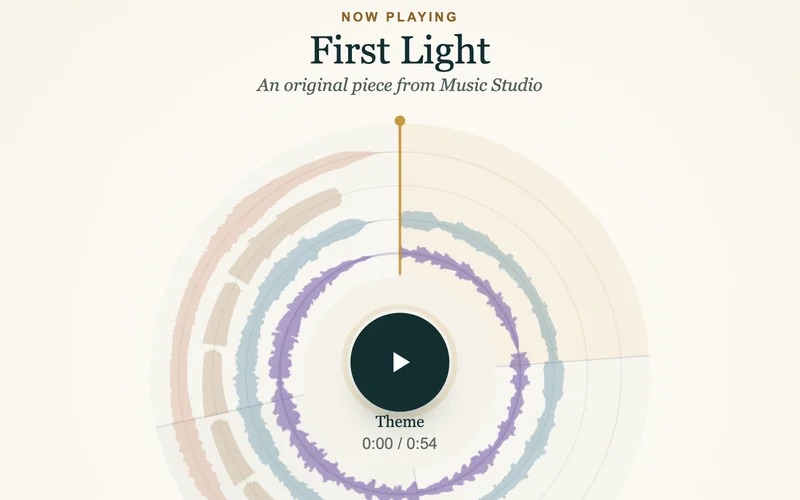 StemLabStemLab shows how closely your transcription matches the timing of the original recording.Open →
- Our UK conservatoire audition practice covers contrasting pieces, sight-reading and the interview with the panel.
- Sight-reading practice prepares wind, brass, percussion and harp candidates for the sight-reading test.
Guildhall's own pages
Requirements can change from year to year. Read your department's page before you apply. Our practice cannot predict an admission decision.