Music audition guide · United States
Curtis Audition: Prescreening and the Live Rounds
The Curtis Institute of Music in Philadelphia says admission is based solely on musical promise shown in the audition. Almost every applicant first sends a prescreening video, a recording that decides who comes to audition in person. A department holds auditions only when one of its teachers has a free place for a new student.
 Start conservatory audition practicePractice the parts of the audition in order. Each part explains what the panel listens for.Open
The Music Stem is not affiliated with the Curtis Institute of Music.
The application
You apply online, and every document must be in English. The application includes an unofficial transcript, which is a copy of your school grades. It also includes a written essay, a video essay and a list of the works you have studied closely. You add at least one recital program and two recommendations. Singers also describe their stage and dramatic training. The SAT is optional for the Bachelor of Music, and Curtis does not require an English test score for admission.
International applicants send the same materials as everyone else. Curtis sets no minimum or maximum age, and younger students of pre-college age apply for its Diploma program.
Curtis states that tuition is free for all students. Free tuition does not cover living costs, and the financial aid page explains the help available for them.
The prescreening video
All applicants send prescreening material except oboists, who have no prescreen. Recording rules differ by department:
- Piano. You record on video from memory, with both hands and feet in view. Each movement is one uninterrupted recording with no editing.
- Violin. You play from memory, and each movement is one uninterrupted recording.
- Flute. Works written with accompaniment are recorded with piano.
- Horn. Each piece is one continuous recording with no editing.
- Voice. Undergraduate singers send a song in English, an aria and an art song. Each one is recorded with accompaniment, and a recorded accompaniment is accepted.
- Harp. You email your proposed repertoire for approval before you apply.
The live auditions in Philadelphia
Live auditions take place in person on the campus in Philadelphia. Curtis holds no auditions in other cities, and it moves the rounds online only if in-person rounds are not possible. You have about thirty minutes to warm up in a practice room.
- Piano. You play all of your prescreening works from memory. Concertos are not included. The final round adds one more solo work of your own choice.
- Oboe. There are three rounds, and the first two are blind, so the panel hears you without seeing you. The last round includes an interview and sight-reading.
- Flute and horn. You play all major and minor scales and arpeggios. Flute players also sight-read.
- Trumpet. You may be asked to sight-read.
- Percussion. The final round tests your recognition of timpani pitches, and you sing and recognize all intervals.
- Voice. Undergraduate singers perform up to four selections from memory. The program includes a song in English that is not a translation. It also includes an aria from an opera or an oratorio. Curtis calls a knowledge of piano and music theory desirable.
Composition
You send two or three original compositions with scores wherever possible. Curtis strongly recommends recordings, and computer playback is accepted. Your works are the main basis of the decision. Finalists have an interview in Philadelphia, which takes place online if needed.
After admission
New students take placement interviews or exams where their department requires them. All students also take a spoken and written placement exam on music history and repertoire during orientation week.
How to prepare
Recordings without editing. Pianists, violinists and horn players may not edit their recordings, and pianists must also show both hands and both feet. Set the camera once for the whole session so every movement is framed the same way.
Memory in every round. Pianists and violinists play from memory in the prescreen and in each live round, and pianists play every prescreening work again. Keep each work at performance level from the day you record it to the final round.
Scales and arpeggios. Flute and horn players need all major and minor scales and arpeggios. Play them at one steady tempo with a metronome, in a fixed order, so none is left out.
Sight-reading in the live rounds. Oboists sight-read in the last round, flute players sight-read, and trumpet players may be asked. Read one new orchestral passage a day in your own clef.
Intervals for percussionists. Sing every interval up and down from a given note, and check each one on a keyboard. Practice identifying timpani pitches by ear against a reference note.
The video essay. Use the list of works you have studied closely as your material. Talk about one of those works and what it taught you.
Practice on The Music Stem
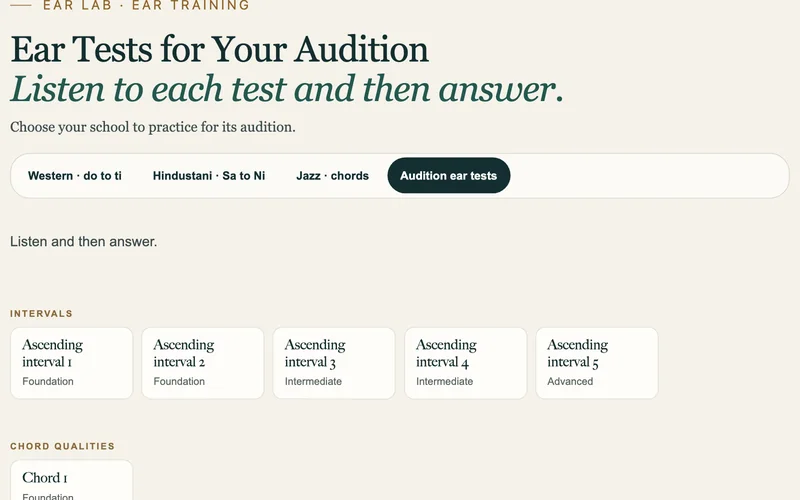 Ear tests for auditionsEar tests for auditions train the interval singing and recognition in the percussion round.Open →A mock auditionA mock audition runs a full audition in order, so a live round feels familiar.Open →
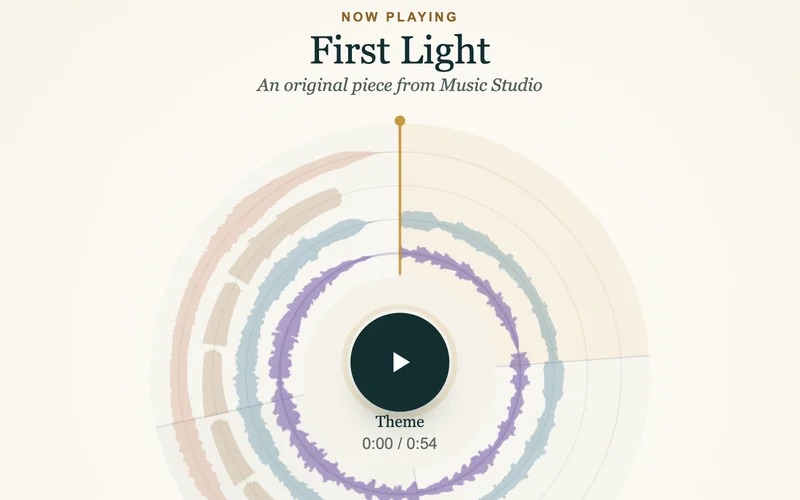 StemLabStemLab measures how steady your scales and excerpts are against the beat.Open →
- Conservatory audition practice takes you through a prescreen and a live round in order, as at Curtis.
- Sight-reading practice prepares oboe, flute and trumpet players for the sight-reading in the live rounds.
Curtis's own pages
Requirements can change from year to year. Read your department's section before you apply. Our practice cannot predict an admission decision.